Your Creative Mind
Behind every book, play, and song is a person juggling self-doubt, deadlines, and the drive to create. On Your Creative Mind, Izolda Trakhtenberg talks with writers, artists, musicians, and creative professionals about how they make their work and how they manage the stress and anxiety that often come with creating.
Through candid interviews and practical insights, you’ll learn storytelling techniques, mindfulness practices for creative professionals, and strategies for overcoming perfectionism in writing and art. Whether you’re searching for inspiration, tools to strengthen your resilience, or fresh ideas for balancing creativity and mental health, this podcast is your guide to creating with courage, clarity, and joy.
Listen on:








Episodes

Thursday Oct 14, 2021
Thursday Oct 14, 2021
Improve Your Collaborative Skills By Knowing Who You Are
This episode is brought to you by Brain.fm. I love and use brain.fm every day! It combines music and neuroscience to help me focus, meditate, and even sleep! Because you listen to this show, you can get a free trial.*URL: https://brain.fm/innovativemindsetIf you love it as much as I do, you can get 20% off with this exclusive coupon code: innovativemindset
It's also brought to you by Gloria Chou's PR Starter Pack. If you want to get featured in the media, this is your best first step. I've used these techniques to get featured in magazines, newspapers, and podcasts. They work! https://izoldat.krtra.com/t/so6Aw0yCuva4
Your gift! The Idea Document. Head over to it, make a copy of it, and keep track of your ideas!
Episode Transcript
Hey there and welcome to the innovative mindset podcast. My name is Izolda Trakhtenberg and I'm thrilled to welcome you to collaboration Thursday. So let's talk about collaboration. What does it mean in the simplest terms? Of course it means working together as a unified team to achieve a goal. Right?
So you work with other people in order to achieve the thing you're trying to achieve. When you have a lots of personalities, that can be a challenge. So you need good communication skills, uh, for sure, to be able to collaborate well and effectively, but you also need to know who the people are, what their skill sets are, and also who they are, how they operate innately.
And. There are these personality traits that I've been thinking about a lot. And there are other people who talk about them too. There are lots of tests that you can take, you know, you can, you can do the Myers-Briggs or, or discuss or whatever. All of those things are absolutely valid. Uh, I think, and yet to me, they break down into some very basic form.
Uh, I mentioned this yesterday in the compassion Wednesday episode, but I want to go a little bit deeper into it. A specialist. What is the specialist? A specialist to someone who is great at the one thing, right? Albert Einstein, Mozart, they were specialists. They were amazing at the one thing they were great at and maybe not so great at other things like, uh, paying the bills or.
I don't know, picking up after themselves, I guess. I'm not sure what, I'm not sure that, uh, I don't know exactly what kind of housekeeper boats art was, but I imagine he was so full of the one thing he was great at, which was music that he let everything else sort of float away. So that's what a specialist is the opposite of that, or along the continuum of that is the generalist.
And the generalist is someone who may not be grand at any one thing, but they're really very good at a whole bunch of things. And that person is able to see assess, evaluate. Different, uh, ideas, notions factors, components of things, and then see a way to make them work together. So you can have the specialist.
Who's great at the one thing, but maybe not great at other things. And the, the generalist who isn't great at the one thing, but is really good at lots of other things or lots of things I should say. Then you have the visionary versus the implementer. This is sort of the grid that I've developed and the visionary is.
The person who can see the whole lay of the land, right? They can, they have the idea, they can see all of the different parts, but they may not be the person who can implement it to make it actually go right. So they can envision the engine, but they may not be the person who builds the engine. That job falls to the implementer, the implementers, the person who's got the skills to actually make it happen.
Right. And if they don't have the skills to make it happen, then they know how to form a team. Of people who will have the skills to make it happen. Right. I know it sounds kind of confusing, but we need all of these kinds of people on projects in order to make them go. You need the visionary, you need your Elon Musk, right?
He's the visionary, he's the one who's going to be out there with, with the huge ideas. The Steve jobs is another one. But you also need the implementer. You need the person, the Tim cook, let's go with apple. The Tim cook is the one who's gonna be the implementer. He, he may not have the vision, uh, of huge revolutionary change for apple, but he certainly knows how to implement the things that that need to be done in order to keep apple being one of the biggest companies on the planet.
And he also knows how to build a team of people that will, uh, that will help him do all of that. As I said, specialists or people like, uh, Mozart and Weinstein. One of the things that I think a generalist does is they're able to do a lot of different things. And when I think of a generalist, I think of.
Oprah is one of those people who she's got a lot going on. Right. She can write the story. She can act, she can produce, she can direct. She can do just about anything. She's a journalist she's she has many, many, many different skills. And I'm not saying she's not great at them, but she's not known for the one thing that she knows how to do.
She's got. That she can draw on. And that is really important because when she needs any one of those strengths, they're there and she knows herself well enough to know that if she's not the person with the, the unique, uh, special. Skills she'll find that person and she will have them do the work. That's one of the gifts of the generalist is that, you know, when you're not great at something and it may be frustrating, but if you collaborate with those who are specialists, if you find them.
Communicate to them, what you need from them. Then the specialists will be able to do the thing they're great at so that the generalist doesn't have to be the person who actually does it and all together, those four can work in, in that collaborative. To create the project that needs to be created in order for things to work.
I'm going to delve much more into this in the coming weeks and months, because I think it's really important for us to think about who we are and I'm in the middle of developing a, an assessment so that you can figure out. Am I a specialist or am I a generalist? Am I a visionary? Or am I an implementer?
And once you know that it'll be a lot easier to know what role you will best play in any kind of collaborative or project situation, but you need to know what that is. And I'm going to have that available, hopefully within the next few weeks, maybe by the beginning of November, so that you'll be able to take a, an assessment and figure it out for.
It won't be long, but it will be illuminating. I am sure because it will give you in some ways, permission. To play to your strengths because there are times when we don't do that, we go, oh, but I want to be great at the one thing. And maybe we're not. And we have to be okay with that because if you're a generalist trying to live the life or the, do the work of the specialist, you're going to be knocking your head against the wall a lot.
And in many ways, vice versa. So at some point it becomes better, more optimal, and we'll give you a better outcome if you. No, who you are, know your skills, know your strengths, and then find the people who will compliment what, you know, how to. In a way that will be substantive and will help you get the job done without you needing to get a bruise on your forehead.
From, as I said, knocking your head against the wall. I hope you enjoyed today's episode. This is his older Trakhtenberg. I'm reminding you. If you are enjoying this podcast, this new, shorter formed, uh, Tuesday through Friday. Please, please please rate and review it. Tell a friend, these are short and sweet episodes are pretty much never going to be longer than about 10 or 12 minutes.
I just want the Tuesday through Friday to be something that is actionable in the four CS that creativity and compassion and curiosity and collaborations. And of course Fridays are mindful Fridays, so we're doing everything. And then the long form, of course, the long form Monday morning shows that are the interview shows are going to be a continuing they're not going anywhere.
Having said interview shows. I do have one more long-form me episode this coming Monday. So I hope that you will stay tuned for that. It's all about how slowing down can make you faster until next time till tomorrow. This is Izolda. Trakhtenberg reminding you to listen, learn, laugh, and love a whole lot.
* I am a Brain.fm affiliate. If you purchase it through the above links and take the 20% off, I’ll get a small commission. I'm also a PR Starter Pack Affiliate. I use Gloria's methods to get featured in the media often. And please remember, I’ll never recommend a product or service I don’t absolutely love!
Wednesday Oct 13, 2021
Wednesday Oct 13, 2021
Compassion Wednesday
This episode is brought to you by Brain.fm. I love and use brain.fm every day! It combines music and neuroscience to help me focus, meditate, and even sleep! Because you listen to this show, you can get a free trial.*URL: https://brain.fm/innovativemindsetIf you love it as much as I do, you can get 20% off with this exclusive coupon code: innovativemindsetIt's also brought to you by Gloria Chou's PR Starter Pack. If you want to get featured in the media, this is your best first step. I've used these techniques to get featured in magazines, newspapers, and podcasts. They work! https://izoldat.krtra.com/t/so6Aw0yCuva4
Episode Transcript
Hey there and welcome to the innovative mindset podcast. My name is Izolda Trakhtenberg. I am your host, and I'm really happy that you're here. I want to talk to you about thinking differently about compassion today. This is compassion Wednesday. I'm super, I'm super excited about this because I'm going to talk to you.
I'm going to bringing back a, a topic that. Addressed a few weeks ago with the co-founder and the director of the wild tomorrow fund Wendy Hapgood. The wild tomorrow fund is, uh, an organism, a nonprofit organization that does wildlife conservation and habitat reclamation in South Africa. And what their goal is, is to provide habitat for the species, especially endangered species, but the, the indigenous species of animals that live in Southwest.
And they're not just going, okay, we're going to, we're going to fund or support anti-poaching efforts because yes, that is important. And in fact, Wendy told me that the very first thing that they ever did was that they were at first raising funds to buy. Replacement boots for the Rangers that are trying to keep the animals safe, which I think is an incredible thing.
You don't think that they're going to need boots, but yeah, of course they do. They need boots, they need clothes. They need whatever Rangers need in order to do that very important job. But then when he talked about how they thought, when they were developing, while tomorrow fund even further, they thought, okay, saving the animals is great, but we need to say.
Uh, and reclaim land for these animals to live. Right. So that's one of the reasons. Wildlife conservation. Isn't just about wildlife conservation or as, as in saving the animals, Wendy and John, her co-founder decided that what they were going to do was figure out a way to reclaim habitat, to reclaim land, to make sure that there was dedicated land for these animals to live.
They have, they have a habitat, they have a range, these animals that they need to have a freedom to move. In order to thrive. And one of the things that Wendy told me recently was that they've just had baby giraffes, born, and animals do not reproduce if they feel stressed. So, uh, if they don't feel stressed or threatened, they're more likely to reproduce.
So that should tell you that having enough habitat for these drafts means that these drafts are reproducing on their own and they're getting to live the way they were meant to. And so in order to look at, at this, we have to look at things differently. We have to sort of turn things on their head, right?
You can't just go, I'm going to just save animals. That's my entire goal, because just saving an animal, it means nothing. If that animal doesn't have. Water, fresh water, clean water, a food supply of some sort, whether it's a, a predator or an herbivore, doesn't matter, they're going to need food and, or access to food, I should say.
And they're going to need that range that I was just talking about that, that place to live. Right. So without those. The animals will not survive. And so Wendy and John and their team at wild tomorrow fund went, okay, we need to think of this differently. And when you have compassion, your tendency, your instinct, I think, is to just go fix the thing, right.
Let's save the animal. And that is a very important part of it. But if you're going to look more long-term, you're going to have to look at how. That compassion needs to ripple out into different ways of assessing and acting on the. So when you feel the need to look, uh, to look into something like we talked about yesterday, with curiosity, when you feel the need to look at something and you have an idea, the idea, can't just be the one thing.
It, you have to end up looking at what kind of infrastructure you're going to need to establish and foment in order to. Let this compassionate idea that you have grow, right? You don't, it won't grow in a vacuum and it can't be single-minded. You're going to have to look at different ways of doing what you're trying to achieve in order for it to work.
And so. Compassion is a great motivator. Absolutely. That feeling the feelings that, that you want to help in some way, especially those who are less fortunate, uh, endangered species, children, uh, abuse survivors, so many different, uh, beings, the habitat itself, the environment. There's a lot of, oh my goodness.
Just thinking about it as a little overwhelming. You know how I like to say small steps are still steps. So even taking a small step is a, is a good thing. Uh, and sometimes especially a small step is a good thing because you don't want to overreach, but yet you want to be sure that you're paying attention to the, the rivulets to go out, not just in the straight line of I'm going to go save that animal, but all the way around.
To habitat to food supply, to access, to clean, fresh water, uh, to being free from being hunted. If, if it's a critter, there are lots of different things that we need to look at as part of our compassion up as part of our purpose driven mission. And you have to think of it in those terms, it cannot be the straight line you're going to need to have, you know, the straight river goes on one direction, but there are lots of tributaries and you need to pay attention to that.
And that brings me to the notion of visionary versus implementer and specialist versus generalist. If you've, if you're a longtime listener of the show, you've heard me talk about this before. It's really important. And I want to address that a visionary will have the one vision, the implementers, the person who's going to have to go figure out all the different rivulets, right.
Specialist will have, uh, uh, the one talent and the generalist will have the capability of doing multiple things at once, or at least have, uh, at least. Expertise of a number of different, um, factors in what you're trying to achieve and the way those, those interplay with one another is what's going to make projects succeed.
And I'm going to talk a lot more about that tomorrow when we do communication Thursday, but I wanted to at least put that bug in your ear. So you come back tomorrow. And we can go delve deeper into the difference between a specialist and a generalist and a visionary and an implementer, and how those working in concert, we'll get you in from the spark of an idea, to being curious about how it could work to developing a plan and then implementing that plan.
And having a go to fruition and tomorrow we're going to talk about mindfulness mindful. Friday's going to be about how you build the awareness, not just the curiosity, but the awareness that the idea is there to begin with. Now. All righty, I am super excited that you were here. If you enjoy this episode, drop me a line and let.
And, uh, and, or leave a review of the show. I would love it. Tell a friend, all of those things. I am giving you a 42 things that I'm asking you to, but it wouldn't have seriously. It would, it would mean the world to me. If you were to leave a review for the show, I would really appreciate it until tomorrow.
This is Izolda. Trakhtenberg reminding you to listen, learn, laugh, and love a whole lot.
* I am a Brain.fm affiliate. If you purchase it through the above links and take the 20% off, I’ll get a small commission. I'm also a PR Starter Pack Affiliate. I use Gloria's methods to get featured in the media often. And please remember, I’ll never recommend a product or service I don’t absolutely love!
Tuesday Oct 12, 2021
Tuesday Oct 12, 2021
Creativity Tuesday.
This episode is brought to you by Brain.fm. I love and use brain.fm every day! It combines music and neuroscience to help me focus, meditate, and even sleep! Because you listen to this show, you can get a free trial.*URL: https://brain.fm/innovativemindsetIf you love it as much as I do, you can get 20% off with this exclusive coupon code: innovativemindsetIt's also brought to you by Gloria Chou's PR Starter Pack. If you want to get featured in the media, this is your best first step. https://izoldat.krtra.com/t/so6Aw0yCuva4
[00:00:00] Izolda: Hey there and welcome to the innovative mindset podcast. My name is Izolda Trakhtenberg, I'm super happy that you're here and I'm also happy to talk to you about creativity today. Creativity, Tuesdays are going to be a thing from now on, and I'm really excited to do this in part, because I want to really get down into the nitty-gritty of the four CS that's creativity, compassion.
[00:00:28] Collaboration and curiosity and curiosity and creativity, they go together. And I actually looked up the exact definition of curiosity in the dictionary, and it's really very simple. It is the desire to learn or know about something being inquisitive. And so the question then becomes. What is curiosity's role in creativity?
[00:00:56] Curiosity is the thing that gives you the need to follow the thread of [00:01:00] an idea. Right? So if we think of creativity as following the spark of the idea, the, the, the notion that you decide you want to do something, curiosity is the need to know about it, or to learn about it, to see where it's going to go.
[00:01:15] So that need to follow the thread of an idea because. Really important. But before that you don't want to discount the idea or the thought when it pops up, instead of. You can get curious as to why it bubbled up in the first place, what it is and if applicable, what problem it solves. If your idea's creative in nature, it can go one of three ways.
[00:01:39] It can simply exist and be part of the world's stories. It might be a painting or a piece of music or an interpretive dance or performance art that adds to the human experience and the human condition. Right? If you, if you decide to write a book or a short story or a poem, it is part of that human experience.
[00:01:58] And it becomes [00:02:00] an excellent opportunity to get creative and curious about what that notion is trying to tell you if you're an artist of some sort and, you know, I believe that we're all artists in one way or another, you'll need to figure out for yourself whether or not this idea, this seed of creativity is something you want to pursue.
[00:02:17] If you're curious, of course you want to pursue it. You might have to rearrange your schedule or figure out a way to pursue it, but pursue it. Yet you have to figure out for yourself whether or not it meets one of the other two criteria. The next criterion is you might be interested in making an impact.
[00:02:38] You might be interested with this idea in sort of affecting people or situations or the world at large. You might want to get them thinking or doing things differently. The last has. Driven creators and innovators and adventurers for ever. I'll have a lot to say about this, but, but this [00:03:00] one is super important.
[00:03:02] Let's look at why. And here's what I mean by that. If you are a creative and you have a mission, if you're trying to solve a particular problem, all of a sudden you slide into. Being an innovator, right? To me, an innovator is a creative person with a mission. And so you might want to solve the problem to make things easier or to help, right?
[00:03:34] You want them, you might want to make money and making money is great. No question. But there can be something infinitely, more satisfying because you're compassionate about something or you're solving a problem to help yourself. But also others. The inventor of the, uh, electric washing machine remains unknown.
[00:03:53] The actual person, various people hold patents for various parts of it and various advances. But let's [00:04:00] look at the notion of going from beating clothes against rocks, to putting them in a drum and rolling them around to putting in paddles inside the drum so that the clothes get agitated even more and get cleaner to all of the various types and iterations until we come to the modern washing machine, then pretty much do everything.
[00:04:22] And here's, here's an example of why this kind of innovation and creativity can be a really beautiful thing as far as helping others and, or solving a problem. I was standing in line the other day at, uh, the kitchen bus at union square and in Manhattan, uh, they were, they're giving out free slices of vegan cheese pizza, and I was waiting to get my slice of vegan cheese.
[00:04:48] Cause they've released a new vegan mozzarella and it's fabulous. And I started talking to the woman in line behind me. Then she was upset because there's too much technology. She said, it's too much. It's going too [00:05:00] fast. And then she said something I found very interesting. She said, Technology's going to take all our jobs.
[00:05:06] And that actually gave me a wonderful opening. And I said, but what about the jobs nobody wants to do? Let's take, for example, uh, uh, look at all of the garbage on these New York city streets. What if there were robots who went around and picked up all the trash, then people wouldn't necessarily need to be the ones doing it.
[00:05:26] And robots would probably be doing a better job and they also wouldn't necessarily mind. I, this is my own judgment here. I do not like the notion of being a, uh, a garbage picker-upper. They made, there may be people who love it, it's it, it is not for me. And I imagine some jobs are not jobs. Any human is going to want to do so getting a robot or some other tech to do, it might be a beautiful thing.
[00:05:53] And her eyes lit up. Like it was Christmas morning. She said, you mean we'd have garbage pickup that worked. We wouldn't [00:06:00] have bags and torn stuff all over the streets because robots are do it. I told her sure it was possible. I mean, maybe not today, but someday. And she loved the idea. She'd been thinking about all the jobs that would be lost, but she hadn't been thinking about the fact that some of those jobs are jobs that we humans don't want to do and robots wouldn't mind doing it all.
[00:06:20] So that notion of. Solving problems and creativity becomes really. And she said you've changed my mind. And I was actually surprised about that, but she, she did, she, she asked a question that I thought was a Stute. She said, but how are those people going to make money? And I said, well, wouldn't it be cool if they didn't have to pick up garbage and were therefore freed up to follow a different path, maybe they want to be a writer.
[00:06:46] Maybe they want to drive a bus. Maybe they want to have their own business delivering roller skates or electric bikes to houses. So the people who want them don't have to go hunting for them, but can just have. Delivered. I'm not sure what they could do, but it seems pretty limitless. [00:07:00] And I'm not saying everybody has to become an entrepreneur, but some of these jobs that we don't really want to do, I'm assuming here, I admit they could be moved away through new inventions and new innovations.
[00:07:10] And then those people who'd been doing those jobs can do something else. And what that is, I'm not. And of course we'd have to look at the infrastructure of things like that. And of course, we would have to take care of the people whose jobs would no longer be to pick up garbage for example. But what if we made that change?
[00:07:27] What if we looked at this all a little differently? How cool would that be? If somebody is innovation, somebody's creativity. Being driven by wanting to solve a problem, allowed people the freedom to pursue different kinds of work or pastimes, right. Anything that helps us save time. Because remember time is, is finite, right?
[00:07:53] We all only have so much time. And so if something comes along that allows you to save time, like [00:08:00] the dishwasher, for example, right? You doing dishes by hand is one thing, loading the dishwasher, having to do all the work and then just taking the dishes out and putting them away. That's that's an hour or so that's saved, right?
[00:08:12] That's that's yours. And we don't tend to think of it. If we have a dishwasher, we don't tend to think of it as, as a big deal, but it's a huge deal. Remember if you ever lived in a time where you didn't have a dishwasher or a place where you didn't have a dishwasher, it is a big deal. So, and there are still parts of the world, certainly where there are no dishwashers.
[00:08:31] So when we look at this sort of thing, when we look at the innovations that come in and help people save time, so that those people are then freed up to do other things. That's a really big deal. And in fact, I was just talking to a couple of podcast guests who are going to be on the show soon about the little sun.
[00:08:51] Uh, it's a, it's a solar powered light. It's called a little sun shaped like a flower. It's really cute. And the reason this little [00:09:00] sun is a beautiful thing is because the person who and I can never remember his name, he's an architect who lives in Iceland, but I just can't remember his name. I'll have to put it in the show notes, uh, Elias somebody, anyway, he invented this little solar powered light, and every time you buy one, they send.
[00:09:18] To somewhere in Africa that does not have a light infrastructure. They don't have in indoor lighting. And so people who want to read at night or who want to do, do things at night after working, if they want to hang out and play a game or read or learn or study or work or work, even they can now do it because that little second.
[00:09:39] Is solar powered. So you charge it during the day. And then in the evening you have light and in an area of the world where there isn't that kind of artificial light happening. Uh, that's a huge, huge deal. It saves people a lot of time and it actually doesn't save them time. It gives them time. It [00:10:00] gives them time to be able to go ahead and.
[00:10:05] Do things that would otherwise be impossible. And so this notion of being creative, this guy's an architect, the guy who started it, he's an innovator because he's doing it. You know, he's being creative with a mission. He got curious about what, what kind of thing he could do to help people who don't have a way of seeing at night?
[00:10:27] How cool is that? That, that he got curious about it and he didn't stop. Right. When the idea came to him, what if I did that? What if I created something that would help people in parts of the world that don't have artificial light for nighttime? What if I did something to help them see and he didn't go, yeah, that'll never work.
[00:10:45] Instead he went home. Okay, let me pay attention to this. Let me get curious about what I could do. And that brings me back to that notion of curiosity. What do we need to do? To [00:11:00] follow the curiosity to follow the idea. I mean, what do we need to do? How, how do we keep space? Well, being mindful about, or being aware that the idea has come and honoring that instant is really important.
[00:11:16] So here's my mission for you. As I, as I said earlier, you know, I believe that we are all creative people. We are all innately possessive of our own unique creative genius. And so you have ideas, ideas come to you, and I'm going to ask you to either go to the idea document, and I'm going to put a link to it in the show notes that I developed.
[00:11:40] Uh, it's it, it's yours for the keeping, right? You can go to the idea document and add your ideas in, and it's not my idea document. You would actually make a copy of it, grab it and use it to your heart's content. It's it will be yours. Cause you'll make a copy. That's going to be your personal copy, but it gives you the opportunity to jot down [00:12:00] your ideas and or you could keep a notebook, whatever it is you must for the next week.
[00:12:07] Jot down those ideas in the idea document or a little notebook or a piece of paper or on your phone and your notes app. However you do it. If an idea comes to you instead of going, no, no, no, I don't have time for that right now instead go, okay. This idea came, whatever it is, it could be. I know what I want for dinner.
[00:12:25] It could be, I figured out how to do, uh, flying cars. It doesn't, it doesn't matter. What matters is that you, instead of going out, I don't have time. Stop what you're doing and note it down, jot it down, uh, recorded into your, into your voice memo app on your phone, whatever it is, note down, whatever ideas you have and at the end of the week, go through and listen to, or read your ideas and see if any of them have merit.
[00:12:58] If any of them [00:13:00] spike your curiosity. Having the idea and getting curious about it is the first, there are the first two steps of unleashing your inner. Ingenious innovator. And that is what we're talking about here. Creativity doesn't happen in a vacuum. It happens when the idea strikes from inspiration from without, or from your subconscious or from a dream doesn't matter.
[00:13:25] But then you have the curiosity about it to see where it will take you and that desire to know or learn about something is what will propel you forward to make curiosity and creativity a bigger part of your. All righty. So you have your mission. I'm going to put the idea documents, uh, in the show notes, the I, the link for the idea document in the show notes, and I hope that you've enjoyed today's short episode.
[00:13:51] I am Izolda Trakhtenberg and I will be back tomorrow to talk about compassion. I have a feeling we're going to be talking about the wild tomorrow fund and the. [00:14:00] Amazing people who run it. Uh, Wendy Hapgood was just on the show a few weeks ago. And I'm going to talk a little bit about what they're trying to do and the difference between, uh, or actually the relationship between wildlife conservation and habitat reclamation, because compassion Wednesdays are just as important as creativity, Tuesdays and collaboration, Thursdays and mindfulness Fridays.
[00:14:24] So we're going to have a whole bunch of different ways of looking at innovation and. I will talk to you tomorrow, but if you're liking this episode, I would love it. If you would review the show, tell me what you're thinking, and if you really love it, tell a friend until next time, this is his older reminding you to listen, learn, laugh, and love a whole lot.
* I am a Brain.fm affiliate. If you purchase it through the above links and take the 20% off, I’ll get a small commission. I'm also a PR Starter Pack Affiliate. I use Gloria's methods to get featured in the media often. And please remember, I’ll never recommend a product or service I don’t absolutely love!
Monday Oct 11, 2021
Monday Oct 11, 2021
Bob Lesser, Author, Coach, Psychotherapist on His Peak Performance Formula and How it Can Help You Become a Peak Performer
This episode is brought to you by Brain.fm. I love and use brain.fm every day! It combines music and neuroscience to help me focus, meditate, and even sleep! Because you listen to this show, you can get a free trial.*URL: https://brain.fm/innovativemindsetIf you love it as much as I do, you can get 20% off with this exclusive coupon code: innovativemindsetIt's also brought to you by Gloria Chou's PR Starter Pack. If you want to get featured in the media, this is your best first step. https://izoldat.krtra.com/t/so6Aw0yCuva4
Bob Lesser is a founder, psychotherapist, and executive coach. From 2010-2017 Bob founded and led Mott Hall Charter School, an innovative public school serving low-income students in the South Bronx section of New York City. The school combined rigorous academics with cutting-edge social and emotional health supports enabling its students to defy the odds and attend top, college-bound high schools in New York and beyond. During that time Bob managed a rapidly growing organization that tripled in size over three years. Bob is also a trained psychotherapist and executive coach working primarily with start-up founders in the San Francisco Bay Area, New York City, Boston, Canada, and elsewhere. He studied management, negotiation, and leadership at Harvard’s Kennedy School of Government where he holds a Master's Degree and obtained his BA in sociology from Vassar College. Bob lived in Vietnam where he studied meditation and Buddhism. He lives in Oakland, California with his wife and three children.
Connect with Bob to Learn More About Peak Performance
Twitter - @lesser_bob
Instagram - @bob_lesser
www.boblesser.com
https://www.publishersweekly.com/978-1-951412-20-3
Episode Transcript
[00:00:00] Bob Lesser: The purpose helps us clarify what really matters. And it points us to what we should be using our skills and talents for. It gives us courage to act in conditions of uncertainty and difficulty, and it functions as both. This kind of it's sort of a grounding for us, but it also helps us move forward. So it's kind of like our north star.
[00:00:25] Izolda Trakhtenberg: Hello, and welcome to the innovative mindset podcast. I'm your host Izolda Trakhtenberg. On the show, I interview peak performing innovators in the creative social impact and earth conservation spaces or working to change the world. This episode is brought to you by brain FM brain FM combines the best of music and neuroscience to help you.
[00:00:43] Focus meditate and even sleep. I love it and have been using it to write, create and do some of my deepest work because you're a listener of the show. You can get a free trial head over to brain.fm/innovative mindset. To check it out. If you decide to subscribe, you can get 20% [00:01:00] off with the coupon code, innovative mindset.
[00:01:03] And now let's get to the show.
[00:01:09] Hey there. And welcome to the innovative mindset podcast. My name is Izolda Trakhtenberg. I'm your host. I'm super happy that you're here and I'm really excited to speak to this week's guest. You have got to hear this. This is so cool. Bob lesser is a founder psychotherapist and executive coach. From 2010 to 2017,
[00:01:28] bob founded and led. Mott hall, charter school an innovative public school, serving low income students in the south Bronx section of New York city. And you know how much that is close to my heart since I'm a new Yorker. Now the school combined rigorous academics with cutting edge, social and emotional health supports, enabling its students to defy the odds and attend top college bound high schools in New York and beyond.
[00:01:50] Yes, I'm all about education. So this is thrilling for me. During that time, Bob managed a rapidly growing organization that tripled in size over three years. [00:02:00] He's also a trained psychotherapist and executive coach working primarily with startup founders in the San Francisco bay area, New York city, Boston, Canada, and all sorts of other places.
[00:02:10] He said he management negotiation and leadership at Harvard's Kennedy school of government, where he holds a master's degree and obtained his BA in sociology. From foster college, Bob lived in Vietnam. Wow. Where he studied meditation and Buddhism also. Wow. He lives in Oakland, California with his wife and three children.
[00:02:27] Bob, thank you so much for being on the show. Welcome
[00:02:29] Bob Lesser: pleasure. Or that, that guy that you just introduced. Sounds really interesting. I'd love to hang out, hang out with them.
[00:02:35] Izolda Trakhtenberg: Let's go have a cup of coffee,
[00:02:36] Bob Lesser: hard to, hard, to hard to believe, but that's me. My hair at all.
[00:02:41] Izolda Trakhtenberg: Yeah. I, you know, all at once it can sometimes be a little like really.
[00:02:45] Okay. I guess that yes, I did that step into that power. Right. So I I'm, I am excited beyond. Imagining talking to you about everything that you've done. I'm a huge proponent of education. I was a NASA master [00:03:00] trainer working in schools all over the world for many years. And I, I want, I'm dying to find out from you how you combined.
[00:03:09] The flow of I'm going to start an innovative public school working with low-income students to being an executive coach for fortune 500 companies. Where, how did that start and what led you down that path?
[00:03:24] Bob Lesser: Yeah, it's a, it's a great question. And I think it's, it's kind of the crux of it is, has to do with purpose and has to do with.
[00:03:33] Identifying sort of the essence of who I am and the impact that I want to have. And so, you know, like most of us, you know, young getting out of college, you know, trying to figure out what I wanted to do with the rest of my life, or at least, you know, the next few years of my life. Following following my passions, I'm a native new Yorker.
[00:03:52] I came back to New York city and, and participated in a very cool fellowship in New York city government called the New York city urban fellows [00:04:00] program and worked in city government for the first, the first part of my career first at the New York city correction department. And then for the New York city police department and ultimately from the New York city department of education.
[00:04:12] Where I worked with aspiring school leaders who were founding schools, founding new schools, founding charter schools. And we're creating these innovative new school models. And I got into my, into my head that I could do it just as well or better than the folks that I was I was working with and supporting.
[00:04:31] And so I pulled together a team and we wrote up a charter application and. We got approved and we opened a school and that school was my hall charter school, which, which coincidentally is, is celebrating its 10 year anniversary this year. And yeah, and so so I did that and I did it and it was really hard.
[00:04:51] It was, it was, it was harder than I ever thought it would be. And it really kicked me out. And while I think I did a great job, I also know that [00:05:00] I was quite exhausted by, you know, the, the fourth year, the fifth year. And I was kind of running out of gas and I knew I needed to hand it over to somebody who had, you know, sort of like hand the Baton to somebody who had more energy and, and, and, and, and, and, and endurance and more passionate about.
[00:05:17] Than I had. And, you know, I found a great successor and transferred, you know, transition the leadership of the school over to her, and she's still there and doing an amazing job. And when I was really soul searching about, well, what, what, you know, what's next for me? And what about this experience is you know, was essential.
[00:05:36] What I determined was that it was, it was that process of start. Creating something from nothing. That was what my passion was and, and what kind of, what my sort of deeper purpose was, was that sort of create that, that, that component of creativity, you know, taking an idea and making the reality and doing the heavy lifting of getting it up and running.
[00:05:57] And so that's how I transitioned over then to working [00:06:00] with with founders as an executive coach. And working primarily now with founders of startups mostly in the, in the tech startup space, because that's, you know, that's obviously, that's sort of where the, the sort of the, the, the startup ecosystem is still working with some education leaders and organizations.
[00:06:17] But primarily we're working with some of the kind of best and brightest minds in Silicon valley helping to, you know, get these amazing ideas that they have for changing the world off the ground.
[00:06:30] Izolda Trakhtenberg: Yea, all of that. I I'm going gonna, I want to take a second and, and sort of so-called have that in because every word that you just said was music to my ears.
[00:06:40] And first of all, kudos to you for realizing when your work with the school was done and passing the Baton. I think that's, that's very self-aware and, and I'm grateful that you. That you did that because it allowed you to go to this next place. And you said, you're going to, you're you're moving into, or you've moved [00:07:00] into working with tech startups who want to change the world, which again, music to my ears.
[00:07:04] And yet I can't help thinking that there, that that word that you used early on purpose is really a part of. The sort of the foundation of what you do. And it seems like it was that way with students and it seems like it could be. And is that way with the founders that you're working with in Silicon valley?
[00:07:24] Can you talk a little bit more about what you mean by purpose? Is that an internal purpose or is it the purpose of the startup or what you want for other people to experience? How does all of that flow and what do you bring to it? And.
[00:07:40] Bob Lesser: Yeah. Yeah, yeah. It start, it starts off as a very individual thing is, is what is my purpose?
[00:07:45] What's my why. And the way I, I define it is it's really the expression of what's most deeply meaningful. You can know who you are at your essence. We've we all have this sort of deeper level of purpose of, of kind of [00:08:00] who we are at our essence. What's most deeply meaningful to us. And you know, it, it purpose helps us clarify what really matters and it points us to what we, what we should be using our skills and talents for.
[00:08:14] Right. It gives us, it gives us courage to act in conditions of uncertainty and difficulty, and it functions as both this kind of it's sort of a grounding for us, but it also helps us move forward. So it's kind of like our north star. And so knowing, knowing our essence, knowing who we are at our essence and how we want to express that in the world is in my mind, that's required for anyone that wants to do anything.
[00:08:41] And, you know, starting, starting a company, you know, that it has never been started before in you know building and creating a product that's never been created before creating anything that's never been, been done before, or, or even that you've never done before is going to be hard. And so having this strong sense of grounded.
[00:08:59] [00:09:00] Of this is part of this is deeply personal and meaningful to me and, and it's, it's on purpose for me. So it starts with that and it starts, and that's often where I start with the founders that I work with is helping them to clarify their purpose and articulate their purpose. Purpose also extends to organizations, organizations need to know why they exist.
[00:09:22] They need to know, you know, kind of who they are at essence and so far. So great organizations have well articulated purpose statements and, and purpose has kind of for many organizations supplanted, the old mission statement, you know, the sort of, you know, we exist to blah, blah, blah, blah, blah, blah.
[00:09:41] Versus. Our purpose is, this is, this is why we exist. This is our why, this is why we do this work. As one request an organization, this is the impact that we seek to have. And so it's, it's very powerful for organizations as well, to know who know who they are, know what impact they're trying to have [00:10:00] and be able to clearly articulate that for both their employees and their clients or customers or people they serve.
[00:10:07] Izolda Trakhtenberg: And I would imagine. Extending that to the community, the organization is in that, that, that, that knowledge of purpose serves a bigger ecosystem than just the organization or the company. Can you talk a little bit about. If, if there is, because one of the things that I do when I work with people and companies and organizations, we talk a lot about compassion.
[00:10:32] That's that's in intwined with purpose and compassion to me means that you're not just thinking about yourself or your organization. You're thinking about how you. Everyone in that ecosystem for you, when you work with a founder who has this vision to make these changes, how much of the extended family, if you will, are you focusing on or is it first an internal process and then maybe someday they'll get to that other place.[00:11:00]
[00:11:00] Bob Lesser: Yeah, that's a great question. I, I, I would say that. The vast majority of ones, you know, sort of, if you take sort of everyone, who's sort of thought about their purpose and has a kind of well articulated sense of, or even a, you know, half halfway, half baked, you know, articulated sense of that purpose.
[00:11:20] It, their purpose has to do with with the community with others. Very rarely is one's purpose solely focused on. Themselves. Okay. And you know, you'll see this, you know, sometimes you'll see this with elite athletes who are sort of, you know, training for themselves training training for, for their own sort of to achieve their own highest potential.
[00:11:39] But very often you'll hear them talk about how they want to be an inspiration or a role model for others. They want to show they want to show that, you know, someone from this city or this town or, or, or this, you know, th this background. Can make it and so, so very, very often I'd say more often than not, there is a component that [00:12:00] involves being of service to inspiring helping others in, in one's purpose.
[00:12:07] Izolda Trakhtenberg: I'm taking all of that in for a second because I, it, the Olympics just happened and we just had all of these people when all of these metals and so many of them. When they were talking about having one we're talking about, you know, winning it for the team or for their country, it's always something that is, that is greater than themselves.
[00:12:29] And when you do the work you do and. Everything I've read about you. Doesn't say that you were specifically with athletes, you're working with founders, but it's still, they're still trying to be the very best. And so I know we're going to talk a little bit about the book that you've written, which I'm excited to delve into, but the big thing, I there's something about the words.
[00:12:51] Cause I talk about this also peak. That just inspires me. It's also, like you said, it's [00:13:00] grounding, but also it lets you fly a little bit because it means that you've, that you've got this vision that you want to achieve someday. Can you talk a little bit about what it means to be a peak performer, physically, mentally, professionally?
[00:13:12] What does peak performer mean to you? That you are spending so much of your life and your work studying it and working.
[00:13:20] Bob Lesser: Yeah. Yeah. Yeah. My definition of peak performer is, is maybe a little different than, you know, some of the others are some, some, you know, what, what sort of, how it's talked about in the field.
[00:13:30] I defined peak performer as, as being your best, not being the best necessarily, but being your best, really living up to your potential. And it's, and it sort of has two parts to it. One is it is about achieving results or, or, you know, sort of meeting your goals, but it's also about 50. And being, being, and feeling fulfilled.
[00:13:54] And I, I, you know, I kind of believe that one without the other ultimately is kind of [00:14:00] flimsy and on some level is empty. So just achieving you know, without a sense of fulfillment, still feeling like you're not enough or still feeling like you haven't really done what you've been put on earth to do is, is not going to be that satisfying being just fulfilled and sort of feeling great and, you know, You know, feel happy and I'm hanging out on the beach here and, you know without achieving your goals, the things that, you know, you know, you are capable of or you believe you're capable of, or you're, you wonder if you're capable of is also going to ultimately feel this, you know, maybe hedonistic and, you know, at the end of the day, Kind of get boring.
[00:14:35] So it's, it's both of those things. It's achieving your goals that you set for yourself feeling feeling you know, kind of optimal fulfillment and being, being the best that you can be being your best. And that's how I think about peak performance. And I think most, if not everyone wants that.
[00:14:56] Izolda Trakhtenberg: Sorry, I'm taking all that in that last sentence made me go. Hmm. [00:15:00] I wonder if they do I do, because, because there are lots of people, you know, I've heard, I've heard therapists say this before that in any moment whoever's doing the, they might be doing the most awful thing, but they are doing the very best they can in that moment.
[00:15:14] And so, so that, so that I get, but at the same time, I wonder sometimes. How, how do you know if you're being a peak performer is somebody who's spending their life on the couch, watching jeopardy and eating Cheetos. Being a peak performer, if that's what they want to do, like if their goal is I'm just going to chill through my life all as well.
[00:15:39] Is that them being a, be a peak performer or is that them being a little lackadaisical about the goals they might have?
[00:15:47] Bob Lesser: Yeah, it's a, it's a kind of a slippery question because if it is truly that person's goal. And if, if I sort of, before I get into [00:16:00] goals, I talk about vision and vision for me is one of the, is one of the peak performance pillars.
[00:16:06] There are three peak performance pillars. There's purpose, there's values, and there's vision. Vision is about where we want to. And in our life, it's, it's the, it's the destination. And the more clear we can be about that, the more, more able we are to design our lives and our actions and behaviors to get there.
[00:16:28] So if that is really, truly Aligned with an in support of one's vision, if, you know, hanging out, you know, sort of on a couch and, you know, eating, what are they eating? Doritos
[00:16:40] Izolda Trakhtenberg: Cheetos.
[00:16:43] Bob Lesser: Yeah. Well, if you know, if they're snacking and that, and they're doing that, you know, you know, for, you know, large parts of the day, and that is, is somehow aligned with their ultimate vision, then yes, I would say, and they're feeling fulfilled and they're achieving then.
[00:16:56] Yes, I would say they are, they are being a peak performer under [00:17:00] my definition. However I would say we, there, there, and this, this is, this is what I, I, I termed the performance paradox. There are a number of ways in which we work against ourselves from really getting what we want, achieving what we want and feeling fulfilled.
[00:17:20] And we can, in some ways, fool ourselves or talk ourselves out. Doing the things that will actually get us what we want or even, or even really being honest about what we want. And so there, there are ways that we're, it's, it's, it's, we're, we're kind of built in and I have sort of five major ways that I think about this.
[00:17:43] We're kind of built to kind of work against ourselves and work against our achievement of what it is we really want.
[00:17:51] Izolda Trakhtenberg: I that's there. Believe it or not. This reminds me of a Terminator movie. I am a huge that my, a friend of mine coined the [00:18:00] term cinephile nose tele parable. That's what it is. I am a cinephile, but he quoted, he, he coined the term tele parable because I use movie quotes.
[00:18:08] To give lessons a lot. And there's a moment in which Arnold Schwarzenegger's Terminator says, you know, you humans, it is in your nature to destroy yourselves. And what you said kind of sparked that for me, because I I'm sitting here and I'm going, is that part of it? Is it, is, is it that, or is it fear?
[00:18:27] Like what keeps us from acting in our own best interests in, in that.
[00:18:34] Bob Lesser: Yeah. Yeah, I love it. I don't think it's, it's this sort of death wish that, you know, sort of Suman Freud talked about early on in his, in his, in his theory. I think it's actually more maladaptive mal adaptive survival mechanisms that have not evolved with us in our, in our modern world and our sort of vestiges of, you know, sort of the old.
[00:18:58] When we were, you know, [00:19:00] evading the, the saber tooth tiger. And when we had predators and when we were, when we were really you know, it was all about survival and, and, and our lives were literally in danger. You know and, you know, for most of us, that's not the case anymore, but our minds and our nervous systems have really not evolved to kind of to meet, meet the demands of the modern world.
[00:19:22] And I think, I think it's mostly, I think it's, it's more of that. And if, if you want, I can, I can also, you know, kind of quickly go over these sort of five things that I think sort of stand in our way of really really, you know, sort of being a peak performer, achieving what. The stage
[00:19:38] Izolda Trakhtenberg: is yours.
[00:19:38] Absolutely. I'd love to hear them. Are you
[00:19:40] Bob Lesser: kidding? All right. Wonderful. So the first, the first one is the unconscious mind. This is our unconscious mind. This is where, you know, 95% of the action is happening in our mind is unconsciously out of, out of conscious awareness. We, we don't know it at times. It, it sort of peaks up and become semi-conscious and we have [00:20:00] some, some idea of it, but mostly it's happening out of our conscious awareness.
[00:20:03] These are our organizing patterns. This is where our, our self-limiting beliefs live. You know, it's, it's, I'm not good enough. You know, I'm unworthy, I'm unlovable. You know, the world is unfair. That's where all that stuff lives. It's where our internal saboteurs live. You know, and this sort of, you know, sneaky, you know, and insidious thing called imposter syndrome that many of us face.
[00:20:25] So that's where all of that stuff kind of lurks and it lurks again without our awareness and without our consent and, and it's, but it's there and it's sort of running us you know, personality experts believe that our, our personalities are mostly. Defined by the time we're about five years old in terms of our sort of basic organizing patterns and beliefs about the world.
[00:20:46] So essentially, you know, that means we have a, five-year-old running the show and that's kind of scary to think about, you know, I know at five, at five years old, I was, you know, I was eating dirt. So, you know, So that's the first one, [00:21:00] our unconscious mind. The second one is our self-conscious mind. This is to the X, the extent to which we value and probably overvalue other people's opinions.
[00:21:10] And we are so concerned and worried about what other people will think. How we will look about belonging to the in-group that we it, it, it keeps us from doing things that we want, that we think where we may look dumb, or we may look, you know, we may be rejected. And it also, when we become overly, so self-conscious when we are trying to do, to do, to do something, to perform it impedes performance.
[00:21:35] We we've all been there where, you know, once you start sort of, you know, wondering what other people are thinking about, you, you know, you start, you know, it really messes up. Right. So that's the second one. Self-conscious mind. The third one is, is squarely the sort of biology physiology that I was talking about.
[00:21:50] You know, we're designed to conserve energy as, as animals, as, you know, as a, as a species like other animals are, we want to conserve energy. [00:22:00] We don't want to expend energy when we don't have to. So that is, that is. We may want to sit on the couch and eat Doritos instead of, you know, go out for that run or, you know, do the thing we know that's going to be really hard.
[00:22:10] And so we need to be able to push through that that energy con conservation, because most things that we want to do in life that are going to be really fulfilling and rewarding are also going to be demanding and challenging, and we're going to require us to expend some energy. The other part of that is, you know, this is sort of the.
[00:22:30] No human capacity to worry. Have anxiety stress out that animals, you know, don't have other animals don't have that we have. And it really makes, keeps our nervous systems kind of on high alert. You know? So there's this, this, you know, the stress response system is, is sort of is, is, is, is primed to activate you know, when we get cut off in traffic it's as if the saber tooth tiger is like, is coming to.
[00:22:57] And, and when, you know, when, in fact it's not. [00:23:00] And so so the, the way that our stress response system is sort of is, is, is, is overactive for, for many people, unless somebody, unless you've really trained yourself through meditation and yoga and breathing and, and practices of that, of that nature you are often getting hijacked by your by your amygdala and the stress response.
[00:23:21] System is again, running, running your responses rather than your rational mind. So that's the third one. The F the fourth one is I call the hedonic treadmill. And this is a psychologist Barry Schwartz talks about, about this in his book that the paradox of choice and this to me, the, so the hedonic treadmill is this notion of how we, our brains are wired to be attracted, to shiny the shiny new object, right?
[00:23:47] Novelty novelty is one of the. That our motivation system works. It's how we become excited about things is when they're new and novel. That's great for getting out in the world and sort of finding food and, you know, you [00:24:00] know, you know, kind of inventing tools that are help us survive. But we also quickly get disinterested in things.
[00:24:07] And we get excited about the next. And we get disinterested in that and we get excited about the next thing, and we get disinterested in that. And that's this treadmill, hedonic, treadmill metaphor. And what that does is it makes it hard for us to sustain our focus on things that matter. When things start getting feeling a little mundane or boring, we've got to put in repetition to do things and to become really good at, we got to, we know we have to put in, you know, we've got the 10,000 hour rule.
[00:24:35] It's it's, it becomes hard to stay focused and interested in things. Are meaningful to us, but because of the way our brains work become boring. And our minds you know, men in Buddhism, there's this notion of the monkey mind, the way our minds work, our distracted mind. It's very hard to focus very hard to kind of keep our minds on one thing.
[00:24:58] And [00:25:00] and to not give into this, this hedonic treadmill of, you know, the next shiny new object that we're ultimately gonna get. The last one is this the way our minds are wired for negativity. This is something that, you know, neuroscientists have dubbed the negativity bias. We are much more attuned to and amplify negative things.
[00:25:21] Things that are pretend may be potentially harmful to us. Maybe threatening to us than we are to, you know, the good things. So this is, you know, we're walking through the forest and we're much more attuned to, you know, that twig that looks like a snake, you know and stepping out of the way of that and looking for, you know, looking for anything that might be dangerous than we are noticing the beautiful flowers that you know, can sort of leave us in.
[00:25:48] And so this, this negativity bias really over it has this, over-index some things that may be dangerous or harmful. It leads to anxiety, risk, aversion and pessimism that [00:26:00] you know, is not so helpful to us in our pursuits. When what we really need is optimism, especially when things are getting checked.
[00:26:08] So those are, those are the five, you know, performance paradoxes that I kind of outlined the ways in which, you know, we are in many ways designed to work against ourselves and what it is we really want.
[00:26:23] Izolda Trakhtenberg: Wow. Wow. Okay. So much, so much. I, I, I appreciate you outlining them and I, a lot of this. First of all, it's so succinct and I'm really grateful that you have it so well down. I'm excited to talk about the book and and see more about how you detail these things. I have a couple of questions though, about, about these five and about something that you said.
[00:26:52] About the five-year-old the, the, the emperor, the five-year-old emperor of your, of your brain. [00:27:00] When you talk about that. Cause I do want to talk about these five pillars, but there's this is, this is something that I wonder about children who go through. For example, if, if we're in that space of child abuse or some other kind of, of trauma of children in war zones, what kind of challenges, extra challenges do those children then have to get past?
[00:27:24] Not just the inner five-year-old, but the trauma that they survived in order to become peak.
[00:27:31] Bob Lesser: Yeah, it's a great question. I mean, they, they, they certainly are going to have organizing patterns, limiting beliefs about themselves in the world that are going to impact how they behave. The actions they take, the actions, they don't take the, the, the relationships with others.
[00:27:51] And You know, not to say that it's going to be, you know, impossible for them. Cause you know, certainly people who have suffered trauma have gone on to [00:28:00] be, you know, perform at the highest selfless to become, you know, to be elite performers. But it's, it's, you know, they're gonna, they're gonna struggle.
[00:28:08] They're gonna suffer in the ways that we all do, but maybe more. And you know, so it does, it does go back to this sort of ultimately the question becomes what are their core beliefs about themselves and what are their core beliefs about the world? And You know, how will that enable them or get in the way of their doing the work to get what it is they want in life and to feel fulfilled doing it.
[00:28:34] So that would be the, sort of the big question that I would have, or I would look at with anyone who has suffered a trauma early. Early in life is, you know, are they are they able to do still do the things that are necessary to achieve their goals and, and feel fulfillment? And a lot of that does come down to, you know, their, their perceptions in themselves or perceptions of others, or ability to have re have healthy relationships[00:29:00] their ability to stay the course when things get difficult and be consistent, you know, the consistency required.
[00:29:06] To do anything worthwhile and challenging. So, you know, certainly not not impossible, but you know, it's, it's it's, it's hard, you know, it's hard anyway. And especially if you've had trauma, hopefully they've been able to get support and get help and, you know, be able to, to, to come to terms, you know, with with what happened and maybe use it as.
[00:29:26] You know, I think, I think you see that in a lot of elite performers who have had early hardship is they've been able to use it as fuel to help motivate them and to keep them going and to sort of, you know you know, and it's, it's, in some ways, you know, built their resilience and their, and their, and their they're on their toes.
[00:29:43] Izolda Trakhtenberg: Yeah, it's so interesting that you, that you said that, that, that that's this notion of using it as fuel because these pillars that you're talking about, I can see the self-conscious part of that and the sort of the expectation of being cared for as a baby, all of a sudden that's [00:30:00] not there. Right? So how people think of you and how you think they think of you is, is an unstable foundation.
[00:30:07] So that's why I was wondering about how someone who has survived trauma. Deal with these five pillars and, and still perform at a peak level. I wonder the other one that I, that sort of was like, Hmm. What about people who have attention deficit issues? How do they deal with those issues to then sort of climb up and become peak performers?
[00:30:34] Bob Lesser: Yeah. Yeah. I mean, I mean, hopefully, you know, they have been able to find ways to manage their ADHD. They've maybe they've found, you know, a meditation practice. Maybe they found medication that has worked for them. Hopefully they've chosen endeavors that are well sort of, well-suited to you know, to sort of you know, maybe more distractable.
[00:30:57] And, you know, have maybe gravitate it to something that, you know, [00:31:00] maybe, you know, that's like sort of like startup entrepreneurs tend to be people who are like interested in a lot of things and you have to be focused on a lot of different things when you're starting and leading a company. And, and so, you know, hopefully they found pursuits that are.
[00:31:14] You know, sort of you know, not impeded, not overly impeded by, you know, their, their challenges in focusing. And you know, and yeah, it's, you know, you know, again, you know, I think. These, these couple of questions that you have you know, we're all, we are all flawed. We are all, you know, challenged, we all suffer.
[00:31:37] So, so it is, it is the human condition and it is about figuring out. How to work within the constraints that we have to meet our highest potential. And we all have constraints, you know, I am never going to be an NBA basketball player because I'm five, seven. Right. So, you know, and I'm never going to be an astronaut because I'm too old [00:32:00] right now.
[00:32:00] So these are real constraints. So when we talk about one's potential, we're not talking about, you know The sort of, you know sort of potential without constraints. And I think that's important is for us all to understand who we are, what the constraints are that are, are kind of, you know, sort of you know, that we're, we're working with.
[00:32:19] And so the question becomes, how do we maximize ourselves, given the constraints that we face, given who we are. And, and, and not, you know, deny those things or not be ashamed of those things, but to really know, like, this is a constraint I have, so I got, I have to work with, you know, I have to work with it.
[00:32:37] Izolda Trakhtenberg: And that goes back right to the very first thing you said, which was, it's not about being the best, it's about being your best. Right. And, and I, I love that. And it ties beautifully into this idea of, of what you said about vision values and purpose that having that amalgam and then being able to work through.
[00:32:58] And with it allows you to get to [00:33:00] that place, which dovetails beautifully into talking about the peak performance formula, your book. I would love it. If you would talk a little bit about, let me, let me just give the whole title because I love it. I think it's so wonderful. The peak performance formula, achieving breakthrough results in life and work.
[00:33:17] Yes. You're again, you're singing my song, Bob. So I would love to hear from you a little bit about. First of all, what prompted you to write it? And second of all, what is it that you want the book to do for the people who read it?
[00:33:34] Bob Lesser: Yes. Well, what prompted me to write it was really, you know, I, you know, work with my clients is an executive coach.
[00:33:42] And prior to that, as a psychotherapist and, you know, do this really. Intentional work that you know, yields great results helps people to be their best and developing tools and techniques throughout the years that have been really effective in helping people deal [00:34:00] with the. Unique, but not but unique, but also somewhat universal challenges that that, you know, these, these founders and executives and leaders you know, we're facing and.
[00:34:13] I wrote the book because I wanted to make it accessible to a larger audience, not just, you know you know, the, the, the you know, the, the tech, startup CEO, or though, you know, leader of the big organization you know, that I'm working with to my executive coaching practice, but I want to make it accessible to really anyone, anyone who's trying to get better at anything, whether that's, you know, a student who's trying to get their grades up in school, you know, The new college grad, that's trying to figure out how to, you know, kind of, you know what to do with, with, you know, the sort of next phase of their lives.
[00:34:43] A manager in a company who is trying to move up somebody who's thinking about starting their own company you know, really anyone who's like, you know, I need some tools and tactics to to, to. Achieve the things that I, that I want to achieve. And I, and I want to do it in a way that [00:35:00] is about me, what matters to me and will bring me fulfillment, not what society says or thinks I should do.
[00:35:06] So, so that that's, that's why. To sort of make it, make it try and make that more accessible. And the set was the second part of the
[00:35:15] Izolda Trakhtenberg: question. What is it that you want readers of the book to get out of it? Like what, what is, what is your desire for someone picks up the book reads it? What do you want them to have that they didn't have before they picked up the book?
[00:35:31] Bob Lesser: Yeah, I, I think it's, it's a sort of tools and tactics to, to allow each individual reader to become a peak performer in their, in their own lives. And, and, and, you know, make the kind of you know, breakthrough achievements that maybe have. Holding the things that have been holding them back or or things that they've been, you know, really wanting to do, but just, you know, you haven't had the tools to do that to really provide those, [00:36:00] those sort of tangible tools and tactics to allow people give people some tools to really know themselves, better understand themselves better.
[00:36:07] There's a lot of that in the book of, you know, helping them, giving them guided exercises to. Define what their purpose is to articulate their core guiding values, to to articulate their vision from, for themselves and where they want to go in their lives. So, so, so that sort of self knowledge, then those tools and tactics to, you know, to be one's best to, you know, transform, you know, the imposter syndrome, if that's something that they face to.
[00:36:39] Con be able to come to see failure as, you know, not somebody to be scared of, but actually something to embrace to, you know, really make sure that they are doing the sort of baseline things that we know will help anyone trying to do to do anything important in their lives around physical health and energy [00:37:00] management training one's mind.
[00:37:02] To again, overcome some of these performance paradoxes that we talked about in the beginning and to sort of master the techniques that they need to master in whatever endeavor it is that they're that they're pursuing and to, to, to, you know, use tried and true tools and tactics to do that.
[00:37:20] Izolda Trakhtenberg: You keep stopping me. I kind of go, ah, I need to take all this in because there's so much there's so, so much rich stuff in, in, in what you're saying, something that I'm really curious about with, within that. I love that it's tactical. I love books that, that don't just go, let me just strategize for you.
[00:37:39] And then you go and try and do it all by yourself. So I'm so glad that that's, that that's in the book. Something that I. That I'm wondering about is when, like you've said this a couple of times already, not in these words, but that we have a tendency toward entropy that we kind of don't [00:38:00] work at our best within the book.
[00:38:04] What are the steps? Someone who has that tendency to sit on the couch and eat Cheetos and then dream about doing more. What's the first step? What do they do for.
[00:38:16] Bob Lesser: That's a good question. I mean, I, I start, the book starts with. Because I think, I think purpose is this really, this sort of motivator, the purpose gives us motivation, the stronger our purposes.
[00:38:28] The more motivated we will be, the more motivated we are, the more energy we will direct to do something. It'll get us off the couch, the stronger our purposes. And, you know, you hear these stories about, you know, parents were able to lift heavy cars up, you know, you know, to save their children, you know, this sort of the strength.
[00:38:46] It, that comes from purpose, the motivation, the energy that comes from purpose. So I like to start there because that is a sort of an Energizer. And then, you know, I, I do think [00:39:00] You know, vision coming, you know, really helping people sort of co if they, if they don't have that strong vision from themselves.
[00:39:06] Cause that's that you know, Lewis, Carroll, the author said, you know, if you don't know where you're going, any road, any road will do. And, and so, you know, we need to know where we're going, where we want to go. And once we know that once we have a, a as clear a picture of where we want to go, what we want in life as we can, then we can start to set some goals around it that are based on you know, this, this, this real, you know sit this real sense of like, wow, if I could, you know, if I could just make it.
[00:39:37] You know, how great would that be? And so, so then, you know, so you've got the, you've got purpose, you've got vision and then values are the beliefs that drive our behaviors. And so once we begin to, you know, we, we know who we are, what's deeply meaningful to us or energized around that. Our purpose, we have our vision, which is telling us, you know, Hey, this is kind of, this is where I want to [00:40:00] go.
[00:40:00] I've got some now some concrete goals that are gonna are gonna make sure that. I'm getting there, then our values become about what are the behaviors that are going to, if I do those things day in, day out, I practice those behaviors day in, day out. They're gonna, they are gonna you know, kind of like the oars of you know, of a, of a canoe.
[00:40:20] They're going to row me in that, in that right direction. They're going to be the thing, that sort of guy that keeps me moving in that right direction through these, through. Practice of these core values. So that's how the kind of the peak performance formula works in practice. So purpose, vision values.
[00:40:39] Come together to give us this really strong foundation. And then, and that's the first part of the book. And then the second part of the book is about these sort of tools and tactics. And these are these things, you know, you know, I break down into sort of three categories, you know, physical, the physical.
[00:40:54] The second is that is, is, is the ticket. And the third is, is, is the mind [00:41:00] training the mind? So the physical is, is stuff that we, most of us know about. But we need to be reminded about, about the optimal amount of sleep to get that kind of diets. We should be eating the ways we should be moving our body and the amount of exercise we should be getting the ways we should really be managing our energy to optimize that energy for the things that are important.
[00:41:20] That the technique piece is giving people some, some tools through a method called deliberate practice. Your PR you probably need to get better at you're at some technique. So if you know, part of my goal or vision is maybe to, you know, play competitive tennis I'm going to need to work on aspects of my game.
[00:41:38] I'm going to need to, you know, practice my, you know, my serve or my overhead, or, you know, whatever shot needs improving or shots need improving. So I, I need to I need to design some deliberate practice in order to actually get better. At the, at my craft. And so, so that section of the book really addresses some best [00:42:00] practices and how to improve your technique and whatever it is you're trying to improve.
[00:42:04] The third, third piece of this is, is training the mind. And this, this, again goes back to a lot of the performance products stuff that gets in our way. And this is through, you know, through things like meditation. Practice, you know, I'm a big proponent of, of meditation because of the, you know, the, the incredible benefits that it has and the scientific data that is now available, that backs up the benefits of meditation in terms of, of, you know, what it can do for our nervous system, our immune system how it can help us focus and constant.
[00:42:35] Better. And so it's really this mental training. That's important in order to kind of, and, you know, and, and to overcome the negativity bias, to be able to practice optimism and learn to I learned optimism. So things of that nature tools of that nature that are gonna help us to have some control over our minds to, you know, kind of make sure that we're able to stay on the [00:43:00] path of, of, of our, of our vision.
[00:43:06] Izolda Trakhtenberg: Again, I'm thinking I want to take all of that in. Ah, wow. So it's, I mean, yay. This is so exciting and it's, it takes me back to something. That I'm that a lot of times when I work with my own clients, we talk about the, the foundation, which is you have to remind yourself that you deserve to be here. You know, that, that that's so much of it.
[00:43:32] And as a meditator, I that's, that's part of my daily meditation. Right. So when I'm, and I'm gonna use myself as, as the The research tool, I guess when I'm meditating, when I'm in that space. And if I'm trying to do my vision and purpose and values, and I'm trying to get to a place where I feel like I can act on the things that you're talking about, the tactics, the actual step-by-step stuff [00:44:00] that you detail in the book, how do I remain consistent?
[00:44:06] What does someone need to do? If, if for example, they're not having results yet, or, or it's taking a long time or things are moving slower than they might want or need. How do you maintain a consistent level of the practices that, that you outline in the book? If you are someone who's, who doesn't have Bob lesser as a coach to sort of talk through it.
[00:44:30] So you're the you're, you know, Jane Schmoe and you are. Trying to work through and develop these, this, the values, the vision and the purpose.
[00:44:41] Bob Lesser: Yeah. Yeah, yeah. That's it. It's a good question. There's a couple things. So one of the things I talk about in the book is an as again of practice practices of high-performers one of them is to build.
[00:44:52] Around you that will support you. And, you know, the team is going to look a little different depending on, you know, what it is you are trying to achieve and get [00:45:00] better at and and, and optimize. So, but we all need, we all need a team. We all need a support. We all need support. Nobody does it alone. That team part of that, part of what that team does is hold you account.
[00:45:10] As well as support you. And, and so having a team in place that will help you to stay on track, stay on the path that when things aren't working, we'll brainstorm with you, what's not working, what do we need to do differently? And and, and so, so thinking about yourself, just like athletes, do athletes have their, you know, tennis players have their teams of, you know, Their coach, their physiotherapists, their acupuncturist, their dietician they're right there.
[00:45:36] You know, their fitness coach. They've got all these people that are specialized to help them be the best tennis players they can be. Right. What I'm suggesting is that we all need that in our lives. We need our own sort of personal teams that will help us be. You know, w person that we can be the best, you know, whatever it is, you know, fill in the blank that we want to be.
[00:45:58] So part of it is, is, is [00:46:00] really formulating that team and, and, and using that team. And then the other piece is at the very end of the book, I include a 30 day peak performance challenge which walks the reader through how to implement the concepts in the book over a 30 day period on anything that they want.
[00:46:17] They want to get better at anything they want to make sort of breakthrough performance in and what that does. And the reason I included that is because it's both showing people how tangibly and practically to implement these concepts and day-to-day life. And it also helps to make it. Doing this over 30 days is gonna, is gonna start to build these practices as habits.
[00:46:42] And, you know, it is checking in on purpose, going back to purpose. It is checking in on your values and make sure you're doing those behaviors. It is checking in with your vision. And, and it is also making sure. The goals that you have said are are the right goals and that you are monitoring and measuring them.
[00:46:59] And so I [00:47:00] include a process that's taken, actually taken from Google and w what Google uses to manage its its own performance. Called objectives and key results. And I've adapted that to personal use so that you are basically setting goals for yourself. And then you're breaking those goals down into, into monthly objectives and key and key results that are kind of the measurable indicators that tell you the, what progress you're making towards achieving those objectives.
[00:47:32] And you score yourself. On them and, and it's as great tool for staying. Seeing where you're where you're not on track, where you're maybe behind and where you need to pick up the pace on things. So that's a, that's a very concrete tool that I offer and I use myself that I've been doing for years that really has helped me stay consistent.
[00:47:53] Because every week I'm looking at my goals, my objectives for the month that are based on my goals for the year that are based on. [00:48:00] Long-term vision for myself. And I score them and I say, yeah, you're doing, you know, you're on track this week or, Hey, you're, you're behind schedule and you have to pick up the pace.
[00:48:09] And I used that process to, you know, to kind of, you know, stay, stay on, you know, on track, you know, month by month till I hit six months. And I revisit my annual. To make sure that it's still relevant and see if anything has changed or if I want to make any modifications. And then I keep going and hopefully by the end of the year, I'm a step closer to achieving my vision.
[00:48:33] Izolda Trakhtenberg: I love that. I love that. That's again, to me, consistency is so important because you can have the absolute best intentions, but, but if you're not consistent with it, then. Then you're going to have a lot of extra challenges, I think. Yeah.
[00:48:49] Bob Lesser: I, and I, and I actually just won one saying that I really love is that elite performers are not consistently great.
[00:48:57] They're great at being consistent. And [00:49:00] so. Consistency showing up day in, day out is, is the name of the game. And so I'm glad you brought that up because that, that is, you know, it's not about these heroic performances or, you know you know, going, you know, all 110% all the time. It's about showing. You know, doing our best day in day out and being consistent and by being consistent is going to be how we become better and ultimately great at something
[00:49:31] Izolda Trakhtenberg: 10,000 hours.
[00:49:32] Yes, absolutely. And that's, that's the epitome of consistency. You have to do it for 10,000 hours on Malcolm Gladwell. We love him and we hate him at the same time. Bob, I'm so grateful that you. Took the time to chat with me about your work and the book. I'm super, super excited about it. I would love it if you wouldn't mind.
[00:49:53] Cause I'm sure, you know, someone's listening to this going, I need this book. I need to know more about [00:50:00] Bob Lester and the work he's doing. How does someone connect with you? What, where are the places that someone could find you and also where can the book be found?
[00:50:09] Bob Lesser: Yeah. Awesome. Yeah. I mean, you know, I'm on social media.
[00:50:12] You can find me on Instagram at, at Bob underscore lesser. I'm also on Twitter at lesser underscore bomb. So you can find me both of those places. And you can also go to my website to learn a little bit more about me and my work and. Read some, some articles that I, you know, kinda my new, my new stuff.
[00:50:31] And that's www.boblesser.com. The book can be ordered it's out and can be ordered on Amazon Barnes and noble bookshop and indie bound. So, you know, any anywhere, you know, where you prefer to, to, to buy books, those are all the online sources. And the name of the book is the peak performance formula achieving breakthrough results in life.
[00:50:53] Izolda Trakhtenberg: Fabulous. And I'll put the links to everything in the show notes so that we don't have to be typing furiously down [00:51:00] everything. So writing it all, noting it all down. Whenever somebody says to me, you know, oh, can you spell that for my name? For example, I'm always like, oh, you don't want to do that. Let me just send it to you either that, or I say write small because my name is very long.
[00:51:14] Once again, Bob, I'm so grateful that you took the time to be here. I have just one last question that I. Everybody who comes on the show. And it's a silly question, but I find that it yields some profound results. And the question is this. If you had an airplane that could sky write anything for the whole world to see, what would you say?
[00:51:41] NEF said. All right. Well, that's, that's about the most succinct I've had there. That's yeah. Three, three words. That's good. Cause you can't, you can't. Too many words. So there you go, Bob. Thank you once again for being here. I really appreciate it.
[00:51:59] Bob Lesser: Although my pleasure. [00:52:00] Thanks for having me.
[00:52:01] Izolda Trakhtenberg: Wow. So you have gotten it from Bob lesser.
[00:52:04] You're going to need to go out and get the peak performance formula. Be consistent in your practices. Figure out your vision, your purpose, your values, and live your best life and do your best work. It's really the way it's all about. I am. Izolda Trakhtenberg for the innovative mindset podcast. And I'm hoping that you enjoyed the show.
[00:52:24] I'm hoping that you are enjoying your day, and I'm hoping that if you do like what you're hearing. Drop a review, tell a friend about this episode so that more people can learn about Bob and the incredible work he's doing to help people be peak performers until next time, remember to listen, learn, laugh, and love a whole lot.
[00:52:49] thanks so much for joining me today. I really appreciate you being here. Please subscribe to the podcast if you're new and if you like what you're hearing, please review it and rate it and let other people. [00:53:00] And if you'd like to be a sponsor of the show, I'd love to meet you on patrion.com/innovative mindset.
[00:53:06] I also have lots of exclusive goodies to share just with the show supporters there today's episode was produced by Izolda Trakhtenberg and his copyright 2020. As always, please remember, this is for educational and entertainment purposes. Only past performance does not guarantee future results, although we can always hope until next time, keep living in your innovative mindset.
Friday Oct 08, 2021
Friday Oct 08, 2021
Mindful Friday
On my birthday, I follow the same routine as other days. I wake up and meditate. Then, I do yoga, and I journal. However, the journaling I do on my birthday is a bit different. Instead of my usual ramblings, I do a check-in. I try to answer the following questions.
What went right this year?
What could I have done better?
What lessons have I learned?
Which of the goals I set for myself for this past year have I accomplished?
Which are still works in progress?
What am I grateful for?
What do I hope to learn this year?
What are my goals for this coming trip around the sun?
What is the biggest adventure I can have?
After I'm done journaling, I light a candle, make my wishes, and set my intentions for the coming year, and I blow it out to send the wishes out into the world.
Do you have any birthday routines or rituals? What are they? I'd love to know.
Monday Oct 04, 2021
Monday Oct 04, 2021
Peter Shankman Discusses How He Innovates With ADHD As His Superpower
This episode is brought to you by Brain.fm. I love and use brain.fm every day! It combines music and neuroscience to help me focus, meditate, and even sleep! Because you listen to this show, you can get a free trial.*URL: https://brain.fm/innovativemindsetIf you love it as much as I do, you can get 20% off with this exclusive coupon code: innovativemindset
It's also brought to you by Gloria Chou's PR Starter Pack. If you want to get featured in the media, this is your best first step.
What a great episode! Peter innovates and moves faster than normal. We dig into how he does it and we can do it too.
The New York Times has called Peter Shankman "a rockstar who knows everything about social media and then some." He is a 5x best-selling author, entrepreneur, and corporate keynote speaker, focusing on customer service and the new and emerging customer and neuroatypical economy. With three startup launches and exits under his belt, (most notably Help a Reporter Out) Peter is recognized worldwide for radically new ways of thinking about the customer experience, social media, PR, marketing, advertising, and ADHD (Attention Deficit Hyperactivity Disorder) and the new Neurodiverse and Remote economies.
In addition to his passion for helping people and companies find success, some of Peter's highlights also include:
Founder of HARO - Help A Reporter Out, which became the standard for thousands of journalists looking for sources prior to being acquired three years after launch
Futurist-in-Residence at Epic Marketing Consultants, focusing on the customer experience of tomorrow
Faster than Normal - The Internet's #1 podcast on ADHD, focusing on the superpowers and gifts of having a "faster than normal brain,” which has helped thousands of people all around the world realize that having a neurodiverse brain is actually a gift, not a curse.
The ShankMinds Breakthrough Network, an elite, online mastermind of thought leaders, business experts, and change-makers
Peter is a worldwide influencer and/or spokesperson for several global brands including Sylvania, National Car Rental, Manscaped.com, Sealface, Thule, and many others.
Finally, Peter is a father, a 2x Ironman triathlete, a class B licensed skydiver, and has a pretty serious Peloton addiction. When he’s not traveling around the world speaking to companies big and small, he's based in NYC with his seven-year-old daughter and 20-year-old cat, both of whom consistently refuse him access to the couch.
Connect with Peter
LinkedIn: https://www.linkedin.com/in/petershankman/
Facebook: https://www.facebook.com/PeterShankman
Instagram: https://www.instagram.com/petershankman/
Website: https://www.shankman.com/
Episode Transcript
Peter Shankman
[00:00:00] Peter Shankman: You know, at the end of the day, if you don't like where you are, you can move. Cause you're not a tree, but sometimes that takes time and that's fine. But the only thing I have a problem with is, is if you're spending the few hours of free time, you're not making arrangements to change down the road, but rather bitching about your situation.
[00:00:18] Then I kinda have a problem with it because you have the opportunity to at least start the process.
[00:00:27] Izolda Trakhtenberg: Hello and welcome to the innovative mindset podcast. Izolda Trakhtenberg. On the show, I interview peak performing innovators in the creative social impact and earth conservation spaces or working to change the world. This episode is brought to you by brain FM, brain FM combines the best of music and neuroscience to help you relax, focus, meditate, and even sleep.
[00:00:48] I love it and have been using it to write, create and do. Deepest work because you're a listener of the show. You can get a free trial head over to brain.fm/innovative mindset. To check it out. If you [00:01:00] decide to subscribe, you can get 20% off with the coupon code, innovative mindset, all one word. And now let's get to the show.
[00:01:12] Hey there and welcome to the innovative mindset podcast. My name is Izolda Trakhtenberg. I'm your host and I'm super happy. You're here. I'm also really happy and honored to have this week's guest. The New York Times has called Peter Shankman a rockstar who knows everything about social media and then some he's a five-time bestselling author, entrepreneur, and corporate keynote speaker.
[00:01:34] Focusing on customer service and the new and emerging customer and neuro-atypical economy with three startup launches and exits under his belt. Most notably help report her out. Peter is recognized worldwide for radically new ways of thinking about the customer experience, social media, PR marketing, advertising, and ADHD, attention deficit hyperactivity disorder.
[00:01:57] And the new neurodiverse and [00:02:00] remote economies, in addition to his passion for helping people and companies find success, some of Peter's highlights also include founder of HARO helper reporter out, which became the standard for thousands of journalists, looking for sources prior to being acquired three years after launch futurist in residence.
[00:02:17] Epic marketing consultants, focusing on the customer experience of tomorrow, faster than normal. The Internet's number one podcast on ADHD, focusing on the superpowers and gifts of having a faster than normal brain, which has helped thousands of people all around the world realize that having a neurodiverse brain is actually a gift, not a curse.
[00:02:39] The Shank Minds, breakthrough network, an elite online mastermind of thought leaders, business experts, and change-makers. Peter's a worldwide influencer and a spokesperson for several global brands, including Sylvania national car rental, and many others. [00:03:00] Finally, Peter is a father, a two-time iron man triathlete, a class B licensed skydiver, and has a pretty serious Peloton addiction. When he's not traveling around
[00:03:10] speaking to companies big and small, he's based in New York City with a seven-year-old daughter and 20-year-old cat and dog. All of whom consistently refused him access to the couch theater. I'm super thrilled that you're here. Welcome.
Peter Shankman: Hey, great to be here. Thanks.
Izolda Trakhtenberg: I am. I'm a big, huge fan. I have read faster than normal before, and I just got a copy for my husband because the audiobook is out and cause he's not a big reader.
[00:03:37] He has ADHD and he's plowing through it and loving it. And he now of course from the movie up, keeps going squirrel. So, at all sorts of times, I want to jump right on it. If that's okay with you. You, it's been said, have an incredible imagination and incredible intuition. And [00:04:00] I'm wondering, how does, how do those, those parts of you relate to ADHD if they do and how do you use them to make it your superpower?
[00:04:11] Peter Shankman: Oh yeah. That's interesting. I think that, you know, people would say anything. I think that, that for me, a lot of it. When you have a faster brain, you have a couple of options. You can try to slow down to match everyone else. Or you can accept that that's really, really hard to do, and you can sort of learn to, to speak slower than you think.
[00:04:32] So what do I mean by that? I will sit there and come up with 15 ideas in five minutes because it's fun. 13 that might be beneficial to, there might be terrible, whatever, but I will spend time to sort of understand. What's going on and then present the top couple of ideas of the world. The difference is, is that I've accepted that no matter how calmly I do that, that'd be really think that he is crazy.
[00:04:55] And so the goal is to learn, not to care about [00:05:00] what people think and never let that prevent you from doing something fun or doing something that you want to do or creating something, something, something new.
[00:05:07] Izolda Trakhtenberg: Okay. So within that people might think it's crazy, but you come up with the idea and I'm wondering, are you in that moment trying to solve a problem that you've seen or is it just the ideas of rapid-fire and how do you reconcile the two?
[00:05:21] If for example, you come up with an idea that someone else might think is crazy, but it's
[00:05:26] Peter Shankman: not okay. You know, it it's, it's sort of stealing yourself in the fact that when you present the idea, there's going to be at least one person that knows what the hell is wrong, you know, but, but then understanding that, that, that, that the situations and the ideas that you presented in the past that actually benefit, you know, I have a little bit of a positive track record in that.
[00:05:45] And I've had several ideas of the past that have actually turned into, you know, great companies or, you know, a million multimillion dollar exits, things like that. So that gives you a little bit of credibility. The key though, is to keep moving forward. The thing about ADHD is that is the [00:06:00] forward motion.
[00:06:00] Whether you're in, whether you are, you see you and your entrepreneur forward, motion is thrilling. And if you're not going forward, even if you're just standing still, it kind of feels like you're going backwards. And that's a problem. So for me, it's always about forward motion. If I have an idea and it doesn't work, I try and do it right.
[00:06:14] That is where I try another one. And they're going to be ideas of work. It happens all the time. So the key is to keep moving forward.
[00:06:22] Izolda Trakhtenberg: Okay. And yet there are times when ADHD is something that allows you to think laterally, to look at things from a different angle. How does that align with the forward motion that you're talking
[00:06:32] Peter Shankman: about?
[00:06:33] There's several ways. I mean, I mean, the, the, the premise of you know, just this morning, I was on a call with a client and, and, and the client was coming back and forth on an idea that they just, they didn't see it working and see it working. And rather than try to sort of convince them that what I said, what if we take it?
[00:06:45] What if we go 45 degrees to the left and look at it? And all of a sudden, oh, okay, well maybe that, you know, it's all this stuff that I got in trouble for in school. Right? Speaking, out of turn you know, cracking jokes. [00:07:00] Disrupting the class. Cause I talking about something that completely come up with something completely different type thing.
[00:07:04] All of that has sort of given, allowed me to, to, to use that to my benefit as a, as a, you know, as an adult. The key is to be in an industry to be in a place, to be in a world where, where creativity is, lauded is not pushed down and, and, and, and, and thrown away. You know, I know that some ideas I'm gonna, I'm gonna put the effort.
[00:07:22] We're not going to do that and that's not going to happen. And sort of once you realize there's gonna be people like that, and you just move on, you find your people, you find the people who, who, who appreciate what you can bring to the table. I heard a great quote once cause there've been times that I've had to let people leave my table because we just didn't, you know, they couldn't understand my speed.
[00:07:43] I couldn't understand their non speed. And I heard a great quote. Just because we're no longer friends doesn't mean I wish you ill. I don't want you to starve. I just don't want you to eat at my table. Right. And if [00:08:00] you are creative and your, and your brain does work differently, occasionally you have to realize that not everyone's gonna think like you, and if you spend your entire life focused on the fact that that things you do are not.
[00:08:12] Always going to be understood or are not always going to be accepted or, you know, you're not, you're going to be asked. Why aren't you normal things of the day. If you spend your entire life being upset about the fact that's happening, you're never gonna be able to grow. I think Winston Churchill said, you'll, you'll never reach your destination if you stop to yell at every dog barks.
[00:08:29] Right. So sometimes you just have to make it on your own and, and, and, and move forward and understand that. Yeah, here we go. And it's, it's, I've found. That's a great success in that. It took a long time and a lot of a lot of therapy. But in the end I realized that, you know, the idea that I've had, some of them have been very beneficial, so it'd be great.
[00:08:48] Some of them failed, but I will never stop continuing to do that.
[00:08:55] Izolda Trakhtenberg: Yeah, nor should you, I mean, there, there are certain ideas, certainly heroin is one of the ones that I love help a reporter [00:09:00] out. I've used it myself and continue to use it. And th th that, that begs the question that you've had these successful companies, some of them have been multi-million dollar ends, it's you?
[00:09:10] And then you're moving forward when you're doing that. There are times, and I've, I've, I've been lurking on your blog. You talk about feeling like an imposter. Okay. So what was that? God? Yes. Okay. So, so how, how does that work? Is that, is that the ADHD brain, is that your personality? And if so, w which, which would, whichever one it is, how are you making those work for you?
[00:09:34] Peter Shankman: It's a little bit of everything. I think there's a part of it that. No matter how I could give a speech to 30,000 people and get a 30,000 person standing ovation. If one person doesn't stand up, that's the person I'm gonna focus on. Oh my God, everyone hated it. It was terrible. Let alone the fact that, that my eyes are literally telling me the 29,999 people like.
[00:09:54] Right. There's always been a little bit. And again, that's something you have to work on constantly because a lot of times, you know, [00:10:00] growing up with ADHD, growing up with, sit down, you're disrupting the class disease and growing up with you're wrong and you're weird. And why are you so stupid? And why are you so strange?
[00:10:06] You know, no matter how much success you have that tends to stick in your brain. And that tends to pop up the most inconvenient times. It's taken years to get over that, but every little bit of success, I have everything that I do that tends to benefit, you know, from that I tend to to learn a little bit more and chip away a little bit more at what I call junior high school, Peter the guy who, who, who took all that shit seriously.
[00:10:28] You know, the, the PERT example, we're talking about the triathlon. I ran this Sunday, my friend my coach and my friend was at the finish line. He grabbed this photo of me coming across and my. Oh, my God, I am disgusting. I'm sweaty. I'm gross. I still have 25 pounds to lose. I don't look like a triathlon or triathlete.
[00:10:45] It looks some fat guy who just got, and then I had this moment where I saw the finish line sign behind me and realized, no, maybe just a guy who just did this race and that's a shit ton more than most people did today. And once you own that, right. And it was this wonderful feeling of release and feeling of, of, of, of freedom that, [00:11:00] yeah, I did just do this and I can, I can appreciate myself for what I do.
[00:11:06] And it it's, it's hard to get there because you know, you sit there a lot of times with your, with your, with your, your, your ADHD and, you know, your concept that, that today's the day when I wake up today is absolutely the day of the New York times gonna have written a huge article about about what a fraud I am and everything I've done is just been locked.
[00:11:21] And then when they don't, it's obviously, because I'm not important enough to be written up by the New York times, you know? So there's this constant battle with yourself, but. You know, you do what you can do and, and, and you, every day, you chip a little bit more away at it. Yeah.
[00:11:37] Izolda Trakhtenberg: It's so fascinating that you say that because again, my husband has add, and he, and I talk about this a lot about the notion that no matter, no matter what he does, he doesn't think it's good enough, no matter how he's an artist in a clown.
[00:11:50] And he always comes back with stories of not thinking that no matter how well he did. It just wasn't good enough. And on some level it might lead him to strive, but there are times [00:12:00] when he just gets down on himself and it's very hard for him to motivate himself and it's impossible for me to motivate him.
[00:12:06] So do you get to those places where you actually just stop and go, you know what, I just can't today or are you always going, no, this is it right? Yeah. There
[00:12:14] Peter Shankman: all the time. And you know, I have ways to make sure that I am like don't let them. Perfect. You know, let it affect me as, as little as possible, but that way I I, I, exercise is massive, right?
[00:12:26] I have to exercise. I have to work out. I have to get that brain chemistry growing in my brain every single day. I was up at 4:00 AM this morning. I was on the bike for an hour. It just, it gives me the, the chemistry I need to, to quiet those demons. Right. For lack of a better word. It's certainly not easy to do, but you know, if I don't exercise my day, And so the key is to find a way to build that into everything I needed.
[00:12:58] My dad you know, it's not, [00:13:00] it sounds easy, but you know, when, when you've had it, when you worked late or you had a late dinner or whatever, you know, you get to bed at midnight and it's 4:00 AM and you have to wake up and work out. It's it's difficult, but I know what will happen if I don't. And I certainly don't want that.
[00:13:17] So, you know, I it's, I've heard it's called playing the tape forward. Alcoholics talk about it a lot. The premise of that you know, okay, I'm going to have this one drink, well, if have this one drink where I'm going to be in 12 hours and it never ends well when you think of it that way. So the key is to not think about it that way, the key is to not have that first drink.
[00:13:35] For me, it's sort of the same thing. If I don't. It'll be 6:00 PM or 4:00 PM and 12 hours we'll have passed either way, but what kind of a damn right, will it be a better day or a worse day? And so that easily enough to get me up. And again, this is enough to get me, but not all the time. I'm not perfect.
[00:13:51] You know, I will sleep in every once in a while ago. And honestly, Ben and I will, I will, I will scale workout. The key is not to not to get into such a rut where you [00:14:00] are, where you are without one MIS becomes a 2, 3, 4, 5, 6 weeks cycle. That's you, you know, you don't want to so was one of the reasons I rarely drink anymore is because I would, I would, I would, you know, I wasn't going to have to get drunk, but I, oh, I'm going to client event free.
[00:14:14] Great. I'll have four drinks. I'll have five drinks. I wasn't getting drunk, but I. You know, I come home a little, hung up, not hung over, but you know, I'd be a little dehydrated. I wouldn't wake up the next morning and workout. Well, I'm not okay. I might as well. You know, I blew it. I blew the workout this morning.
[00:14:27] I might as well get a bacon, egg, and cheese at Suffolk degrees or two of them. Well, I do want my breakfast sized back and let's just get dinner. I'll have a pizza. I'll start tomorrow. All of a sudden it's two weeks later, right. Have gained eight pounds and I'm sitting there what the hell just happened.
[00:14:38] So, you know, was a great line from the movie war games where the computer realizes that line wards is the only winning. And for me very often, the only one who move is not to play, I have I heard another great quote, read something like the demons in my subconscious are too hard to be there for us simply [00:15:00] must not.
[00:15:02] Izolda Trakhtenberg: Oh, both of those quotes are fantastic. Yeah. I love it. I loved it. First time I saw war games and heard Whopper say that, you know, interesting game, the only way you move is not to play. What's interesting. What was that? Yes, I, yes, exactly. Favorite and. Here's the thing. There are times when we're in situations where, you know, there are people with ADHD who are in jobs that they hate, or, or, you know, are doing the nine to five when, when they're not suited for it.
[00:15:27] They're neuro-typical how, what is your, what is your guidance for someone who is, who perhaps hasn't gotten to the point where they want to be an entrepreneur or whether they want to start their own business or where they can be on their own? What do you tell someone who's in that nine to five, who might hate it is not well suited for it because of some of the neuro-typical situations in their lives.
[00:15:47] What are your thoughts on that?
[00:15:48] Peter Shankman: I think the first thing to understand is that I'm there. I would never judge anyone on what's a job they're doing or how they're living their life. Is, are they happy if they're not going to have the, to change that? You know, there are people, I, you have these, you have these [00:16:00] sort of entrepreneur gurus.
[00:16:03] I can't stand it. You know, if you're not happy, you hate your job. You should quit go out on your own, you know? And if you have to work 22 hours a day, so you just told someone to, you know, give them some of the recipe to kill themselves. That's not recommended. Right. Right. So I'm not going to say, oh, you're a miserable job.
[00:16:16] Quit. We don't have that opportunity. Right. And, and it's, it's really privileged to mustard. Everyone can do that. So I don't think that way, but I do have everything is that if you understand that you are not happy where you are, you have to start making the correct arrangements so that at some point down the road, You can quit so that you can change your life so that you do, you know, at the end of the day, if you don't like where you are, you can move.
[00:16:44] Cause you're not a tree, but sometimes that takes time and that's fine. But the only thing I have a problem with is, is if you're spending a few hours of free time every day, not making arrangements to change down the road, but rather bitching [00:17:00] about your situation, then I kind of. Because you have the opportunity to at least start the process, right?
[00:17:08] So if you're miserable and where you are look to things and don't just look for a new job, because it's better than your old job, look for something that will truly make you happy and then work backwards and figure out how to get there. Again, it's not easy. I don't expect you to do it tomorrow, but it is doable.
[00:17:21] I didn't become an entrepreneur until I realized I could. I didn't think that's what you did. Both of my parents were teachers. I didn't know anyone was entrepreneur. I figured you worked for someone else. You've worked 40 years. Got a gold watch and retire. I got laid off from America online and my first job out of college and sit in the parking lot, went what the hell just happened?
[00:17:38] And I realized I'm going to try it. I'm going to go out on my own. I know how to do PR. I learned from me, well, I'm gonna try it without what's. The worst can happen when it, I literally said when it fails, I'll get a job. Not if it fails when it fails, I'll get a job. It's been 98 to almost oh eight, 18 and almost 24 years later.
[00:17:53] And I haven't had good job. So I've been incredibly lucky. That being said there been incredible highs, incredible lows. [00:18:00] But yeah, if you're miserable where you are, figure out what you can do and how you can improve your current situation to get to where you want to be.
[00:18:12] Izolda Trakhtenberg: That makes a lot of sense. I I'm going to, I'm doing rapid fire because I know we don't have that much time.
[00:18:17] I would love to know from you, you talk about in faster than normal, your fabulous book. You talk about how your body, and I don't know if it's actually all ADHD people, but you say that your body does not produce enough dopamine, serotonin and adrenaline. And I'm wondering how those. Okay. So how does that, how does that relate?
[00:18:36] What, what is, what is, what does that do for you and how do you address that issue?
[00:18:41] Peter Shankman: So a combination of domains, serotonin adrenaline allows you to focus. It allows you to sit down and do the things that you don't necessarily love to do. So I'll give you an example. In school. I was the class clown, and I would get in trouble for me in the class.
[00:18:54] Clown. Why was the class well in the subjects that I loved English. [00:19:00] In social studies. I was never the class clown. I paid attention like the greatest dude in the world, in math, in science and things I wasn't good at. I was the class clown. What I realized 30 years later is why I was making jokes and cracking up and cracking jokes and cracking wise because when I made a joke and other students laughed, they laughed at something I did, which actually gave me a dopamine hit.
[00:19:23] And all of a sudden I could focus. Of course I was getting in trouble. But I was actually, if you look at it, the big picture I was getting in trouble because I wanted to learn now I've since learned better ways to get my domain, get my adrenaline and get missing and turn it into meetings with bad jokes.
[00:19:41] But the logic is sound right. It is the same thing. You know, we all know every single one of us, there's not a person in the world who understand, who doesn't understand that texting while driving is dangerous and will kill you. Here's how so many people still do it. Why? Because every time we hear a text, [00:20:00] every time we see a message, every time we get a tweet or reply, whatever our brain actually releases domain it's addiction.
[00:20:09] So no different, if don't mean, it gives us that focus chemical and that ability to be happy then. Yeah. Obviously you're going to want it and you're going to look for it. So the key for kids today in school, we now understand how to find a better way to get it. I've spoken to schools where they've installed something called bouncy bands.
[00:20:27] They're these little bands that sit on the, on the legs of the chair and the kids can bounce their legs without making any noise. And just that gives them some adrenaline kids are allowed to get up, go to the back of the room, right, hang out and and just, you know, work, standing up whatever little things more recess, less carbs at, at, at lunch things.
[00:20:44] Izolda Trakhtenberg: You know, what's interesting about what you just said. It bringing up education in my mind, the whole, the whole education system. If I were queen, I would redo it because sitting kids who have such incredible amounts of energy down for so many hours a day, I think is a mistake. [00:21:00] I worked at NASA as an educator for many years and I watched it happen.
[00:21:02] I watched kids be bored and they weren't, it wasn't necessarily that they were ADHD. Necessarily, I don't know what their diagnoses, and I know you don't like that word what their, what their state was, but at the same time, I think so many children have trouble with that. And so if, if we, if you were king and I were queen, what would we do?
[00:21:21] How would we address kids today? And the education system to help them learn better in ways that work for them, whether they're neuro-typical.
[00:21:31] Peter Shankman: Well, you have to, I mean, it's tough because you know, one teacher, 30 kids, you can't make three different ways of learning, but what you can do is you can level the playing field in your, in your favor, right?
[00:21:40] So you can create you can create Situations where kids don't come in as entirely high energy. Right? So the premise of the kid wakes up instead of the kid waking up eating two bowls of chocolate, frosted sugar bombs, and sitting in front of television for 45 minutes at school, wake up, have a couple of hard boiled eggs, have some protein.[00:22:00]
[00:22:00] Walk to school run around for 45 minutes, go to the school. You've got, you know, have a zero period class that's recess, let the kids work out exercise first, then bring them into school. They did a study in Texas with a school district in Texas, where they did exactly that they, they gave them 90 minutes of recess a day as opposed to 20.
[00:22:16] And they upped they, they changed the carb. They dropped carbs in breakfast and lunch by 70% and upped protein by 50% like that. And they saw a 29% decrease. ADHD outbursts in boys and 20, not a 24% increase in girls getting involved in the class discussion. Those are huge numbers. They really are.
[00:22:36] Right. So it's those little tiny things that you can do that really do make a huge change.
[00:22:41] Izolda Trakhtenberg: Fascinating. I did not know about that study. I'm going to have to go look it up and I'm gonna swing it right back to you and ask you about something you said in, in your book. Again, you said that skydiving, which you are a master skydiver, which I think is great.
[00:22:54] It gives you a productivity high. I would love to hear from you. What about a dive? I've been skydiving [00:23:00] once I loved it and I want to do it again, but what about it is your rush? What, what is the productivity high? That's kind of. Well
[00:23:07] Peter Shankman: don't mean you're basically jumping on a plane, you're doing something.
[00:23:10] Every single molecule or brain says dumb ass. You don't need to do this. The plane can land. And you're literally fighting against that. The second you enter the atmosphere. Second, you jump out of the plane. You're in, you're in air. You're in freefall, your body. You have two choices. I can open my parachute live, or I cannot have my parachute and die.
[00:23:23] That's it. There are no other options. It is the most free you'll ever get. And when that parachute opens and you've quote unquote to fight death, I hate that term. But when you, when, when the parachute opens and you've slowed down and the world comes back into focus and you know, your hearing comes back and it's no longer just the wind and, you know, you.
[00:23:41] You have this feeling of euphoria and that is all the domain serotonin and adrenaline firing at once. And so I, and that just doesn't go away. That needs to dissipate over time. So I will drop my parish. I will, I will land, I'll put a parachute full, you know gathered up, throw it in the corner of the, of the, of the, of the hanger, pull out my laptop lean on the parachute and then, you know, write 10, 20,000 words in [00:24:00] an hour, right?
[00:24:00] Because I'm so high with, I double triple, quadruple the amount of those chemicals in my brain, that focus is. The easiest thing in the world and I'll do it and I'll get it done. And it's interesting because I was dating a woman once years ago, 20 years ago, it was a PhD candidate or double PhD, something way too smart for me, we should not have been dating.
[00:24:21] And one of the things she was doing was like, she got paid the government, she got government grants to FICO, came to rats to learn about addiction and pathways and things like that. And, and I'm like, so you get free cocaine. She's like, yeah, let's just table that discussion right now. But the point was.
[00:24:34] She took my blood once and she said, I want to, I want to take your blood and see how you are after a jump. And she goes, yeah, yeah. It just comes back a week later. She's like, yeah, you're basically half a molecule off from being a full, a full on cocaine addict. I'm like, I don't do cocaine. She's like, no, it's the same exact chemistry.
[00:24:47] I'm like, huh? I'm like, so instead of if I need to focus, I just to go to cocaine, she goes, Peter, you're really not listening. But the premise was that I was getting that same high, but the difference was I was getting it naturally. When you do [00:25:00] cocaine, as I actually taught me The brain fires all those those receptors at once.
[00:25:05] Because it doesn't understand what's going on. When you're skydiving, even though you need all those receptors to just keep you alive, the brain is still smart enough to keep some in reserve. It's why after I finished skydiving and finished writing 20,000 words, I could still drive home. I don't know crap.
[00:25:22] I don't need to immediately do it again. Right. My body is able to process that keeps on the don't mean for later we turned some of the serotonin things like that, as opposed to illegal drugs, which are, you know, drugs period, which, which don't do that. They just, oh, send it all. Okay. Now you're empty. Right?
[00:25:35] It's the equivalent of, of, of being in a helicopter and having 10, 10 minutes of reserve fuel in case in times of war. So, you know, your body is very smart that way, and if you can figure out how to adapt it for me, it's skydiving or running or exercising or public speaking, you know, my. Knows me so well that when I do a corporate keynote, she will attempt to get me back in my seat, on the airplane home within two hours of my coming off the stage, [00:26:00] because that's around the time that I, that I started to come down from the high.
[00:26:03] Right. And if she times it well, and there are no delays, I will sit down that plane and I will fall asleep until we get home. And it's the greatest feeling in the world. It's the deepest sleep I'll ever get.
[00:26:12] Izolda Trakhtenberg: I it's great to have someone that knows you so well. And that actually brings me to my next question.
[00:26:17] Are you one of those people who you're able to start the project and then see it through, or do you get into what my husband and I call shiny, pretty producing things syndrome and go, oh, the next thing squirrel. And then you move on and if so, what kind of support do you have or need to stay on track?
[00:26:33] Yeah,
[00:26:33] Peter Shankman: it's a dos attention deficit. Ooh, shiny. I have, what I have is a very, very, very powerful calendar. There is not 20 minutes out of my day that is not scheduled. It was brutal during the beginning of COVID. All my keynotes, which went virtual. I had a keynote in Stockholm. Okay. Well, I know I'm taking most of my day to fly there.
[00:26:51] I'm going to sleep. I'm waking up the next morning. I'm speaking, I'm spending the day there next morning. I'm flying back home. That's three full days, right? That's 14 hours on a plane and round trip. That is [00:27:00] a. You know, a lot of scheduled time where I can right now that same keynote that would the 45 minute keynote that we want to take three days.
[00:27:06] Now it takes about 45 minutes. So I'll do it at 4:00 PM or 7:00 AM or whatever on a, on a Tuesday at my apartment. And I've done it 7 45. I've just done all my work for the week. And I'm like, okay, well, got a lot of free time. Huh? I can start another company or maybe try meth, you know, it's like, yeah. So one of the things I realized, right, beginning of COVID is I have to schedule shit.
[00:27:30] Doesn't matter if I have nothing to do, I'm going to schedule something to do. So I spent a lot of time. I bought kettlebells, I've gained 16 pounds of muscle in the past two 14 months, because what the hell else I'm gonna do? Right. But I made sure that my schedule was full and. You know, it's again, it's putting these rules in the plate.
[00:27:46] I don't allow myself to ever say, oh, watch it on Netflix. No, the only time I allow myself to watch Netflix or Hulu is when I'm on the bike. Because if I allow myself to do it once I will watch Netflix and Hulu every day and that's it, I will never get anything done. So I only allow myself to do it when I'm working out, because I know I can't do that [00:28:00] forever.
[00:28:00] So it has to be about putting these rules into place. Same reason I don't same reason they don't you know, that I have, I have two sides in my closet and they're labeled, right. I wake up in the morning. Okay. Am I on the road today? Am I speaking somewhere? Am I on TV? No. Okay. T-shirt and jeans. Oh, am I traveling?
[00:28:16] Am I, am I, or am I, am I speaking somebody? Okay, great button down. Shirt, jacket, jeans. That's it. My sweaters, my best, my scarves, all that stuff. It's in my daughter's closet. So I have to see it because God's been ahead of look at the stuff. Oh my God. What should I wear? I know, I remember that sweater.
[00:28:27] I'm like Largan. That's what I wonder how she's doing. I should look her up, you know, it's it's three hours later. I'm naked the living room on Facebook. I haven't left the house.
[00:28:35] Izolda Trakhtenberg: Oh, it's like your it's like I'm living with you instead of that's when that's exactly. It's exactly how he does things. And, and it's interesting because that notion of decision-making.
[00:28:47] What you, it sounds like you have developed specific processes to, to address the fact that you have sometimes issues, either making decisions or getting onto the next thing. Do [00:29:00] you detail them somewhere? Are there places where if someone goes, okay, I want to know how Peter Shankman does it, where can someone go if they are interested in finding out more about your process and how you've managed to make ADHD
[00:29:12] Peter Shankman: or superpower?
[00:29:13] So I occasionally. Now for halibut coaching. I have a site for that called shank minds.com/adhd coaching. Love coaching. I'm not, I don't call myself a coach, but I occasionally help people. I talk about this stuff all the time on at shankman.com. I talk about it on any of my social channels all the time, which is at Peter Shankman and all the channels.
[00:29:32] I encourage people to email me. You are welcome to, to reach out if you want to go for a run or, you know, the only thing I will not do is sit down with you for a meeting, but you want to go for a walk and talk. You wanna do an Aaron Sorkin style Westwind meeting. We walk 25 blocks and you know, never stopped.
[00:29:44] I'm happy to do that. I I'm always, you know, what I used to do when I'd go to the airport is if you really want me bad enough, you will take a ride to the airport with me. Right. We'll take New Jersey transit from the city to, to the airport. And you'll have me for about 40 minutes. Talk about what you want.
[00:29:57] Right. And, and you'd be amazed how many people would do that. So yeah, for me, [00:30:00] it was really about about Knowing what works for me, understanding that it might not work for everyone else, but happy being happy to share what I do.
[00:30:11] Izolda Trakhtenberg: I love that. And I'm so grateful that you said that because I'm at some point going to take you up on that.
[00:30:15] I won't, I won't run, but I'll walk. So I have just a couple more questions if that's okay. I wanted to ask you about new ideas. They come to you fast and furious. Where from what does your brain do differently in that way? And how do you file them? Or do you just remember the.
[00:30:32] Peter Shankman: I write them down. I write everything down.
[00:30:33] When I run, when I exercise, I use my apple watch. They make, they make notes. They make memos. This morning on, on, on the Peloton at 4:00 AM, I came up with two video ideas. I put them both on this to remind me in three hours to try this or that, you know, as long as it's written down somewhere, I can then translate it three hours later.
[00:30:47] When it reminds me I could transfer it to a Google spreadsheet or whatever. And I'm able to, to keep this on when I need to do okay. I gotta write, gotta create something this weekend went, oh, look, all this stuff I have. Right. So, so. Everything because you know, some of the greatest lies in [00:31:00] the world you know oh, I'm only five minutes away is right.
[00:31:03] You know, those great, great lies the checks in the mail. And I'll remember it when I wake up.
[00:31:08] Izolda Trakhtenberg: Oh, absolutely. I never do. And I keep, I do keep a journal right by my bedside so that I can write first thing in the morning. That is so important to me as someone I don't have ADHD or add, but I do forget, and I get lots of ideas.
[00:31:20] So I think I'm so glad that you said that about writing everything down. I think it's such a fantastic way of, of making sure that the things that you think are important, actually get down and kept. And kept as important. I I'm so grateful. I know this has been fast and furious. I am so grateful that you took the time to join me on the show.
[00:31:39] And I'm going to put everything in the show notes as far as where people can find you. And I have just one last question that I ask everybody who comes on the show. And it's a strange little question, but I find it comes with some profound answers. And the question is this, and you as a skydiver will have a particular opinion on this, I think.
[00:31:55] And that is this. If you had an airplane that could sky write anything for the whole world to see. [00:32:00] What would you say,
[00:32:08] Peter Shankman: love yourself?
[00:32:11] Izolda Trakhtenberg: That's beautiful. Thank you, Peter. I really appreciate it. I appreciate you being on the show. Thank you so much. My pleasure. This is all the Trakhtenberg for the innovative mindset podcast. I'm super grateful that you joined us. This has been a fabulous, I'll be a quick conversation with Peter Shankman.
[00:32:26] Maybe we'll be able to get him back on the show again, to talk even further about the ADHD brain and how you can use it to innovate and create and be creative until next time I remind you to listen, learn, laugh, and love a whole lot.
[00:32:43] Thanks so much for joining me today. I really appreciate you being here. Please subscribe to the podcast if you're new and if you like what you're hearing, please review it and rate it and let other people know. And if you'd like to be a sponsor of the show, I'd love to meet you on [00:33:00] patrion.com/innovative mindset.
[00:33:01] I also have lots of exclusive goodies to share just with the show supporters. Today's episode was produced by Izolda Trakhtenberg and his copyright 2021 as always. Please remember, this is for educational and entertainment purposes. Only past performance does not guarantee future results, although we can always hope until next time, keep living in your innovative mindset.
* I am a Brain.fm affiliate. If you purchase it through the above links and take the 20% off, I’ll get a small commission. I'm also a PR Starter Pack Affiliate. I use Gloria's methods to get featured in the media often. And please remember, I’ll never recommend a product or service I don’t absolutely love!
Monday Sep 27, 2021
Monday Sep 27, 2021
Norm Snyder Discusses Innovating in the Ultra-Competitive Soda Industry
This episode is brought to you by Brain.fm. I love and use brain.fm every day! It combines music and neuroscience to help me focus, meditate, and even sleep! Because you listen to this show, you can get a free trial.*URL: https://brain.fm/innovativemindsetIf you love it as much as I do, you can get 20% off with this exclusive coupon code: innovativemindset
Norm Snyder joined Reed’s Inc. in September 2019 as the Chief Operating Officer. He was appointed Chief Executive Officer in March 2020. Prior to joining Reed’s, Norm served as President and Chief Executive Office for Avitae USA, LLC, an emerging premium new age beverage company that markets and sells a line of ready-to-drink caffeinated waters. Prior to Avitae, he served as the President and Chief Operating Officer for Adina For Life, Inc., President and Chief Executive Officer of High Falls Brewing Company, and Chief Financial Officer, and later Chief Operating Officer of South Beach Beverage Company, known as SoBe. In prior experience, Norm served as Controller for National Football League Properties, Inc., and in various roles at PriceWaterhouse during an eight-year tenure. Norm earned a B.S. in Accounting from the State University of New York at Albany.
Connect with Norm
https://drinkreeds.com/
Drinkvirgils.com
Instagram: https://www.instagram.com/drinkreeds/
Episode Transcript
[00:00:00] Norm Snyder: I have one prerequisite for people that come to work for us. You want to be there and it's just not a job, right? You want to be there to make a difference.
[00:00:13] Izolda Trakhtenberg: Hi, and welcome to the innovative mindset podcast. I'm your host. Izolda Trakhtenberg on the show. You get my conversations with peak performing thought leaders, creatives, and entrepreneurs. We explore how you can innovate through creativity, compassion, and collaboration. I believe that innovation combined with compassion and creative thinking can save the world and I aim to bring you ways.
[00:00:35] You can do it too. If you're enjoying the show, I'd be super grateful. If you could support it by buying me a cup of coffee, you can buy me a cup of@buymeacoffee.com slash Izolda tea. And now let's get on with the show.
[00:00:57] Hey there and welcome to the innovative [00:01:00] mindset podcast. My name is Izolda Trakhtenberg. I'm super happy that you're here and I'm so honored and happy to have this week's guest on the show. Check this out. Norm Snyder joined Reed's incorporated in September of 2019 as the chief operating officer. He was appointed chief executive officer in March, 2020 prior to joining Reed's norm norm.
[00:01:21] I love that norm served as president and chief executive officer of Avita USA, LLC, and emerging premium new age beverage company that markets and sells a line of ready to drink caffeinated waters prior to a VTA. He served as the president and chief operating officer for Edina for life. He was president and chief executive officer of high falls brewing company and chief financial officer.
[00:01:44] And later chief operating officer of south beach beverage company known as Sobe in prior experience. Mr. Snyder, norm served as the controller for the national football league properties that tells us something about norm and in various roles at Pricewaterhouse during an [00:02:00] eight year tenure norm earned a BS in accounting from the state university of New York at Albany.
[00:02:05] Wow. You have quite the resume norm. Thank you so much for being on the show. Welcome.
[00:02:11] Norm Snyder: Thank you. Good to be
[00:02:12] Izolda Trakhtenberg: here. I am. First of all, you have such a wide range of experience and you began. As an accountant, which I think is so it's so fascinating because accounting is in many ways, everything, knowing where you are, knowing where you want to go and knowing the sort of the, the numbers behind it is, is incredibly fascinating to me.
[00:02:37] And I'm wondering, how did you get from? I started in accounting to, I am the CEO of one of my favorite beverage companies reeds. Cause I love the ginger beer and ginger ale. How did that
[00:02:48] Norm Snyder: happen? Well, you know, it kind of goes back to the, before I went to school and, and figuring out what I wanted to do and I, I always had a pension for business [00:03:00] and, but I also thought I wanted to be a lawyer.
[00:03:03] And somehow I threw that into a cup and shook it up and threw it out and accounting came out. And I thought, you know, the, the real basic premise behind it was, is it exactly you touched on if I understand the, you know, the numbers guide, every business, I understand where all the numbers are coming from.
[00:03:21] It would be a great way to learn. It would be a star. So, you know, I spent the formidable part of my career, really working with big fortune 500 corporations and really got to see a lot how they operated and really use the numbers, how to, how to dig in and understand that. And then when I got on the business side, I loved it even more.
[00:03:41] So I knew that, you know, businesses where I really wanted to be and, you know, in an operating role. And as I progressed, I just, I loved it more and more. And then I found at the end of the day, it really gave me a competitive advantage, being a CEO that understood [00:04:00] numbers and how things work. So I always felt like when it came down to financial negotiations, nobody could, nobody could top me.
[00:04:06] So it was kind of a stepping, stepping stone or a ladder is how to start and where I wanted to go. Then once I got into that side of the business, I fell in love with it. And I just, you know, I knew that was that's where I wanted to be. And, and that's where I am now.
[00:04:24] Izolda Trakhtenberg: Oh, that's fascinating to me, this notion of having a springboard and then you innovated from there and you develop this incredible career from something that is as basic as numbers, but they can be really complicated and.
[00:04:40] It's interesting to me because reads is I am going to be very I've. I've been drinking reads since the nineties, when I first heard about it and, and started, it was only available like in the natural health food stores type places, it wasn't widely available and yet you've been innovating and making it so much more [00:05:00] prevalent everywhere.
[00:05:00] I would love it for, for those of you listening, who have not heard about reeds, you need to go out and get it's so good if you, especially, if you like ginger, but norm I would love it. If you would talk a little bit about reads where it was when you started and where it is today. And if you could tell just a little bit about what the company is, I would love that.
[00:05:19] Norm Snyder: Well, let me just, let me, let me say a couple of things before I answer that. Number one. I started drinking it in the nineties too. So, you know, I've been in, I was a consumer long before I became involved with a company. The other thing too is, you know, throughout your career and I'll, I'll say this to any young people that are looking for advice, I've also had great mentors.
[00:05:41] And one of the reasons why I'm here ironically, is a guy that I started working for over 30 years ago in NFL properties, named John bellow. And, and you know, if you look at spots on my resume, there's a lot of spots that he was involved with. And, and he has been very instrumental in my career in terms of [00:06:00] learning and pattering pattern things of him.
[00:06:04] So that's important too. Now reads reads is a, a great company. And one of the things that I love about it and this, this is what makes me feel good when I wake up every morning. And I talk about. You know, we just came out with this campaign called Reno reads is real or reads. I got to make sure I get this right.
[00:06:25] You know, real real is always better. That's it? And we, if you take a look at our ingredients panel and if you know how we make our products, they are so far superior than any of our competitors by far. And that makes me feel really good because we're offering consumers, you know, the best ginger beer, the best ginger ale, you know, the best craft sodas that we have.
[00:06:52] And, you know, Reed's was, it's a 30 year old company started by a gentleman in Southern California named Chris Reed who had this [00:07:00] idea and he loved ginger. And that the world really knew nothing about ginger, except for maybe, you know, in a Chinese food menu. Right. And all the great properties that ginger has.
[00:07:13] And created this all natural, better for you drink. And which started because if you go back in 30 years ago, the only, the only, the only channel that would carry such a thing was that were natural stores. Right? And then it morphed into grocery stores because groceries as natural stores became bigger and started stealing business from grocery stores, grocery stores said, wow, we've got to start offering more natural products, right.
[00:07:39] And you know, most mainstream grocery stores today have a fairly large section of natural products or have natural products that are interspersed within the regular categories. So we kind of morphed off into that. And you know, we've been growing ever since because obviously [00:08:00] as people become more educated and understand the great properties that a lot of these products have and become more knowledgeable.
[00:08:09] And want better for you products. You know, it's the classic supply meets demand scenario, and we've been able to fill that gap.
[00:08:19] Izolda Trakhtenberg: I'm taking all of that in for a second because it's in many ways looking at it from, from an economics standpoint, that whole idea of supply and demand is it's as old as time.
[00:08:32] And yet there are some innovations here that are, that are fascinating to me because the innovation, when Mr. Reed started the company was all natural ingredients as specially focusing on actual ginger instead of this sort of, oh, ginger, if you will. And, and that was different. That was really different. I remember thinking that when I first started drinking it and that, that it tasted like ginger, not [00:09:00] fo ginger, if you will.
[00:09:01] And so. How does that work when you're starting something like this. And I know you haven't been with the company all that long, but, but you're still innovating. You're coming out with new campaigns. How does, how does somebody decide, you know what, I'm going to do things in a way that people aren't thinking about like all natural ingredients, actual, fresh ginger in the sodas, instead of fake ginger or whatever, what do you think the mindset has to be of someone who takes that kind of chance?
[00:09:32] Norm Snyder: I think they truly believe in and stayed true to their convictions of this is what they want, and this is good. And I'm spin up persevere and educate as many people as possible. And hopefully they'll feel the way I do. I mean, obviously anybody that takes that type of risk, right. And anybody that creates something that sticks for 30 years has done something pretty tremendous my view.
[00:09:56] And so one of the things we, we, we, we [00:10:00] haven't deviated. From its founding guiding principle that Chris started. And that's why, you know, it came back to this whole thing. That real is always better than, you know, 30 years we're still doing it the way he did it and his garage or his kitchen. Right. We were still using organic, real ginger that we import from Peru.
[00:10:28] And we still make it the same way and we still make it the, what he refers to as the Jamaican inspired recipe, which is fruit juices. So we use pineapple, lemon, lime and honey. Right. And you know, what I've tried to do is just improve the efficiencies of how we put all that together. Right. And not deviate, but as you mentioned, innovate, so.
[00:10:53] That's a great next step in you know, what, how we innovate is because if you look at the ginger beer category [00:11:00] relative to other beverage categories, it's, it's, it's kinda small. And, and a lot of competitors saw the successor reads as an up comment and obviously that takes market share. And if you look at, if you look at ginger beer consumers you know, it's kind of a mix and it's, it's, it's used as a mixer, obviously with the popularity of Moscow mules and dark and Stormys, and that's quite frankly how I met reads with overall Moscow over a few Moscow mules
[00:11:30] Izolda Trakhtenberg: in
[00:11:31] Norm Snyder: those special copper cups, but those copper mugs, right.
[00:11:34] And then. But you have some folks that like, drink it, like I use the Jamaican inspired recipe. We had to make a woman that worked for us and how everybody makes their own home version. But, you know, they, they drink it like a soda. So it's a mix that, you know, people that drink it like a soda they use it as a mixer, actually, there's people that drink it because of that helps their digestion.
[00:11:58] It helps them, they have [00:12:00] nausea. You know, we have a lot of like cancer patients, believe it or not that reach out to us because it helps them. So you know, kind of, that's sort of very limited type of audience. So, you know, one of the things that we thought of, which was kind of a natural is the ginger ale category, which people drink, drink ginger ale the same way.
[00:12:21] I mean, my grandmother gave it to me one in an upstairs upset stomach and my mother gave it to. If you go to the hospital, they give it to you. Right. But it's a much broader category. It's not as you know, you don't have quite the ginger burn that you do in ginger beer. But we sent cheese. Why aren't we in the ginger ale cannon?
[00:12:39] I mean, and as we peel back the onion a little bit, we found once again, that nobody's really using fresh ginger or real ginger, they're using ginger flavoring, ginger extracts. So we took that formula and applied it to our ginger ale. And again, it's one of our it's, it's probably our fastest growing product right now.
[00:12:59] [00:13:00] And you mentioned that you would be drinking your zero calorie, ginger beer. I've been drinking like zero calorie, ginger ELLs, like they're going out of style. Right? I just love the flavor. You know, it's, you know, it's, again, it's a great product. We took the foundation of our ginger beer and created this.
[00:13:19] You know, a great way we have innovated. Then we took it a step further and we came up with mocktails. Cause we found out that a lot of folks said, Hey, I want to go out, but I don't want to feel like I have to have an alcoholic drink in my hand. So, you know, and, and if I think in your, in your neck of the woods in Brooklyn, there's been non-alcoholic bars that have popped up, right?
[00:13:39] People would go off that want to have fun and socialize, but don't want to feel like they have to drink. So we came up with these ginger rail based mocktails, surely temp on our versions called Shirley tempting and then transfusion, which is you know, which has been a very popular drink. So obviously if you want to mix it with alcohol, you can.
[00:13:58] But if you don't, you have a [00:14:00] really great, healthy zero calorie beverage that you can enjoy and, and not feel like you have to have to have consume it with alcohol. So I think that's a great sort of three step, how we've really pivoted and innovative to give folks. A great quality product. It's all natural, but that they can drink at the, at the occasion that they'd feel the most appropriate.
[00:14:23] And the reactions then really, really possible.
[00:14:27] Izolda Trakhtenberg: And I'm so glad that you said that because I am not a huge drinker and I'm usually the designated driver, you know? So, so it's really nice to be able to go. I would like something that, that is going to taste great. It's going to, this is going to sound a little weird, but it's gonna look good if you see what I mean.
[00:14:47] I
[00:14:47] Norm Snyder: don't want to feel out of place. Right? You want to feel like you're you're, you're, you're, you're you're you fit in with everybody. And then that's the beauty of these things. And you know, one of the things that I do and I love part of my job is so [00:15:00] I, we have six production facilities across the country.
[00:15:03] Every production run that they do, they should product. So my office looks like a collection of bottles, right. And I have a mini refrigerator and I drink, I try and both warm, ambient temperature and cold, but I drink multiple products every day from different locations where they're produced to locate for quality, be for consistency.
[00:15:25] But I mean, I want to drink this stuff cause I want to know if a consumer says something, but I can say, look, I had that this is what I believe. Or, you know, do I detect there's an issue because if there's an issue we need to fix it. So I do that every day. I mean, I drink multiple products every day, seven, you know, all the time in the office, but I, but I have a collection of all of our production stuff, so I know what's going on and I know what our consumers are picking up.
[00:15:55] Izolda Trakhtenberg: I love that. I, you know, it's funny going, going into a bar or [00:16:00] pub and ordering something, nonalcoholic feels sometimes I've had people say, oh, you must be in AA. And I'm like, no, just didn't want to drink. And so, so this it's, it's a weird way. It's a weird way of passing actually, because fewer people will talk to you about that sort of thing.
[00:16:20] Not that it's any of their business, but yet something that, that is interesting to me about what you just said about making sure that the consumer experience is a positive one. That's, that's one of the, that's one of the results, right? Is that people feel more comfortable drinking it and something else that I would love to ask you about, you said, That you check in as far as whether or not things are going well from all the production facilities.
[00:16:49] And I like to say that an innovator is a creative thinker on a mission. And it sounds to me like you're embodying that this notion of checking in, of being very [00:17:00] practical. Can you talk a little bit about what those steps are? How does that, how do you keep innovating while staying very practical in the evaluation and assessment process?
[00:17:13] Norm Snyder: Well, because the innovation is the fun part, right? It really, it really is. I mean, you can, you can come up with a wackiest ideas and it's like a release, right? It's like, you can get all this stuff off your chest, off your mind. I mean, I'm like, it's kinda funny. It's ruined me forever being in the beverage business.
[00:17:35] Cause I can't go into a store and just buy stuff. I've got to go to the beverage section. I got to go to the coolers. I got to check out what's going on. You know, I look at there's all this scan data. So it's syndicated data that either Nielsen or IRI puts out that shows by category what's selling.
[00:17:53] What's not selling by package. I mean I love data too. So it's kind of like, see you assimilate all this stuff that [00:18:00] you're seeing, that you hear people talking about. I have I have three 20 year old children. Well actually I have five but three that are in their twenties and I'll watch what they drink and what their friends drank and what they talk about.
[00:18:12] Like I said, when I go into stores, I, no matter what I'm doing, if I'm going on mission a, I always end up in the beverage outlet, check out what's going on. So it's the fun part is the innovation thinking, this is what I think people want. We do a lot of research this based on what the research tells us people want.
[00:18:30] So we'll put together a product concept. This is what it becomes a little bit more formal, but a product concept, and then work with our R and D department to create something. And then the fun part is that, that first time that you taste it and does that product really reflect what you're trying to do.
[00:18:50] Right. And sometimes you get there very quickly and sometimes it takes a dozen iterations. And sometimes you just say, can't get there. Can't get there. No, [00:19:00] one's gonna, no, one's going to drink this. So that's kind of the fun part. Because it's part science part our, you know, part into it in intuitive and, you know, and I do it with, you know, a lot of people within our organization.
[00:19:14] Right. So it's just not me. It's everybody. And it's kind of like free flow. I've got to make sure I said that slowly free flow thinking where people can just kind of like, say what's on there. Right. And you know, you watch trends and you have data and you do other stuff and you try to put it all together and come up with a decision that makes sense.
[00:19:35] But you know, we do that on the premise of who we are and what are our, what are our key values, right? It has to be within those because what if we deviate from what our values are then who are we really? Right. So we try to, we try to stay within that sort of bandwidth of who we are and what we want to be.
[00:19:56] And, you know, some, like I said, sometimes it just feels really good. It's [00:20:00] like, boy, we nailed this. And sometimes it's like, well, it could be a stretch, but does it work? And sometimes we come back and just say, that's not us. So it's the fun part of the job. And it's the part that's unstructured and very loose and very flowing and it's fun.
[00:20:15] And you know, I'm really, I'm really proud that as an organization, we have no shortage of really good ideas. And, and, and like, you know, we, we've got the next two to three years covered, right? Not saying that if we, if something new comes up that we could react quickly, but we have that, we have that many ideas that are, that are good.
[00:20:37] Izolda Trakhtenberg: That's fantastic. And I'm, I'm struck by the notion of including everybody that it's not just you making the decisions, it's you working with your team with, with the people who make up the company. And I'm wondering that that's in many ways, an innovative thing. Also, I'm wondering if you could talk a little bit about [00:21:00] how you structure that if there is a, you said it's free flowing, but there has to be some sort of a, almost a process when you're doing something iteratively like that.
[00:21:10] How do you do that?
[00:21:11] Norm Snyder: Yeah, what we we've, we've developed, not that we want to be burdened with structure. But at the same time, it just can't be shooting from the hip. So we develop. Can can you to develop processes once we get to that formal stage of, yeah, let's do this. But so my job is which is hire as many good people as possible.
[00:21:33] Right. And let them do the work and let me take the credit. Right. My, my job is to really kind of, I'm almost like the, the conductor in the orchestra and there's different sections and there's people with different strengths and different weaknesses. And after you work with folks, you get to, you get to know what their strengths are.
[00:21:53] So, you know, when something comes up like this person or that person, or this group of people are the ones that [00:22:00] I'm going to listen to a little bit more, that's shut other people out because you know, there's been good ideas that come from from people, you know, you don't expect, but, and it's sort of it's, and I'll tell you, it's kind of spontaneous because.
[00:22:14] I'll start on one project and it all either be bogged down or something else will come up and then I need a break and I'll just say, all right, let's cut. Let's taste. Right. Let's taste. We've got a bunch of stuff that we've been working on. Let's taste it and we'll sit there and you gotta be careful because you can't, once you taste too much, your taste buds become severely ineffective, as well as your ability to smell.
[00:22:40] So you really got to kind of measure yourself, but it could be spontaneous. Like let's do it, or let's talk about this. Or then we, or we schedule, you know, we have we, we have weekly meetings and deal with all these things and a lot of it starts, but then we may say, let's just have a meeting dedicated to this one topic on X date.[00:23:00]
[00:23:00] Right? So we, there is a little bit of spontaneity largely because of my schedule, but I think it works well. And sometimes people say, Hey, I've got this. What do you think? And I'm like, let's do it right now. So that, that makes it kind of fun too. But once we get serious, we do have a very documented process and we have people that are responsible for aspects of that development.
[00:23:24] And we fine tuned it over the line. We have fine tuned the process over the last year and it's gotten really good, really good. Like we're working on a couple projects right now. And because of that, I think we're ahead of the game ahead of where we, where we should be, because we've done a real good job of tracking ourselves and communicating.
[00:23:48] Izolda Trakhtenberg: I'm sorry. I'm pausing because I'm, I I'm taking all of it. Tracking yourselves and communicating those two are so collaboration to me is, [00:24:00] so it's people say it's a buzzword, but I think it's so important where everybody feels like they can contribute. And also that they're valued and valuable. So, so communicating their ideas, communicating through the process is fantastic.
[00:24:13] But tracking that, that to me as, as, as more of a creative thinker, the notion of tracking things like that makes my head explode. Just because it's, it sounds like there potentially so many details. Can you talk a little bit about what the, what the ideas are behind traffic tracking and what it is that you're actually tracking?
[00:24:35] Norm Snyder: I think you just answered the question. There's so many details, right? I mean, at the end of the day we build it forward, but I'm going to do it. I'm going to reverse engineer because I think this is easier to explain. Say you, you have this great concept and you know, right now everything's on cycle, right?
[00:24:59] So [00:25:00] the, sell it into a channel or, or a retail chain, you know, they have their meetings on X day and then they make changes on Y date. Right. And they're pretty, I mean, think about this. Cause you're dealing with hundreds and hundreds, if not thousands of products and you just can't like do it every day and every week.
[00:25:21] So they have these fixed periods. So you know what those are and see your work backwards. And you say, okay, we're going to launch X, Y, Z product at this retailer because this is where we really feel like we have to start. So, you know, the date that you can present, you know, the dates that, that they'll do resets at store.
[00:25:41] Then you kind of work backwards and say, okay, what do we have to do to get to that point? Right. What are all the steps? And it's, you know, it's, it's starts at concept. The first thing is the liquid, you know, what's the liquid look and taste like, right. And what do you want that liquid [00:26:00] back to that whole, you know, that whole product brief, what does it represent?
[00:26:05] And then you kind of go forward into, okay, when do we, you know, final product approval. And then from there artwork and labeling package configuration, and then you've got to produce it. So you have to have all your, you know, source all your raw materials and just about every piece of raw material, except for the liquid itself is branded.
[00:26:28] And then, you know, legal, is it, you know, are we infringing in anybody's intellectual property? If not, is it available? Can we can. And then what sort of campaign are we going to have behind it? And then when are we w you know, when do we go, when do we actually scale up to a full production mode? And when can we have that product in our warehouses and when can we ship it?
[00:26:51] So it's, you know, all these various aspects, which involves every department, right? Sales, marketing, [00:27:00] operations, finance. So it's a multi, multi departmental collaboration and meeting where we're tracking and making, checking the box. Do we have that covered? Do we have that covered? Do we have that covered then?
[00:27:14] What's the timing? I mean, because depending on the package, if it's a specialized package, we may have to, we may have to put something in at the plant that produces it because they can't produce that package. So, so all these questions, you know, and, and where are you sourcing the ingredients and what's the lead times, right?
[00:27:33] So. Yeah, and you want to kind of time it, right? Where you have product packaging, you know, artwork that you can share to sell it in and they can taste it. And then to be able to put a final product on their shelves the day, the day that they want it. And that's the process. And if you don't document it, you're going to miss something.
[00:27:57] So, and it, you know, we have someone that [00:28:00] leads to that process that brings everybody together, then holds them accountable as to where do we stand with this? You're supposed to get back to us on that. Where do we stand on this aspect? Where's that aspect. And you know, again, it, it, it, it brings, you know, it brings the organization closer together.
[00:28:17] I mean, we're not a big organization and, and you know what, not just, not just brands, make organizations successful it's people and how they, how they play off and interact with, with one another. So, you know, you can understand like what, you know today. I remember when I was a little kid and the Beatles were popular right.
[00:28:37] Today, you put on a Beatles record and it sounds contemporary, right? Like they haven't lost anything. And, you know, granted they wrote great music, but together as a unit, what, what just, you know, one plus one plus one plus one was like 24 and I believe it, I believe organizations are the same way where if people click [00:29:00] together intellectually, if they, if they collect together spiritually, if they click together on so many different levels, you're more powerful.
[00:29:09] Right. And, and this process really brings out the best in an organization.
[00:29:17] Izolda Trakhtenberg: I love that you use the Beatles analogy. I mean, I agree the Beatles solo band on the run is a great album, but nothing can compare that they did solo two rubber soul and revolver. So I slightly completely take your point. And, and it's interesting to me how everybody, every person in your organization sounds again like, like they're encouraged to contribute and then also need to contribute.
[00:29:43] And that you, someone who is an implementer, someone who is, or maybe an integrator who goes, yes, this is my job to make sure that that everybody is on track. And again, that's one of my challenges I sometimes take on too many projects. Have you ever found that happens [00:30:00] with the course?
[00:30:01] Norm Snyder: How do you handle that?
[00:30:04] It's difficult. That's that's something that you have to watch very, very carefully, but it's something that C C w. I have one prerequisite for people that come to work for us, you want to be there and it's just not a job, right? You want to be there to make a difference and you could be the guy that mops the floors, but you're going to make a difference.
[00:30:26] Right? And I want everyone to feel empowered that they do make a difference in quite frankly, they do, because if one employee doesn't do their job, the whole company suffers. Right? So there's nowhere to hide. And I don't mean that to add pressure to people, but it kind of, it sets the, it sets the bar high, where I want you to be, want to be here.
[00:30:49] I want you to want to make a difference and I want you don't want to contribute. And when you have people thinking at that level you get great results and then, but you're right. But then the negative side is [00:31:00] you gotta be careful that people don't take on too much because when they do that's when errors occur and errors, aren't good.
[00:31:09] Because obviously it adversely impacts the company, but it adversely impacts that individual. Right. And I, you know, I also believe that look, I've, I'm a hard worker. I've worked hard my entire life. My family accuses me of being a workaholic. And there's been many Fridays when we're supposed to do something to grow some place and dad's still at work or on a phone and everybody's angry with him.
[00:31:35] But I also believe that you need time off to refresh your batteries and to have fun and enjoy your family or whatever you want to do during your time off. So I really encourage that as well. But when you're here, I want 150%. Now I want you to want to be here, but you're right. That, that the tough part is I've had several employees.
[00:31:56] I've had to, it's kind of funny. I've had to admonish and [00:32:00] say, I don't want you doing that. I want you to doing this. This is where you're the most effective. And I don't want you burnout. Or I had one employee. I told him if I saw an email from him after 11 o'clock at night, I was going to fire him because he was burning the candle at both ends.
[00:32:18] And I'm like, I don't want you doing that. So that, that, that's something you have to watch. And then, you know, I never thought about it to you brought that up, but that's something that you definitely have to watch is that people get so caught up in it and they take on too much. And it's, and it's not that a desperation because they want to, and they can.
[00:32:38] Izolda Trakhtenberg: Sure, but it doesn't matter does it because they can still burn out. Even if you care about something you can still burn out. So, so balance in all things I think is, is the way to go and something that I, speaking of balance, this is a weird transition, but here it goes. One of the things that I noticed as far as the packaging of reads, and this is because I'm a [00:33:00] artistic type person and I love colors from very early on.
[00:33:03] I remember thinking, wow, the ginger ale is more yellow. The ginger beer is more green and then there's always an orange accent. This is yes. I noticed these things in here. It is. So, so I was wondering if you could talk a little bit about the design, how, if, you know, because you weren't at the company yet, but how did that all happen?
[00:33:24] What w what were the colors chosen? I know that they're white, yellow, orange, but, but how does that all translate into how you're innovating now with the, with the way the product is presented?
[00:33:38] Norm Snyder: I think we've, I mean, obviously we, we like that to sign cause we, we, we, we stay with it. I just think it sort of reflects that whole motif, you know, the Jamaican inspired ginger beer.
[00:33:49] I think that's what if I had to put my finger on it, it kind of comes down to that and it sends off that whole sort of tropical image, [00:34:00] which is reflects that, you know, the style of the, of the Jew, our ginger beer, and then something that like, if you look at now, we really use the Palm trees and our ginger ale and our mocktails.
[00:34:11] So we've kind of stayed true to that. And it just feels, you know, colors in the, in the whole creative element. Yes, I guess there is a bit of a science to it, but I look at a more of what's appealing to the eye and where, and where does your eye go and what, what does it catch and what does it reflect?
[00:34:31] And, you know, obviously there's, you talked to a designer and they're going to tell you, you should paint your kitchen, this color, because it, it creates appetite and, and vibrancy. And this room, you want this color because it creates that and bedrooms, you want this color because you want them to be serene and comfortable.
[00:34:48] And I think labels are kind of the same way. Right? And it just stayed on that whole sort of Jamaican slash tropical theme of who we were. And [00:35:00] the roots of it's really in the ginger beer. Right. And again, we haven't, you know, we've made it more contemporary, but we haven't deviated from that basic story.
[00:35:13] Izolda Trakhtenberg: Yeah, cause it works right. And it's instantly recognizable and that's something, that's something that was great for me again, when I started drinking reeds in the, in the nineties was that you could, oh, I could always find them. And, and I, I don't know how quite it was quite how to say it, but I'm just going to say it, it feels to me like the, the beverage industry is really crowded.
[00:35:36] You've got the, the big giant.
[00:35:38] Norm Snyder: Oh yes, it is. Yes. You know, you know, let me come back that for a second. The two things that are really haven't talked about is we've sort of dominated the conversation with our reads portfolio, but we also have another perhaps of portfolio called Virgil's. Right. Which is, you know, we bought it in 94, so that's [00:36:00] 27 years.
[00:36:00] So it's, you know, it's in the same age group is reads and again, it's, it's. But the same basic premise, all natural non-GMO. And we haven't talked about, you know, this aspect where a lot of consumers now, and the trends are, are no sugar, right? Zero calorie, no sugar. They're keto friendly, certified keto friendly.
[00:36:25] You'd mentioned you, you know, you consume the zero sugar, ginger beer. And I talked about the zero sugar ginger ale, but, you know, I drink a lot of I drink all of our stuff, but we've. Well actually reads had it. We brought it back, our doctor better, which is a pepper flavored item, but we have a great, you know, root beer among other flavors.
[00:36:47] And you know, we have this proprietary sweetening system, that's all natural that tastes gray and has no aftertaste. So one of the things about [00:37:00] zero sugar items, people tend to plug their nose and they can taste it because it's zero sugar, but it has a bit of an aftertaste. And our son doesn't and we haven't really spent a lot of, and so in terms of innovation now, we're, we're looking for something that has mouth feel and flavor that emulates a full sugar drink, but has no calories and is all natural.
[00:37:26] And, you know, again, that's a big part of our innovation. We're seeing a lot of growth at our zero sugar line, both reads and Virgil's, but you know, we think we have the best tasting zero sugar product, you know, on the market. And that's another thing where we've, I think done a really good job job of innovating.
[00:37:48] And again, staying true to who we are all natural, but trying to give the best experience to our consumers as possible. And like I said, I drank these every day and sometimes [00:38:00] I drink and I'm like, I have to look at the, I have to look at the label and say, damn, did we do we put sugar in this all of a sudden, because it tastes that good in the muffins that good.
[00:38:09] So those are two things, you know, virtuals and the zero sugar line, which we have across our entire portfolio. And we use, which I think gives a far superior taste and a taste. That really is the closest thing in the marketplace in Miami. That you can get to a full sugar equivalent.
[00:38:31] Izolda Trakhtenberg: It's so interesting.
[00:38:32] You're talking about mouthfeel. And one of the things I, I, my husband accuses me of being a supertaster because I can taste certain things from a mile away and what I don't like, I definitely don't like if you know what I'm doing, and what's interesting to me about drinking breeds, first of all, I'm vegan.
[00:38:50] And so the zeros, I know the other ones aren't vegan, but the zero sugar are vegan. There's no honey in them. And, and that makes me so very happy because now I can [00:39:00] drink reeds and again, and so what, what's fascinating to me about what you're saying this notion of, as I said, mouthfeel, is, is that it is about the experience, not just of drinking the drink, but how you feel after you've drunk it.
[00:39:16] And that's a, and maybe because I'm not as familiar with the beverage industry as, as I could be. I didn't think that that was something that a company would be thinking about. I would think that it would be, and this correct me if I'm wrong, that it would be more like, oh, you know, our products, you like our products, you buy our products.
[00:39:35] Yay. But mouthfeel is a post experience thing. Can you talk a little bit about what it is that you're trying to, what it is, what mouthfeel is just for clarification and also what it is that you're trying to achieve with the drinking experience for the person who's opened up a bottle of reeds?
[00:39:55] Norm Snyder: Well, let me, let me just make a comment about supertasters.
[00:39:58] They scare me, but I love [00:40:00] them at the same time, because it's a unique group of people. And I can tell when people comment I'm like, that must be a supertaster because they have the ability to taste things in both positive and imperfections. The vast majority of people don't taste. So that's always good.
[00:40:18] And w we actually, we have a couple of supertasters in our office, which I love to bring them in to taste stop, because they can pick up imperfections that most people can't. So that's a great skillset. So mouthfeel the best way to describe it, describe it as like, so take a glass of water and take a chocolate milkshake.
[00:40:37] Right. And those are like two extremes and how they're going to feel in your mouth. And it, and a lot of mafia is about what you perceive it to be. Right. So when you think about children and all my kids were really finicky eaters, it wasn't so much about taste. It's how that, that food felt in their mouth.
[00:40:58] Right. [00:41:00] So, so if mom feels such an important aspect of it, and again, a lot of it's perception, but so. In a typical beverage and let's go back to before zero sugar diet sodas were, were there the best way to describe it, let me see if I can get this right. So the flavor is the music, right? But the sugar is the amplifier, right?
[00:41:30] It takes it up a notch, it makes it loud. It makes it bold and it really gives it that mouthfeel. So you know, if you say you're vegan, I've been on a couple of these podcasts and other things with some other great entrepreneurial people in the food and beverage space. And when they talk about zero sugar for baking fill and mouthfeel are important because that's what you can't use, like Stevia at a banquet.
[00:41:57] Right. It just, it's just awful. [00:42:00] So. When you think about sugar, not only gives it that flavor, that amplification of those flavors and makes it pop it gives it that mouthfeel that you expect that again, that you feel like you're like, you could almost chew it, but you don't bite into with it. It tastes that good.
[00:42:17] And it's that satisfying? It's not just like, Kool-Aid, it's just not like flavored water. That's the big distinction between, you know, our craft sodas and our ginger beers is that mouthfeel. And when you take sugar out, right, and we use cane sugar. So cane sugar direct to me has better mouth feel than just regular sugar or high-fructose corn syrup, which the mass majority of mainstream beverages use.
[00:42:43] You take away that. And with the zero sugar, you can get the flavor, but then it tastes like flavored water. So you need that mouthfeel, that sort of bite to it. Makes it feel like you're drinking a full sugar because it's not just the flavor, it's the feel. [00:43:00] Right. And we've, that's we really taste, you know, mouthfeel when zero sugar, not just flavor, but sweetness and mouthfeel.
[00:43:10] It, does it feel light? Does it feel too heavy? Does it feel right? And we spent a lot of time on that and developing our zero sugar because we want it to emulate a full sugar taste. Most consumers have basically said, okay, I'll deal with a compromise on flavor. I'll compromise on mouthfeel. Cause I don't want sugar, make it to overstay.
[00:43:35] Say I'm going to pick and choose where I get my calories. I'm going to pick and choose if I want sugar where I'm going to get it from many, say I don't, I want to eliminate sugar entirely from my diet. So we want to give them. That product that they feel like they're having that indulgence. Right, right.
[00:43:54] Without the negative things that they're trying to avoid. And why should you have to, why should you have [00:44:00] to plug your notes are chunked down and just say, okay, the zero sugar, I'm going to accept it. Right. And we want to say to our consumers, or to all consumers, you don't have to compromise. You can have your cake and eat it too.
[00:44:14] So to speak, right. Zero
[00:44:16] Izolda Trakhtenberg: sugar cake. Yeah.
[00:44:18] Norm Snyder: Look at, I drink and that's what I drink. Zero sugar. So I'm, you know, personally motivated because I want drink the best thing and I can drink and have the best flavor. So we really take that very serious. And that's what, again, stay true. Who do we are the best tasting, all natural, bold flavors, real as possible.
[00:44:40] And when we develop products, that's the goal. And ML feels important because like I said, I've, I've opened a can of something I've drank it, like our black cherry. And I'm like, my God, this tastes so good. And I know what the answer is, but I still look at the back of the can to make sure it doesn't say sugar.
[00:44:59] Right. [00:45:00] And that's, I want, you know, and I want to feel that way about all of our products and that's our, that's our goal for, you know, for, for zero sugar products, make them feel like they're full sugar, then there's no compromise in the base. Fabulous.
[00:45:19] Izolda Trakhtenberg: That's awesome. And it's interesting to hear you talk about it with, with such passion about, about these products, because otherwise, why do it right if you're not going to, if you're, if you're not going to be really, really in love with, with the work and. And this is something that I, I love the way you described it.
[00:45:45] It feels almost like drinking. The drink is a tactile experience in addition to being a taste experience with. Yeah, it is. It really is. It's fascinating.
[00:45:55] Norm Snyder: I mean, even like look at our products are carbonated having the right carbonation [00:46:00] because that matters because people that like, I, I drink, I love carbonated products.
[00:46:07] I drink sparkling water. Right. I drink our sodas. I love carbonation. And I'm very particular about carbonation. Carbonation is almost like sugar. It's like the tone, right? It's the base of the trouble, the music, if it's right, it makes everything perfect. If it's off it, throws it off and you know, that's another, another element of mouthfeel.
[00:46:32] And then the attribute of the product that. We spend a lot of time in like sometimes when we do our samples, our samples lab can't get the carbonation level that we want. So we try to do our best with that, but it just shows you how important that aspect is too. And that we really watch and that's, and that's, you know, the thing I do when I open our product.
[00:46:57] Oh, easy. Does that twist open? Does it [00:47:00] make that pop? When I poured in, does it, you know, do we get that? Do I see the level of carbonation and fall? Cause that's another really important attribute of our products. When we develop to make sure that they're in the range of carbonation that we think makes the most sense to really accentuate the flavor.
[00:47:18] So it's really, I mean, it is, we are very passionate about it. You're right about it. And it's just not me. It's everybody in the organization. When we taste and we drink our stuff, but those are the things that. At that level and want to make sure that we have an absolutely perfect. So when consumers open that they feel the same way and there's, there's nothing more pleasurable when you get, when you get an email receiving an email from a consumer about your product and how they love it.
[00:47:46] But at the same time, there's nothing like a kick to the gut when somebody has a bad experience. And I'll tell you what, when they have a bad experience, they reach us. We reached back out to them to try to make it better, to try to get, you know, get their input, maybe [00:48:00] clarify something, maybe, you know, sometimes somebody misinterprets what a product really is.
[00:48:05] And you have to kind of help them get there. But, you know, that's that these are important aspects that we're very customer centric and want and are committed to put in the best quality products. And we take every aspect of those products very soon.
[00:48:23] Izolda Trakhtenberg: And that makes sense, right? That, you know, no company has anything without its clients and customers, you vacuum.
[00:48:29] So, and that's something that, that brings me to my next question. Cause norm, I'm going to keep you here for the next eight hours. I'm fascinated by the fact that people have their favorites, right? They, they might have their favorite as far as reads. They might have their favorite as far as Pepsi or Coke or whatever.
[00:48:44] And REITs has this reputation for being a cut above. But how does that affect the average person who wants to drink are the people who you're serving as a, as an organization, as a company. Are they people who are more discerning in a certain way, or are they people who are [00:49:00] healthier or who want to be healthier?
[00:49:02] How does all of that break down when it comes to what we were just mentioned a little while ago, there's pretty crowded beverage industry.
[00:49:11] Norm Snyder: Well, I think they're definitely discerning and you know, some are kind of sewers that love our product. You know, we're still, we still have growth with all of our full sugar line in today's day and age, which to me, I find amazing.
[00:49:29] I think most people are driven by healthier on natural. And I think that's really probably the mindset of our consumer. They want natural ingredients. They want healthier products. They don't want preservatives. They don't want artificial colors, artificial flavors. They don't want high fructose corn syrup if they're drinking sugar.
[00:49:52] So I think those are the things that they clearly read labels are. I think our consumers are label readers, which [00:50:00] I think is great for us because they know what they want and they're not going to compromise. And I think that the trends are going that way. I think those are the you know, Where people want and they, you know, and when they indulge, they want to indulge in something that's good for, you know, that's good.
[00:50:16] Not just something that's crap, that's artificial. So I think people are more, more educated obviously, and they know what they want in their diet, but they still, everybody still wants things that tastes good. Right. I mean, that's one thing that hasn't changed. So if you can deliver something that tastes fabulous but it's healthier and it's all natural.
[00:50:38] That's, that's our consumer. But in terms of flavors, everyone's taste buds are different. You know, you could taste something and I could taste it and we taste two totally different things. So that's what you have to be careful. That's why I called you. We can't be the empire that listens to the crowd.
[00:50:55] No, because the empire in a good day, when he makes 50% of the people happy. Right. [00:51:00] So we can't, you know, you're not going to make everybody happy with every flavor. Sure. People taste things differently and that's how they pick their flavors. But you hope that the flavors that they like that you satisfied it just, you know, the flavor spectrum and how people taste.
[00:51:16] It is wild. And even when we do our tasting, how people react to what they pick up on, but I mean, you can't criticize people because that's what they perceive and that's what they taste. Right. And you can't tell them what they taste. So that's always the big challenge. So it's kind of like stick to what you're trying to, what you're trying to produce, whether it's an orange or vanilla cream or a root beer, that's our best.
[00:51:40] And you hope that people like it, but you can't be. And then you can't get frustrated because people may have, I mean, cause what if somebody says, Hey, I bought this, this and this, I love this, but didn't like that. Well, you know, maybe you don't, that's not the flavor. Doesn't jive well with your, your, your taste buds.[00:52:00]
[00:52:00] So you can't let that discourage you too much because you're never going to have people like everything across the board, as much as we strive to, it's just not going to happen. So you know, we try to whatever flavor it is, this is what, we're one of them. This is what we want to achieve and we're going to make it the best tasting.
[00:52:20] So the people that like that will love our stuff, but you know, coming kind of back, I think that's where the trends are going. You know, obviously we talked about the non alcoholic beverage options, which is growing. We talked about all natural. We talked about zero sugar. And I think people just want healthier, better for you products.
[00:52:38] And then. And in the case where our ginger beer is where we're using ginger, you know, there's some efficacy with ginger, right? And that's, I think what sets us apart with our ginger rail and our ginger beer is we're getting, you're getting real ginger and those products and real ginger has a lot of great properties that we hear from our [00:53:00] consumers all the time, all the time, why they drink our product and how grateful they are, that it exists.
[00:53:06] And that, you know, we used real ginger in those products.
[00:53:11] Izolda Trakhtenberg: Yeah. I mean, I love it. When I go on the few occasions, I've had to go sailing in my life. I bring reads, frankly. I know I sound like a commercial for you all, but, but I bring it because to, to stave off being seasick, it's wonderful for that. So, so yeah, absolutely.
[00:53:28] I, I understand. And I love what you just said about perception and how. Your perception of what you're tasting is so unique to each individual person. I think that's, I think that's so important and, and you know, to me, something that's good for you and tastes bad is medicine and something is for you and tastes good.
[00:53:48] Doesn't necessarily have to be that way. It can be something that you're just enjoying and, and yet, you know, we've just, we're, we're sort of coming out of this pandemic where a lot of people [00:54:00] have had all sorts of obviously obviously big issues and Reed's play has played a role. I'm sure in many people going, okay, I need my comfort and this is, this could be my ginger ale and my ginger beer.
[00:54:13] What has gone on if you, if you can talk about it a little bit, what are some of the challenges that Reed's faced during the pandemic and, and the, how have you dealt with them and, and, and where are you going next with respect to this new future that we're going to be living.
[00:54:30] Norm Snyder: That's a great question. I was thinking about this.
[00:54:31] So I went out and I was at a one of our production locations yesterday. So traveling back, you know, you got a lot of time to think. So I'm thinking about that. And I'm like, man talking about the economy of two worlds. So during the pandemic, we actually benefited because people I think went back to brands, they could trust brands that reflect quality and brands that were healthier.
[00:54:59] [00:55:00] And we had a really good year right now. What I didn't really see coming post pandemic. And I don't think anybody did for that matter was what's going on with the supply chain and transportation in this country. There's so much pent up demand. Right. And then with people losing jobs like I was in I was in And Philadelphia last night at the, at the airport and the place was jam packed.
[00:55:29] Right. And I'm watching it. And I just, I love, I love seeing stuff happened and I've got a chance to talk to the manager. And you said, our business is up 30% over last year. Our staff has done 40%. I'm thinking, wow, that's, that's gotta be really taxing. So the point is the big challenge this year, which we had some issues that we, we, we, but we worked it [00:56:00] out.
[00:56:00] Supply chain is, is just been very difficult to manage. I mean, for example, you can get cans in the United States. Every Ken manufacturer is at capacity. So people are importing cans from all over the world. Well guess what happens with that? There's all the ports of this country are congested. So.
[00:56:21] What would normally be a four month lead time could be a seven, eight month lead time because we ordered something from Europe and it sat sad. The Pacific sat in the ocean for two months before it could even get a dock time. And then once you get a dock time to get through customs and get unloaded. So the supply chain it's been probably the most difficult I've seen in my entire career by far transportation.
[00:56:47] I talked about the port congestion. I think I read something for every truck. There's 12 loads to go on that truck. Wow. So, you know, it goes back to what I talked about supply versus [00:57:00] demand. Our transportation costs have gone up of double of double. Wow. And it's like, wow, where did this come from?
[00:57:09] Now? They're starting to come down and. Things are starting to look like they, by the end of the year, it could become more normal or at least in the first part of next year. But so requires you to plan things out more or you know, which we use for a raps in cardboard for containers have longer lead times.
[00:57:31] There's been a shortage of steel for caps to put on your bottles. There's been a shortage of carbonation because the primary supplier carbonation or ethanol plants, and when nobody's driving, no one's using ethanol, right? So the by-product of that. So carbonation is even gone up. What's gone up with pallets that you stack your product now.
[00:57:50] So virtually every aspect of our supply chain has been impacted. And we didn't see this during COVID, you know, we saw some tightening [00:58:00] labor is the other aspect to production facilities are having a hard time hiring people. So it's, it's really touched every facet of our business. So postcode, the post COVID year has been believe it, or not much more challenging than during the pandemic, which I thought once we got through the pandemic, the biggest challenge is going to be changing consumer preferences and tastes and how they shop.
[00:58:28] And that would be enough to challenge us. That's really been, the supply chain has been turned sideways, right? And so when people ask me what keeps you up at night? That's what keeps me up at night, pasta transportation. And snafoos in our supply chain because as good as our people are, we have to think out longer periods of time to avoid issues.
[00:58:56] And we've had a few, we've had a few of them [00:59:00] and it's really unfortunate because it's like, man never had to deal with this before. Not even close, like, as you get older and remember my parents talk about certain parts of life and yeah, I remember that, but we got through it, remember that and we got through it.
[00:59:16] But now this is the most unique I've ever seen, but you know what, we'll power through it. I mean, it's not like we're defeated and, or are hanging our heads down and say, we can't do it. We just work twice as hard. And we know that it's going to return to some aspect of normalcy, but it's been a bigger challenge than most people think.
[00:59:38] And if you pick up any financial press, it's in the paper every day, right. And look, every head impacts every aspect. I mean the buy cars, you can't buy a car, try renting a car. You can't even rent a car today. Right. Cause there's not available. Right. I tried to buy a steroid receiver. I couldn't find the, the brand and model.
[00:59:57] My wife wanted a new washer and dryer, [01:00:00] but we got the last one in the store. The model that she, it, otherwise we had to wait like two months, right? If you want to buy faucets faucets, you must have were out of stock. I mean, so it's impacted virtually every consumer category. There is imaginable this whole supply chain.
[01:00:17] So it's, it's been, it's been a struggle. Like I said, we'll power through it and we're not complaining, but it's, it's definitely changed how we, how we do business.
[01:00:31] Izolda Trakhtenberg: Oh, sure. I imagine, I mean, whatever supply surplus there was pre pandemic got used up during the pandemic. And now all of a sudden, if you didn't have a supply surplus to carry you for two years, yeah.
[01:00:44] You're going to be short. And, and who did, you know, no one ever thought during, during the pre pandemic or even during the beginning months, no one thought it was going to be this long. And so having to stay agile and having to stay sort of light on your feet[01:01:00] is, has become so important for so many companies.
[01:01:03] And moving, as I said, moving into the future, it's going to be fascinating to see how we all do. If, and when something like this ever happens again, how will we plan for it? And, and that sort of leads me to my next question. And I w I promise I will, I have like a bunch more questions, but I will, I will, I will absolutely stop soon.
[01:01:24] I, I was just wondering, what's your vision for reeds moving into the future? What is your vision for this company?
[01:01:32] Norm Snyder: Well, you know, I, I think we, we've probably talked about this before we w we went on air that the thing that I've seen that I'm really proud of, but it feels good too, is that we're pivoting that we're, we're kind of, you know, the, where we're, we're migrating from, you know, the, what I'll call them all natural ginger beer company that kind of played in one [01:02:00] category to something that's much more.
[01:02:04] Resonates with a much larger group of consumers that really satisfies their demand, but stays true to who we are. And it's been a subtle pivot, but you can see it in the products that are ordered. You can see it on what, you know, what's selling and what's not selling can see it in consumer feedback.
[01:02:23] So I think, you know, the, the vision is continue to produce great tasting all natural beverages and, you know, that are both ginger base, but also our craft, our craft sodas that are healthier that we have, you know, continued to develop great zero calorie, zero sugar products. But, you know, to really look into maybe additional categories, either in the beverage or the food space, but to be sort of that company.
[01:02:57] That really puts out [01:03:00] premium high quality, better for you all natural products. And you know, just like we were able to leverage and successfully grow our business, you know, on the whole premise of ginger, you know, there's other ingredients out there that, Hey, why can't reach, do that too? Right. So, you know, the future is, you know, being that company that really represents that product that consumers can trust that they enjoy drinking and they, they know comes from the finest ingredients source throughout the world.
[01:03:37] And, but also that, you know, we, you know, and we've talked about this too, and it's the first time I touch on this that, you know, really looking at as most companies are that have a, a conscience. You know, aspect of our day-to-day living. And part of that's going to be sustainability, you know, that we're looking into in digging deeper, but, you know, just being a company that, [01:04:00] that reflects the times that we live in, that, you know, doesn't just die and go away because they stayed true to what they used to be.
[01:04:10] I mean, there's so many great examples of that. So many products and companies when I was growing up that were like the big, big players that are just barely hanging on today. Right. And I don't want to be that company that doesn't recognize what consumers want and what are the current trends, but to be on the forefront of that.
[01:04:30] And I think we've really done a good job of pivoting to do that. Right. And that's where I get that sense of what's going on in our company. And I really liked that feeling that we're, we're putting out products that people want and that are happy to have in their hands. But also enjoy tremendously, right.
[01:04:49] And that are relevant to today's consumers. And that's what I want to be. I want to continue to be that way and, and, you know, start from this great idea that really was [01:05:00] innovative, right? Truly innovative in terms of ginger beer and using ginger and to continue on those, that whole premise, but you can't just stick to something and hope that it lasts forever, but to be able to respond accordingly.
[01:05:16] And I think we've, we've, that's been the real KIDO it's reflected in our innovation and who we are. And I think that's what kind of sets us apart too. And it makes it a great place to come to work because that's what we're doing.
[01:05:33] Izolda Trakhtenberg: That's fantastic. I love it. I love it. All right. So speaking of the place that you work if you don't mind, how do people find out more about reeds? Do you have a website and Instagram? Could you share that? Because I would love to have that
[01:05:49] Norm Snyder: WW dot drink, read sat com WW dot Frank burgess.com. We have, we have a Facebook page.
[01:05:57] We have an Instagram account. I have [01:06:00] them on my computer, so I just hit the button. But I mean, it's all linked. It's all linked on our on our website, but there's a tremendous amount of stuff there. We have an 800 number for tumors to call. Obviously you can comment on our social media, there's a consumer info email that people can contact us and we do, and we do reach back.
[01:06:19] So it doesn't just, it's not a one-way street. You know, we do respond to. And like I said, there's times that I pick up the phone or email. I mean, let me say we had a, we had a family that ordered some products on Amazon, in our, the, it was, unfortunately, we, there was only available glass, the product broke and they were disappointed.
[01:06:46] I was struggling like 10 year old son. So I read it and I'm like, wait a minute. They're were like two towns away. So I said, reach out to them and tell them that they're going to have a special gas. That's going to deliver the product. And I showed up at the, [01:07:00] and they wouldn't let me leave. The kid was self ticketed.
[01:07:05] I showed up with a case of the love and root beer. I showed up with a case of that. So I, you know, I look at things like that and I'm like, wow, I want to do this. So I'll say to work at team, let me handle this one. But I think that we're really good about that. Right. We take it very serious. No. So you can do our, you know, through our website and there's links to everything Instagram, whatever you could reach out to us and you're going to get a response.
[01:07:30] But if you, the websites to me are always the best because they have, they have the most information and they're linked. So you can go from one to the other. And it, but it talks about all our products. It talks about our history. It talks about how things are made. What's important to us. So there's a lot out there and, or just Google us.
[01:07:46] I mean, we're going to pop up and you're going to, there's a lot of information out there.
[01:07:52] Izolda Trakhtenberg: Yeah. There really is. And, and, and I'll just say it this way and they're really, they're just tasty and good. I know. I sound like I'm a commercial [01:08:00] for you all, but I'm not an affiliate. I just, I've been drinking reads for a long time and I love that.
[01:08:05] We love it.
[01:08:06] Norm Snyder: That's what we love to hear. We love it.
[01:08:09] Izolda Trakhtenberg: That's awesome. Well, norm I'm so grateful that you took the time to join me on the show. I have just one last question that I ask everybody who comes on the show. And it's a strange little question, but I find that it yields some fascinating answers. And the question is this.
[01:08:25] If you had an airplane that could sky write anything for the whole world to see, what would you say?
[01:08:35] Norm Snyder: What would I say, boy? You know, I've got to find a way to say that. Well, first of all, I, I guess I would go back to the whole, our whole campaign here is that, you know, reads is real right. And I can't emphasize it enough that, you know, we, there [01:09:00] is a difference between us and other products. There really is how we, what ingredients we use and how we make.
[01:09:07] And I love that. You know, real is always better. I think I would write that real is always better, but I guess I'd have to say reads. I mean, that, that's the me, it's like look, I, one of my hobbies is cooking. When you use real fresh ingredients, you can taste the difference and it doesn't have to be black.
[01:09:27] It could be the simplest thing, right. To go out in your garden and grab some fresh herbs. And that's, and you know, how I cook as I think reads is it's like real is always better. And we use real ingredients. We use the finest and it, and it, and how we make everything. So I would go with our Kent and our current campaign, which is really reflects who we've been from day one and who will continue to be real as always.
[01:09:57] And that's what I would write. And obviously I'd have to write [01:10:00] reads and virtual. So, because
[01:10:03] Izolda Trakhtenberg: it's a very big part of the sky, the plane has the notsell.
[01:10:07] Norm Snyder: I have the reads of Virgil's logo come after that, but I mean, that's who really we are. And it's pretty simple because we were sitting around talking about it and it's like, you know, that's, you know, it's, it's funny.
[01:10:22] Well, I won't get into that. It was a movie I saw online that
[01:10:24] Izolda Trakhtenberg: I love. I'm a big movie file. So go for it.
[01:10:27] Norm Snyder: Almost famous, which is now 20 years old, great movie, which is one of my favorite movies. And they get caught in a Russel and was the guitars for the band Stillwater and the, the enemy, you know, the reporter there.
[01:10:43] Well, who was, was portraying Cameron. And they, you know, they, there, they have, the ban is a fight over the t-shirt. They go walking out, the kid still needs to interview this Volkswagen mini bus pops up and says, Hey man, aren't you Russell from Stillwater. And he says, yeah, on my better days, [01:11:00] he goes, well, my buddy's having a party.
[01:11:02] And you know, we're real Topeka people. And you know, the whole, you know, they give him something and he's drinking the whole night he's gone. And this is real is flashing the lights on. This is real you're real. And I just, that, that sticks in my mind about being real. And I'm like, but when we were talking about it, I just felt like we're real.
[01:11:21] That's who we are real ginger real judge, not fake and all the other stuff. So I think that's what I would say real is always better. And, and probably, and we're real, Virgil's reads. And that's, that's, you know, it's that simple, but it's that powerful at the same time. And I think obviously being a supertaster, you could pick that up.
[01:11:43] You know, it, it does, it does make a difference. Sure,
[01:11:47] Izolda Trakhtenberg: sure. No, it does. It does. Absolutely. It does. And, and that's one of the reasons that, that my husband buys me, he goes, I get cravings and he goes out any buys me. He's a good [01:12:00] man. He's a keeper. Right? Once again, norm, thank you so much for joining me.
[01:12:04] I appreciate it. And I'm really grateful and I will toast you the next time I have a bottle of
[01:12:13] Norm Snyder: this has been a lot of fun. It's my pleasure. I mean, I could tell, you said eight hours. I could, I could be here for eight hours. This is my favorite topic to talk about. I mean, obviously I love what I do. I love the product, so not only am I the CEO, I'm probably the number one fan and a big consumer, but it's a fun job.
[01:12:30] And you know, I, I was passed the mantle. I didn't create it. And I tip my hat to the guy that did. And the folks that brought up this far. It's an honor and privilege to be at the helm and. I have fun every day.
[01:12:43] Izolda Trakhtenberg: That's amazing. And I love that you said that loving what you do, getting to that point where you really, really are a big fan of what you do is it's, it's aspirational.
[01:12:54] It's something that we can all aspire to, to just to just get to play and have fun while at [01:13:00] the same time creating something that is so, so beneficial to so many norm. Thank you so much. I really appreciate it. This is, oh my pleasure. This is Izolda Trakhtenberg for the innovative mindset podcast. I'm super grateful.
[01:13:14] You were here. If you're liking what you're hearing, first of all, you need to go get yourself a bottle of reeds by four. They come into four packs and, and drink, drink a bottle of Reed's toast, norm Snyder and his team at reeds and at Virgil's. If you're liking what you hear again, leave a review of the show.
[01:13:33] I would love to hear from you any comments or ideas that you have, I'm all ears until next time. Again, this is Izolda. Trakhtenberg reminding you to listen, learn, laugh, and love a whole lot.
[01:13:50] Thanks so much for joining me today. I really appreciate you being here. Please subscribe to the podcast if you're new, and if you like what you're hearing, please review it and rate [01:14:00] it and let other people know. And if you'd like to be a sponsor of the show, I'd love to meet you on patrion.com/innovative mindset.
[01:14:08] I also have lots of exclusive goodies to share just with the show supporters. Today's episode was produced by Izolda Trakhtenberg and his copyright 2021 as always. Please remember, this is for educational and entertainment purposes. Only past performance does not guarantee future results, although we can always hope until next time, keep living in your innovative mindset.
* I am a Brain.fm affiliate. If you purchase it through the above links and take the 20% off, I’ll get a small commission. And please remember, I’ll never recommend a product or service I don’t absolutely love!
Monday Sep 20, 2021
Monday Sep 20, 2021
Gene Baur on the Animal Rights Movement, Big Agriculture, and Critical Thinking
This episode is brought to you by Brain.fm. I love and use brain.fm every day! It combines music and neuroscience to help me focus, meditate, and even sleep! Because you listen to this show, you can get a free trial.*URL: https://brain.fm/innovativemindsetIf you love it as much as I do, you can get 20% off with this exclusive coupon code: innovativemindset
Gene Baur has been hailed as “the conscience of the food movement” by Time magazine. Since the mid-1980s, he has traveled extensively, campaigning to raise awareness about the abuses of industrialized factory farming and our system of cheap food production.
A pioneer in the field of undercover investigations and farm animal rescue, Gene has visited hundreds of farms, stockyards, and slaughterhouses, documenting the deplorable conditions, and his rescue work inspired an international farm sanctuary movement.
He played a key role in the first-ever cruelty conviction at a U.S. stockyard and enacting the first U.S. laws to prohibit cruel farming systems.
Gene has published two bestsellers, Farm Sanctuary: Changing Hearts and Minds About Animals and Food (Simon and Schuster, 2008) and Living the Farm Sanctuary Life (Rodale, 2015), which he co-authored with Forks Over Knives author Gene Stone. Through his ongoing writing, activism, and speaking engagements, Gene continues working to expose the abuses of factory farming and to advocate for a just and sustainable plant-based food system.
Connect with Gene
https://www.farmsanctuary.org/
https://www.instagram.com/genebaur/
https://www.instagram.com/farmsanctuary/
Other links
https://www.localharvest.org/csa/
Episode Transcript
[00:00:00] Gene Baur: A lot of the information we receive is more marketing than accurate descriptions of reality. And so I think just the first thing is to be discerning and to recognize that just because we read something doesn't necessarily mean we should believe it.
[00:00:20] Izolda Trakhtenberg: Hello and welcome to the innovative mindset podcast. Izolda Trakhtenberg on the show. I interview peak performing innovators in the creative social impact and earth conservation spaces or working to change the world. This episode is brought to you by brain FM, brain FM combines the best of music and neuroscience to help you relax, focus, meditate, and even sleep.
[00:00:40] I love it and have been using it to write, create and do some. Deepest work because you're a listener of the show. You can get a free trial head over to brain.fm/innovative mindset to check it out. If you decide to subscribe, you can get 20% off with the coupon code, innovative mindset, all one word. And now let's get to the show.[00:01:00]
[00:01:00] Yes.
[00:01:04] Hey there and welcome to the innovative mindset podcast. My name is Izolda Trakhtenberg. I'm your host and I'm thrilled. You're here and I'm so honored to have this week's guest. I've got to tell you about this gentlemen. I'm so I'm a little nervous. I'll be. Yeah. But here we go. So gene Bauer has been hailed as the conscience of the food movement by time magazine, since the mid 1980s, he's traveled extensively campaigning to raise awareness about the abuses of industrialized factory farming and our system of cheap food production.
[00:01:33] And you know, how close to my heart that is a pioneer in the field of undercover investigations and farmers. Eugene has visited hundreds of farms, stockyards and slaughterhouses documenting the deplorable conditions and his rescue work inspired an international farm sanctuary movement. He played a key role in the first ever cruelty conviction at a us stock yard and enacting the first us laws to prohibit cruel farming systems.
[00:01:57] Yes, Gina's published two [00:02:00] bestseller. Farm sanctuary, changing hearts and minds about animals and food. It's by Simon and Schuster and living the farm sanctuary life in 2015, which he co-authored with forks over knives, author, Jean Stone, through his ongoing writing activism and speaking engagements. Jean continues working to expose the abuses of factory farming and to advocate for adjust and sustainable plant-based food system.
[00:02:23] Again. Yes, Jean I'm so grateful and honored that you're here. Thank you so much for being.
[00:02:28] Gene Baur: Oh, thank you. It's old. It's great to be with you. And I, and I love talking about these issues, so I'm very, very much looking forward to this.
[00:02:35] Izolda Trakhtenberg: I, I have so many questions, but I really want to start at the beginning.
[00:02:40] What, what did it for you? You know, there's, there's a moment at which you decide the kind of person you're going to be and who you're going to stand up for. What was it for you that made you think to yourself? You know what? I'm going to do this. This is going to become my life.
[00:02:55] Gene Baur: You know, it, it, there was really never any one moment.
[00:02:58] It was a [00:03:00] series of moments. And I think the initial thinking was, I just don't want to cause unnecessary harm in the world. And it started actually even before farm sanctuary, you know, I was born in 1962, so I grew up with Vietnam on television. I grew up during the cold war about all these worries and stories about, you know, The violence, the violence in the world just bothered me and I didn't want to be part of it.
[00:03:23] So as I learned about the food system, I came to recognize the enormous violence there and you know, in high school for a short time, I stopped eating animals. When, when I had come home once and my mother had made a chicken dinner and I saw the light, the bird, you know, full legs and wings attached on his or her back on the plate.
[00:03:45] And that turned me off from eating meat for a while. But that, that vision kind of faded over time. Then I got back to the old habit of eating animals. And then in 1985, I traveled around the country. I started spending time with activists, learning more about [00:04:00] factory farming and recognizing it was possible to live with.
[00:04:03] Killing and eating other animals and that, and I went vegan. And then in 1986, you know, I felt that people just are unaware of what is happening in the food system. And people are unwittingly supporting violence and abuse every day. And you know, our original thinking was that if we could. Document and expose what was happening and show people they would decide not to eat out.
[00:04:26] So that was kind of the simple thing. And this is in 1980. And so we started going to farms and stock yards in slaughterhouses to document conditions. And we would find living animals thrown in trash cans or on piles of dead animals. So we started rescuing them and that's how the sanctuaries began. But at the time we didn't really have.
[00:04:45] Like a five-year vision or a 10 year vision. It was just a series of events. You know, like finding Hilda, for example, a sheep could have been left on a pile of dead animals that then led us to recognize how Hilda and other [00:05:00] farm animals could become ambassadors, because people wanted to hear her story.
[00:05:03] We wanted to hear about where she came from. And then we could tell that story and educate people about the abuses of animal agriculture. And so it's been a whole process. You know, and, and that process continues. When we started, there were no other farm sanctuaries. So we were the first and there are now hundreds around the world, which is great, but we also, I think, need to critically evaluate how can these sanctuaries have the biggest impact possible.
[00:05:29] And ultimately, you know, we said this in the early days, and I'll say it again today is ideally we would love to put ourselves out of business. You know, it would be. If there was no need for sanctuaries, right. But, but there is at this time because billions of farm animals are exploited and treated horribly and we need to speak out against that.
[00:05:50] We need to model different kinds of relationships with that. Yeah. As friends, not food, which, which I think is one of the key messages of farm sanctuary is [00:06:00] that these animals deserve respect. They deserve to be treated with kindness and doing so as good for the animals. And it's also good for us. So, so, you know, it's an ongoing evolution.
[00:06:11] And in addition to trying to inspire individual choices we are recently. Re-engaging in efforts to change the food system, which I think can have significant.
[00:06:26] Izolda Trakhtenberg: I'm taking a second to take it all in. Wow. Okay. So I, first of all, yes. And thank you. That's actually that recognition of what I was eating of, what I was putting in my mouth is what made me go vegan many years ago and something that I'm hearing you say, and I love that you're hearing that you're saying it this way is.
[00:06:48] You're not talking about eating meat, you're talking about eating animals, even that I don't know if it's a conscious choice on your part, but even that is an awareness raiser. So I'm wondering [00:07:00] when you do that, when you speak to people, when you're doing not, let's talk about the direct action later, because I'll get so angry, I'll have to run out of the room and scream for a minute.
[00:07:09] But when you're speaking to people and you are trying to open hearts and. How conscious are you of your mindset of what you are trying to educate them on?
[00:07:25] Gene Baur: You know, it, it really depends on the particular venue and, you know, here, we're just sort of talking like friends, you know? And so when I say animals, Honestly, I wasn't even conscious of that.
[00:07:36] I was just expressing, you know, the humans are eating other animals and it's something that we need to critically evaluate. Right. But you know, when I've done media, I will sometimes also talk about eating animals. And I think that puts it in very stark terms because people don't think about the animals.
[00:07:54] And so I think it's a habit I've somewhat gotten into. Being particularly [00:08:00] conscious of it, at least at this point over the years, it has been something that, you know, I've thought a lot about and how do we best reach people? How do we best connect with people? How do we build bridges of understanding instead of putting up walls that cause people to say, don't tell me I don't want it.
[00:08:17] Right. And I think this is one of the things actually that sanctuaries do. And it would tie into the idea of talking about eating animals or not eating animals is that at the sanctuary is, are clearly animals, individuals, cows, pigs, chickens. They're not that different than cats or dogs or even humans.
[00:08:37] And so the sanctuary world. Yeah. Affords us the opportunity to talk about animals as individuals in a fairly robust and impactful way, and that then can be applied to the food system and the lives that animals and humans experience at sanctuaries are very different [00:09:00] than those that are experienced in the food system.
[00:09:03] And at the sanctuary. The animals are our friends. We interact with them in positive ways. There has been research done to show that when we interact with our dogs or other animals in positive ways, like petting our dog, for example, it helps to lower our stress levels, lower our breath, blood pressure.
[00:09:21] It's good for us. And it's good for the animals. And I would say the same thing about sanctuaries is that these are a, win-win when good for us. Good for other animals. Whereas you compare that to the factory farming system. And I sometimes ask people to consider what it would be like to work in a slaughterhouse.
[00:09:40] You know, this is something that is obviously horrible for other animals, but I would also. Suggested it is bad for people and it causes us to lose our humanity and our empathy. So, so the factory farming system is bad for everybody involved, I believe. And I think in the vegan animal rights [00:10:00] movement, there has been a recent sort of evolution towards looking at the system more holistically.
[00:10:06] Looking at, in some cases, people who are participating in these violent acts as cogs in a wheel and have in many cases, sort of disempowered individuals without agency who are in some ways, even acting outside of their own interests outside of their own values and, and humanity and, you know, figuring out systemic.
[00:10:28] Yeah. How do we replace our current violent extractive system with one that is based more on mutuality. One that is good for us. Good for other animals. Good for the earth. Because if you step back and think about it, you know, the way we grow food and consume in this country today, we're eating food that is making us sick.
[00:10:50] It's been estimated. We could save 70% on health care. By shifting to a whole foods, plant-based diet 70%. We could prevent [00:11:00] millions of premature deaths every year. We could also save enormous amounts of land and biodiversity and ecosystems by shifting away from animal agriculture to plant based in the S.
[00:11:13] 10 times more land is used for animal agriculture versus plant-based. And then of course, animals who are not being exploited and killed also do better when we're not eating them. So this is a win-win across the board. And I think right now we're at a position, especially with concerns about the climate crisis and the loss of biodiversity on the planet that we have very compelling reasons to argue for a plant-based foods.
[00:11:40] Izolda Trakhtenberg: Oh, absolutely. And for sure, it's interesting to me what you said about the people. It's almost like in order to be able to do that horrible job, they have to make themselves inner to the violence they're doing every single second. That must absolutely. Change [00:12:00] them on some fundamental levels. And yet the notion of going macro with it, like you were talking about just a second ago of changing the food system itself.
[00:12:10] Yes. It's good for the environment. Yes, it's, it's obviously better for, for the animals. If we're not. Exploiting them and killing them and eating them. But the question becomes for me, how, how do we, is it, is it lobbying efforts in, in government? What, what do we need to do? What do you, what are you thinking of doing and what do you think the average person can do?
[00:12:33] To make inroads to making those changes.
[00:12:37] Gene Baur: Yeah. Yeah, no, it is a big question and it is a multi valence to response. I think that we need to make individual changes in terms of how we eat so that we are not subsidizing this system by buying factory farm to animal products. Because when we buy those products, we're in a sense voting with our [00:13:00] dollars to support those systems.
[00:13:02] But we also have a government that is supporting the factory farming industry to the tune of billions of dollars every year. So one of the first things I think we need to focus on. Is taking the government support away from growing feed crops. For example, you know, corn and soy that are grown in the U S are used largely to feed farm animals.
[00:13:26] And those crops are heavily subsidized in a variety of ways. So I think we need to stop supporting and enabling this harmful and inherently inefficient. So that's one of the first things is to stop subsidizing irresponsible practices. Also, our government has done a lot to promote the consumption of animal products, including through the school lunch program, where for decades, a school kids have been given a glass of cow's milk as part of supposed nutrition.
[00:13:58] But really, yeah. A [00:14:00] large part marketing and promotions. So I think our government needs to stop promoting animal foods the way it has been doing. And so there's going to be, I think, systemic. Policy matters. There's going to be personal matters. And I think there's going to be a business element to this where, you know, today we are seeing enormous investments in plant-based meats and in companies that are developing alternatives to, to meat from.
[00:14:27] Living feeling animals. And I think those are very positive steps. So business is gonna play a role. Individual choice is going to play a role. And the government also, I think, is going to play a very important role. And part of it is stopping, you know, enabling our current system and instead enabling an alternative and the alternative could look a variety.
[00:14:50] And I sort of see kind of bi-modal food production in the future. We sorta see it today to where you. Large scale mass [00:15:00] production and that's the dominant system. So I think in order to shift that it's really good that you have companies like beyond meat, impossible, and others who are looking to slot in a plant-based burger instead of a meat burger.
[00:15:16] But in addition to that, I think there's going to be a more grassroots. It's a ground up push to even grow one's own food. Yeah. A robust urban farming movement. Now there's a food, not lawns movement now. And we can grow a lot more food than we sometimes believe by local urban agriculture. So I think there's a lot of growth in that space as well.
[00:15:39] So there are good signs and these sorts of shifts should also be supported by government policies.
[00:15:49] Izolda Trakhtenberg: You're singing my song. I love it. So there, there are so many things here that as a, as a former NASA staffer, I, I think about in terms of [00:16:00] how much of our land is being used for agriculture and is that land being used for the best form of agriculture. So what you said about plants like corn and soy that are mostly being grown to feed them.
[00:16:15] Animal agriculture practices, I guess, is the best way to put it. How, how would they transfer if, if the government went okay, let's do this. Let's transfer over from corn and soy to more, plant-based that, that, that is designed to feed people, not animals. I'll put it that way because that's the best language I have in the moment.
[00:16:37] How would we make that shift? How would we get farmer buy-in to be able to do that?
[00:16:43] Gene Baur: Yeah, well, a lot of this crop land is now owned by banks and financial institutions. So the reason that they have invested here is because it's profitable. So if we had government programs, for example, that did not incentivize.
[00:16:59] Crop [00:17:00] land for feed, but instead incentivized crop land for food that would do a lot to shift acres that are growing corn and soy to feed animals into peas or corn or soy or other crops people. But, but one of the other sort of fundamentals. Issues we have with animal agriculture is that it requires enormous amounts of land, enormous amounts of resources which for a small number of people can be very profitable because if you're selling corn and soy and you have crop insurance and you're basically guaranteed a profit you keep doing it.
[00:17:40] And that's kind of, what's gotten us to where we are today and it's been driven by this belief and this bias. That animal foods are somehow preferable to plant based foods. So that's a bias that has driven agriculture, and it's been supported by the increasing profits that, you know, crop producers and [00:18:00] feed producers and the machinery of agriculture has benefited from.
[00:18:04] And this also includes the pesticide companies, the petrochemical industries and, and, and so it's a massive industry. It's a massive company. But removing the, the federal and other subsidies that make crop production for animal feed profitable. And instead just doing that actually would have a big impact.
[00:18:27] And, and, and another part of this has to do with exports because, you know, Grow all these crops and what cannot be sold in the U S is an export. And so you also have international dimensions to this. So it's, it's a big, big machine and it has to be addressed over time in various ways, but.
[00:18:46] Stopping the funding and then enabling of our current system is, is huge. And and if that happened, I think you would see a natural shift towards growing crops to feed people instead of [00:19:00] growing feed for farm animals. But it's going to require a shift because, you know, instead of, you know, A million acres, you could now use maybe a hundred thousand acres to feed as many people, which means you have all that extra land that could potentially be rewilding or used for other more healthy purposes.
[00:19:20] But what it means is that whoever's now pro. From all that extra land would, would, would have to have a different business model. And so there's a lot tied up in this, but the feed side is enormous and that's an important place, I think, for us to try to work on policies, to discourage this, this ongoing irresponsible and frankly, inefficient practice.
[00:19:44] It's only profitable because of government programs.
[00:19:47] Izolda Trakhtenberg: Yeah. And that's the thing that I'm wondering about with, with government subsidies. For agriculture in that way, I keep coming back to lobbying Congress. I keep coming back to changing the minds of [00:20:00] people who represent South Dakota, Iowa, Nebraska, Oklahoma, Kansas, some of the.
[00:20:07] Big farming states that are designed to th their, their practices are designed to keep this machine going. And so I keep coming back to which way do you address the problem? Do you address, do you address it as, as lobbying Congress? Do you address it grassroots with the, with the farmers or the banks? How, how do we innovate away from the current practice?
[00:20:30] If there's so much it's like a locomotive there's so much force going in that particular direct.
[00:20:37] Gene Baur: Yes. Yes. I think you do all of that. And I think from the standpoint of a lobbying, you know, at this point, you know, the vegan perspective, the Amorites perspective is very much a minority point of view.
[00:20:50] And we're up against very entrenched, very embedded, very powerful agricultural interests who not [00:21:00] only have. Lots of money and lobbyists, but members of the agriculture committee and key members of Congress representing agricultural states have disproportionate power to maintain the status quo because it is profitable.
[00:21:16] After spending time in Congress, then they go work at an agribusiness company and they come back and forth. You know, the USDA secretary today, Tom bill sack. And he was the secretary under Obama and he was better than Sonny Perdue who was under Trump. But when Villsac left the USDA in 2016, He went to work with the us dairy export council and was working to promote dairy exports around the world.
[00:21:44] And then when Biden was elected, he came back and he's now the USDA secretary again. So that gives you an idea of the kind of entrenched industry interests throughout government. And there are cultural biases. Towards this idea that drinking cow's milk is [00:22:00] somehow beneficial and healthy. So that's a belief system, but I think we need to challenge you at the government level, but also culturally throughout the country and the world.
[00:22:10] And, and then we need to be working on the machinery of the system. So it's a cultural thing and it's a structural thing. And I think it is important to lobby but we need to be realistic about what we're up to. And one of the issues that really concerns me right now. And it's one that I'm not terribly optimistic, we'll be able to, to, to remedy from a policy standpoint, although we're going to keep fighting away and raising awareness and trying to battle these kinds of subsidies, but you know, the concern about the climate crisis what agribusiness is very good at doing is greenwashing and parlay.
[00:22:49] Concerned about the environment to benefit their own interests. And they're doing that right now with methane digesters and with, you know, this idea that if you take [00:23:00] these manure, lagoons and factory farms, which again, these places can find. Thousands of animals. They produce enormous amounts of waste, too much waste for the land to absorb.
[00:23:09] So putting these cesspools and in a sense of greenhouse gases. So the solution industry has, and this is now tied to the oil industry as well is to take that waste and turn it into methane, which is entered this methane and you digest it and you turn it into energy and on the surface, that sounds good.
[00:23:29] But when you step back, What these methane digesters ultimately do is they further entrench industrial animal agriculture by tying it now to the industry grid or to the energy grid. And if you look at the amount of greenhouse gases coming from animal agriculture, most of it like about half of it comes from the feed industry, not from the manure, which is about 10% of it.
[00:23:55] So if you really wanted to deal with the greenhouse. Gases and the climate [00:24:00] crisis, you would not be constructing maneuver lagoon or rock methane digesters at these factory farms. But that is what the government is currently supporting. And, and it's it's, so it's a financial misstep and it's also a greenwash cause now these industries can talk about how they're ecologically aware when in fact what they're doing is very harmful still.
[00:24:21] So. Again, that's an example of how our entrenched system is working, where certain interests are able to actually parlay a genuine concern. To a policy that actually enables irresponsible practices to continue. And so that's what we're up against. So we just need to be calling this stuff out and encouraging consumers to make changes supporting businesses that are making changes.
[00:24:50] I think we do need to lobby but we also need to do a lot more, right.
[00:24:58] Izolda Trakhtenberg: Taking all of that in. Wow. [00:25:00] Yeah. It's interesting. You know what you said about the land being able to take in these manure lagoons? I worked when I was at NASA, I worked in, in soil science and looking at the soil itself. The soil can do a lot as far as carbon sequestration and looking at this notion of filtration, but it certainly can't do as much.
[00:25:24] Manure, you know, as much manure as is produced. So if we don't try to do it that way, if we, or if that's one arm. The grassroots way of doing things. If I'm a, if I'm a person living in the USA and I want to build awareness is there. And I have no idea if there is, and maybe we should create one. Is there any kind of a database or a website where I can go to start learning about some of this to start seeing companies that are practicing this greenwashing as you put [00:26:00] it, is there anywhere where we can get better educated on this?
[00:26:04] Gene Baur: Yeah, that's a really good question because a lot of the information we receive is more marketing than accurate descriptions of reality. And so I think just the first thing is to be discerning and to recognize that just because we read something doesn't necessarily mean we should believe it. I think a lot of the important progress is going to happen at the local level.
[00:26:28] And the reason I say that is because when you're. In a local area, you see what is happening and it's harder to be misled. You know, the further removed you are from the source of your food. The easier it is for those that are marketing that food to tell you stories that may not be accurate. So I think, you know, I've been very encouraged by what I've seen in recent years.
[00:26:50] And I, you know, before the Corona virus pandemic, I did a fair bit of traveling and I would visit urban. And see what is happening in [00:27:00] communities. And I have been very inspired and impressed by, by the work of groups like Harlem grown in New York or green Bronx machine in New York, you know, both that are enabling the youth to learn how to grow their own food.
[00:27:14] Ron Finley in Los Angeles is doing the same thing. You have a grow where you are an urban farm in Atlanta, eco suburbia, a veganic urban farm in Mesa, Arizona. So you have all these like local farming operations that are producing healthy food in sustainable plant-based ways. And also building soil w and, and, and creating a relationship of mutuality with them.
[00:27:39] Instead of one of extraction, you know, because when we look at the factory farming system, you know, you have a lot of corn, for instance, that's grown in the Midwest. So there's all these petrochemical fertilizers that are added to get that crop to grow. And then that corn is transported. Sometimes it's used in Iowa, but sometimes, you know, in North Carolina, for [00:28:00] example, to feed pigs.
[00:28:01] So you have all these nutrients, all this corn, all this material. It's now being dumped in North Carolina, fed through pigs and you have all this maneuver. So there's this massive imbalance. Whereas if you have, you know, local food produced in a responsible way for a local market you know, it's just more connected.
[00:28:20] The food is fresher. The food is healthier and people know what they're getting. So I would encourage people to join a local CSA co what's a community supported agriculture program. And the nice thing about these structures is that consumers. Invest in the program with the farmer. So at the beginning of the growing season, the farmer has the capital.
[00:28:41] They need to get seeds and whatever else to begin to plant and to grow. And over the course of the growing season, the farmer and the consumer share in whether it's been a bumper crop or not a very successful crop. And the consumer understands buying in [00:29:00] that, you know, You know, a certain amount of food, it might be more, it might be a little less depending on how the season goes.
[00:29:05] So that's a way to spread out risk for farmers and to share that with consumers and also for consumers to get closer to the production system and understand farming more. So growing food locally is huge. There's also, I think, an opportunity to transition lawns. So for people who live in the suburbs or who have homes with gardens or with, with lawns, You know, how about a whole different industry, right?
[00:29:31] Growing produce instead of just instead of a gardener coming and mowing the lawn and, you know, putting down fertilizer in some cases what if the gardener actually became a gardener and now this could be the homeowner, or it could be a service where instead of just mowing the lawn. They're growing produce.
[00:29:49] So every week there's a box of, you know, fruits or vegetables or whatever that could then potentially be sold locally or bartered or traded with other neighbors. [00:30:00] So, so that's another, I think food, not lawns movement that could be very positive locally. And then I think at the local level, you can work on maybe city zoning policies to make it easier to grow, produce in your neighborhoods and, and maybe policies around why.
[00:30:18] Maybe tax incentives or tax breaks for people who are growing food instead of having a lot. So those are some concrete policy, examples of ways to enable more of this type of activity in various communities. So, so those are just some thoughts, but I think local is going to be huge. I think we do need to work on federal policies.
[00:30:40] But doing that. I think it's going to take some time for us to develop the kind of support base to be able to take on animal agriculture and, and another, you know, speaking to innovation. One of the things that I think is happening, you know, in recent years. And it's very positive is that the vegan movement, the animal rights movement [00:31:00] is coming to recognize more common ground with worker movements, with small farmers, with environmentalist's, with health advocates, and you put all these together and you find common ground.
[00:31:13] And, you know, as a vegan, I'd love it to be all vegan and it might not be all vegan. Less meat. You know, so, so finding common ground with diverse interests and then promoting certain policies at the federal level, we might have some success.
[00:31:34] Izolda Trakhtenberg: I really hope so.
[00:31:37] Gene Baur: No. And then methane digesters is a good example of that, right? Where you have small farmers, you know, you know, whether they're vegan or whether they're raising a small number of animals, they would also begins to manure lagoons. So that's one of those examples where we might not agree on everything, but we can agree that these methane digesters should not be allowed.
[00:31:57] We could potentially agree on certain crop [00:32:00] insurance. Federal subsidies, we could potentially agree on consolidation, you know, cause one of the things that's happened also is. Fewer and fewer larger farms producing food. So I think we need a more diversified food system. So those are the kinds of policy areas where I think we might have some opportunities at the federal level working with a broader coalition of aligned interest.
[00:32:26] Izolda Trakhtenberg: That would be such an incredible feat and obviously an important one. That notion though of changing changing mindsets of, of people aligning themselves with, with other, with organizations, aligning themselves with other organizations who are working. At on parallel tracks, maybe if not the same track, there is no centralized body that says, Hey, let's do this together.
[00:32:53] There is no movement, one movement that, that does that. And so it makes me, it makes me wonder [00:33:00] how do we broaden the minds of people who again, want to be involved who want to align themselves with these various movements, but don't know how to reconcile. The differences, like you said, for example, now it might not all be vegan.
[00:33:15] And I know, I know lots of vegans are like, if you're not vegan, you're not worthwhile. And that, that is concerning to me because it you're cutting off your nose to spite your face at some point. So how, how would you encourage people to, to come together in those kinds of situations where they have what they might consider to be insurmountable?
[00:33:39] Gene Baur: Yeah, no, I think it's important to try to find common ground and the build and then build from there. So in the case of a small, a farmer who is raising animals for slaughter, for example, now we would disagree. On the idea of killing animals for food. So that's obvious. And so we need to [00:34:00] accept that, but instead of focusing on that and, and creating more division around that particular problem, we can focus on the idea of local food.
[00:34:11] We can focus in on the idea of. You know, no more subsidies for big ag. We can folk, we should find common ground and focus on that and build from there. And then my belief is that when you engage with people who may actually have a different perspective there's an opportunity for learning and and this can go both ways.
[00:34:32] There are certain, yeah. Experiences different people have, and we can learn a lot from each other when we pay attention and we don't have to agree on everything, but if you can find common ground and build from there, I think that's the most important thing. Instead of looking at the disagreement.
[00:34:47] Yeah. And continuing to pound on that. And in the vegan world, sometimes we tend to do that. And I don't think that it's necessarily helped. I understand the idea of holding onto a certain [00:35:00] ideal and I hold onto the ideal, but, you know, I can't control it. I can only control myself and I can try to encourage others and nudge others, but people, you know, have to make their own choices at the end of the day.
[00:35:13] And if we can work with folks with aligned interests and, and we have an awful lot of opportunity. When we look at the factory farming industry and the harm, it causes to small farmers, to consumers, to rural communities, to urban communities to our health to animals, to the earth. When we look at all the harm, this industry causes indigenous populations, you know, around the world.
[00:35:37] So there's so many ways that we can find common ground. When we look at the food system and specifically the factory farming. And so I think focusing there and then preventing. Again, government policies and subsidies that enable that abusive industry. So that to me is a very good starting point. And, and then once we [00:36:00] hopefully are able to stop subsidizing, irresponsible, unjust, inhumane animal, agricultural practices, we can then start looking at ways to reinvest that government money.
[00:36:13] And, you know, some organizations like ours would only want to support, find funding plant-based alternatives. So that's where we would go a little further than some of these other allies, you know, who might be against the factory farming industry, but would still be for, you know, eating animal products, maybe fewer animal products.
[00:36:33] So I think that's where the common ground is with those groups and individuals that we might not agree completely on. Less animal products is I think a very good comment.
[00:36:44] Izolda Trakhtenberg: Yeah, this friend is, she works with farmers and she, and I have to keep focusing on that common ground instead of on, on where we diverge. Ironically, she's the one who told me what happens to dairy cows in wa and that's when I went vegan. So [00:37:00] so this notion of being able to. In some ways agree to disagree is your point is well taken.
[00:37:07] I wonder if, if I could talk to you about this, this other notion, you said something about the protein and the nutrients. From from directly from plants versus from animals. There's, I've always in my head had this notion that there's, that there is a nutrients once removed situation happening. When you, when you try to get nutrients from, from eating an animal, I don't know what your, what your education level is on this, but could you talk a little bit about that notion that, that, that.
[00:37:39] Primary nutrients from plants versus what nutrients we might be getting from animals, especially animals. Who've, who've been factory farmed.
[00:37:49] Gene Baur: Yeah. You know, I don't have a whole lot of kind of academic knowledge in that space. You know, what I do know is I've been a vegan since 1985. I'm almost 60 years old now and [00:38:00] I, I get everything I need nutritionally from eating plants and no animals.
[00:38:04] And I do know that. Eating animal products. The way we are in this country is causing enormous health problems. I know one of the primary nutrients we do not get in in this country is fiber and animal products have no fiber, whereas plant foods, whole plant foods. Full of fiber. So there there's some basic things I know in terms of the nutrients directly from plants.
[00:38:29] I think it makes sense just from an efficiency standpoint, you know, to eat the plant directly from the earth instead of taking the plant and feeding it to an animal and then eating the animal. And I have also heard that, you know, the animals get their nutrients from the plant. So might as well go right to the plants.
[00:38:46] So, so that all makes sense to me, although I'm not again, deeply knowledgeable about that nutritional question. But what I do know is I've been a vegan a long time and it works, and I know some of the best athletes in [00:39:00] the world have performed at their best eating a plant-based diet and people like Carl Lewis, for example, You know, did his best times as a vegan.
[00:39:10] So, you know, we can perform at a very high level eating plants instead of here.
[00:39:15] Izolda Trakhtenberg: Yeah, I love that documentary. I think it's called agents of change about ventures. Game-changers yes. Game-changers. I always get the two confused game-changers about, about the peak performing athletes who are all vegan plant-based I thought that, you know, if that's not going to inspire you to think about health as a vegan, I'm not sure will.
[00:39:36] What will so I have just I know you, you have to go and I so appreciate you taking the time. I have just a couple of other questions. Can you, can you be a futurist for a second? And talk to me about your vision for 2040. What, what do you see? How do you see us doing, as you can talk about the climate crisis about.
[00:39:57] You know, animal agriculture, [00:40:00] plant-based movement, veganism, anything. Where do you see us as a society and as a planet 20 years?
[00:40:07] Gene Baur: Oh gosh. It's really hard to know exactly. But what I'd say is that it, it appears to me and it feels to me like there's a convergence of it. Yeah. You know, whether it's the ethical treatment of other animals, whether it's the destruction of the, by the, the ecosystems and the earth and, you know, the climate crisis whether it's our own personal health, whether it's our own emotional health and community health, you know, all of these things can be pinned to the factory farming industry, which is a contributor to them.
[00:40:36] And the solutions are in eating healthier. A plant-based diet that is produced in a more sustainable eco-friendly way. So I think, you know, where things currently stand, there's an awful lot of investment in large efforts to replace animal foods in our fast food industry, in our mainstream food system.
[00:40:59] And I think those are [00:41:00] positive. But I also am a very strong proponent of a more grassroots, localized food system where you have. You know, food, not lawns efforts, you have urban agriculture. You have people growing their own food. You have community gardens, you have community supported agriculture.
[00:41:17] So I, I think that a robust grass roots food movement to me is something that really feels good. You could even have like rooftop gardens. You could have vertical farms and in some urban settings, so local food fresh. Plant food produce locally to me is, is great. And so that's the bi-modal system.
[00:41:40] Again, you have this kind of localized versus a more industrialized plant-based options that will replace meat and current in the current machinery. So those are the two kind of. Parallel pushes happening and, and I support them both. Although, you know, as an idealist, I I'm a [00:42:00] bigger fan of the locals.
[00:42:02] Izolda Trakhtenberg: Yeah, absolutely. The thing, the thing that that's always interested me about what you're saying is that you have to want to, right. The, the person who's got a, who lives in Brooklyn, New York has to want to, there's no lawn. I have no lawn. Right. So I have to want to go. To the closest a community garden. And I have to want to work in the soil and I have to want to tend the crops that I'm growing it.
[00:42:28] Even if it's like a 10 foot by 10 foot plot, what would we do? How, how do we encourage people to even begin to think about it? Because I, I grew up in Detroit, even though I wasn't born in the USA, but I grew up in Detroit and the urban farming initiatives there. Blow my mind and, and people are, are really because, and it's because so much has been abandoned there that there are these plots of land doing nothing.
[00:42:53] So people have started doing it. They've started these urban gardening and urban farming initiatives there, [00:43:00] but in a, in a, in a place like Brooklyn, there's not too much. That's abandoned. How do we talk to people in those areas and say, Hey, this is a possibility for you. Where do we need to start
[00:43:11] Gene Baur: with.
[00:43:12] Yeah, no. In places like Brooklyn, where, where land really as it, or is it a premium? It gets a lot tougher, you know, but there is, I think, a growing hunger for green space for open space and opportunities for gardening, even in very small plots even container gardening, like, you know, on the back porch, for example, you can sometimes have a container to grow some herbs if nothing else.
[00:43:35] But you know, In addition to like the physical limitations, which I hear and understand are significant in places like Brooklyn, there are also just, how do you get people to want to do this? Part of it is just by seeing others do it. You know, we are social animals and if we see somebody else doing something.
[00:43:52] You know, there's a good chance we might start doing it. So the more that this happens, you know, like in Detroit, as you were describing, I think the more [00:44:00] it will pick up momentum because I believe that being with the earth, having our hands in the soil is actually healing and it feels really good. So once people start doing that and they recognize how beneficial it is, I think more and more people are going to want to do it.
[00:44:16] And in places like Brooklyn, you know, again, land is very limited. So maybe rooftop. Or one of the possible options public spaces, you know, some parks, you know, might be made available to have some, some gardening space. But I think expanding green spaces and adding food production in some of those could be a solution.
[00:44:37] There are food forests. So, you know, Trees that are producing fruit. For example, in some of these green spaces could be another part of the solution. So it's going to be multi valence. It's not going to be one thing or another. It can be a variety
[00:44:49] Izolda Trakhtenberg: of things. I, again, I hope so. I keep saying to your responses, I keep going.
[00:44:55] Yes, I hope so. Yeah. And it's interesting to me, rooftop gardens do a [00:45:00] lot to cool the buildings, so it saves energy. In that way, too. And, and I hope that that keeps going and growing because there is an initiative to have that, to address the urban heat island effect in, in these urban areas. I would love, I, first of all, gene, I know you have to go, but I would love to find out from you and I'm going to put it in the show notes also.
[00:45:20] Where, if someone, if someone wants to follow your work, where would they go to find you? And I'll put the links in the show notes, but I like people learn differently. So if you could say where someone would be able to locate your work and what you're doing, I would love to have that information.
[00:45:36] Gene Baur: Yes, absolutely.
[00:45:37] Well, you know, we have at farm sanctuary, we have a website, farm sanctuary.org. We also have an Instagram account, a Twitter account and a Facebook for farm sanctuary. And then also I have my own Twitter, Instagram and Facebook for Jean Bauer. So people can go to either or both of those to keep in touch with us and to track our work.
[00:45:59] Izolda Trakhtenberg: [00:46:00] Fabulous. Thank you so much for saying that. And I will put all of that and game-changers. Do engagements have changed? I don't know why game changers and, and csa.org is the community supported agriculture link. I'll put all of that in the show notes so that if you're interested in finding out more about gene Bauer and his work farm sanctuary how to get involved in a CSA, you'll be able to do it from the show notes of the page.
[00:46:23] Jean I'm. So. So grateful that you took the time to be here. I really appreciate it. I have just one last question and it's a silly question, but I find that it yields some profound answers. And the question is this. If you had an airplane that could sky write anything for the whole world to see, what would you say?
[00:46:44] Gene Baur: Wow. I mean, probably kindness. I think kindness is one of those really important kind of unifying values. I don't think anybody says it's bad to be kind. I mean, they might, they might say, oh, you're being idealistic or you're [00:47:00] not being realistic for instance, but nobody, I think disagrees with the aspiration of kindness.
[00:47:06] So kindness matters. Be kind. I think that is one of the most important things for us to aspire.
[00:47:13] Izolda Trakhtenberg: Fabulous. I love it. I love it, Jean, once again. Thank you so much for being here. I appreciate you taking the.
[00:47:20] Gene Baur: Absolutely. Thank you so much as all the great talking with you.
[00:47:23] Izolda Trakhtenberg: This is Izolda Trakhtenberg for the innovative mindset podcast.
[00:47:26] If you've enjoyed this episode, and I know you have share it out, tell your friends this is important work, gene Bauer and the farm sanctuary movement. They're doing incredible work on behalf of the whole place. All the animals, including us. I hope that you've enjoyed the episode and this is me reminding you to listen, learn, laugh, and love.
[00:47:50] Thanks so much for joining me today. I really appreciate you being here. Please subscribe to the podcast if you're new and if you like what you're hearing, please review it and [00:48:00] rate it and let other people. And if you'd like to be a sponsor of the show, I'd love to meet you on patrion.com/innovative mindset.
[00:48:08] I also have lots of exclusive goodies to share just with the show supporters there today's episode was produced by Izolda Trakhtenberg and his copyright 2020. As always, please remember, this is for educational and entertainment purposes. Only past performance does not guarantee future results, although we can always hope until next time, keep living in your innovative mindset.
* I am a Brain.fm affiliate. If you purchase it through the above links and take the 20% off, I’ll get a small commission. And please remember, I’ll never recommend a product or service I don’t absolutely love!
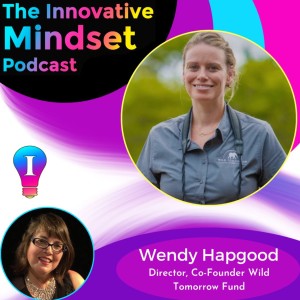
Monday Sep 13, 2021
Monday Sep 13, 2021
Wendy Hapgood Discusses the Ways the Wild Tomorrow Fund is Innovating how Animals are Saved
This episode is brought to you by Brain.fm. I love and use brain.fm every day! It combines music and neuroscience to help me focus, meditate, and even sleep! Because you listen to this show, you can get a free trial.*URL: https://brain.fm/innovativemindsetIf you love it as much as I do, you can get 20% off with this exclusive coupon code: innovativemindset
Wendy Hapgood is the co-founder and Chief Operating Officer of Wild Tomorrow Fund, a wildlife conservation charity dedicated to saving threatened and endangered wildlife and their habitats.
Wendy believes that biodiversity loss and climate change are the two most critical issues facing our planet today. In 2015 she left Wall Street behind to dedicate her life to the protection of the environment and biodiversity. She completed her Master’s Degree in Sustainability Management at Columbia University's Earth Institute where she studied climate change science and policy, researched the intersection of poverty and rhino poaching, uncovered illegal ivory in New York City, and studied new methods for financing the green economy.
Connect with Wendy
www.wildtomorrowfund.org
Instagram: www.instagram.com/wildtomorrowfund/
Facebook: www.facebook.com/wildtomorrowfund
Twitter: https://twitter.com/wildtomorrow
Episode Transcript
[00:00:00] Wendy Hapgood: But I feel like when you are really emotionally connected to this project and it was truly an emergency, I think it really pushes you to do what you think is impossible.
[00:00:15] Izolda Trakhtenberg: Hello and welcome to the innovative mindset podcast. I am. Izolda Trakhtenberg on the show. I interview peak performing innovators in the creative social impact and earth conservation spaces or working to change the world. This episode is brought to you by brain FM, brain FM combines the best of music and neuroscience to help you relax, focus, meditate, and even sleep.
[00:00:36] I love it and have been using it to write, create and do some. Deepest work because you're a listener of the show. You can get a free trial head over to brain.fm/innovative mindset. To check it out. If you decide to subscribe, you can get 20% off with the coupon code, innovative mindset, all one word, and now let's get.
[00:00:59] Hey there [00:01:00] and welcome to the innovative mindset podcast. My name is Izolda Trakhtenberg, I'm your host, and I'm really happy that you're here. And I'm also thrilled and honored to have this week's guest. And you'll understand why as soon as I tell you a little bit about her, Wendy Hapgood is the co-founder and chief operating officer of wild tomorrow fund wildlife conservation, charity, dedicated to saving, threatened, and endangered wildlife.
[00:01:22] And their habitats. And that last part is a really important part of what Wendy and her group, what they're doing when he believes a biodiversity loss and climate change are the two most critical issues facing our planet. Today in 2015, she left wall street behind to dedicate her life to the protection of the environment and biodiversity.
[00:01:41] She's singing my song. She completed her master's degree in sustainability management at Columbia university's earth Institute, where she studied climate change science and policy research, the intersection of poverty and rhino poaching uncovered illegal ivory in New York city and studied new methods of financing.
[00:01:59] The green [00:02:00] economy. Ah, Wendy, I'm so honored that you're here. Thank you so much for being here. Well, Thank you
[00:02:06] Wendy Hapgood: so much as older for having me. I'm really excited to be on your show. Wow.
[00:02:11] Izolda Trakhtenberg: I you're, you're you're living my dream life in many ways. It's exactly the kind of thing that I have always wanted to do.
[00:02:18] So I'm so glad that you took it and ran with it and are doing it right. I love you. You left wall street and you, you went, that's it. I'm changing my whole life around and I'm doing this now. I'm going to dedicate my life to saving wildlife and saving protected lands. What sparked that for you? What, what made you go?
[00:02:36] Okay. You know what? I'm making that change. I'm going to totally transform the way I live and I'm going to innovate things on my own terms. Yeah.
[00:02:43] Wendy Hapgood: I mean, it was a really big jump. And I have to say that this feeling grew within me, that sort of, it happened over years where I had the sneaking feeling of, you know, unhappiness or just dissatisfaction with, with life and what I was doing with my life.
[00:02:58] And I was successful [00:03:00] in finance. And I loved, I did like my job and the people I worked with and customers, but there was something really missing for me, which was sense of purpose. You know, I absolutely love animals and I feel like probably a lot of your listeners have pets that you just adore and it really starts there and, you know, hiking and.
[00:03:19] Starting to feel that I needed to do something about what I was seeing around me in terms of environmental destruction and climate change. And you know, people talk about ecological grief, starting to feel really sad about what was happening to the planet and knowing I wasn't helping. I really big moment was I was actually working in Tokyo, Japan, and I was there for the big earthquake, which resulted in a nuclear crisis.
[00:03:46] So being on the ground in Tokyo and living there and worrying about if my boss water was contaminated, which by the way it was and you know, it just, it was such a hosted apocalyptic scenario that I was living and [00:04:00] what really shocked me. How a lot of people weren't that concerned. They, after it went well and people from outside of Japan and friends, weren't, well, no one died, you know, after this nuclear crisis.
[00:04:13] But whereas I couldn't stop thinking about how we poisoned the earth forever and that wasn't being spoken about. And it really was a sort of symbolic moment. And I felt complicit in it as someone living in the city using, you know, that's all the power being generated for that's what the nuclear power was needed for.
[00:04:33] So I felt really complicit in this poisoning of the earth. And I felt very guilty about when I left later that year to, to, to come to New York about not being here. Both people that were, you know, refugees, internal refugees from that crisis and thinking about how we poison the land and, you know, I saw it with my own eyes up Mishima.
[00:04:53] So that really was a huge moment in my life. I was thinking, what can I do? And how can I help. [00:05:00] Being a part of the destruction. Then in New York, I met my now husband, John Stewart, who is the other co-founder of wild tomorrow fund. He was in a similar place in life. He was an advertising executive here in New York.
[00:05:13] It creative director also loved animals and was in a place like me. What next to do in life and actually make a difference and help animals in nature. So that was nice. I don't think I'm not sure I could have done it all on my own. Definitely helps to have a partner and to embark on this big journey together.
[00:05:32] So that's what we did in 2015. And then personally, I felt like I needed a little more background and I love studying. So that's, I went and did my masters at Columbia, which was Columbia university, the earth Institute. Gave me, I felt like a little more confidence and background in, in sustainability and environmental problems and climate change science and all kinds of really fascinating things.
[00:05:55] So that helps me on my journey as well, to feel ready, to really [00:06:00] switch careers and focus a hundred percent on saving the planet.
[00:06:07] Izolda Trakhtenberg: I'm taking that all in. I sometimes take these little pauses cause I'm like, I'm overwhelmed. That's amazing. So, so here you are. You've, you've made the decision and you came out of with your masters. And w I'm I'm so fascinated. What did you do next? How did you, how did you decide, you know, what we're going to buy land in South Africa and what were the steps that you took to make that start happening?
[00:06:35] I imagine the bureaucracy is monumental.
[00:06:38] Wendy Hapgood: Well, again, I think we took it step by step and when John and I started Walton were fun. But we also felt like buying land and saving habitat as much as we knew that that was the really big overarching issue in the same way that climate change kind of hangs over everything.
[00:06:55] Habitat loss also kind of drives so much of the [00:07:00] environmental loss and destruction we see today. But that, that, that would be a huge thing to start with. So when we started well, tomorrow flung, we started in 2015. Really just with small things, we were asking friends, family for $50 to buy boots for Rangers, because what we saw on the ground in kazoo, in a town, South Africa, which is where we're focused.
[00:07:23] Was that government reserves in particular were super under-resourced they're in charge of protecting incredible biodiversity, some of the last big tusks elephants in the world. Really under-resourced trying to fight the rhino poaching crisis and, you know, here's these amazing. People who very dedicated boots on the ground, but they don't have good boots.
[00:07:45] So from New York, we're like, well, what, well, we can, we can help with that. You know, or like really bad, basic things. Like they couldn't go out on patrol if the tires had punctures and of their, you know, for their patrol [00:08:00] vehicles and their budget was didn't allow them to purchase more that month, you know?
[00:08:05] So it was like a week. Fundraise for that. And we can involve people in New York who would love to, you know, it's very direct impact to say, if you give, if you can give us $50 donation, we will personally have our team on the ground, buy those boots and deliver them. So that's how we started. Nice and small step-by-step.
[00:08:27] And it was 2017 when the land kind of happened, which I say was a land emergency where. One of our partners on the ground told us about this piece of land that was up for sale and it had two offers on it from pineapple farmers. And when you know, these farmers want it to extend their existing fields of kind of fools.
[00:08:52] And if you could see a picture of it, it's just. You know that typical monoculture farming that just extends out forever in these [00:09:00] endless rows of, you know, sameness and it's terrible for biodiversity. And you know, this land that was up for sale had, had been farmed, you know, cattle and a little bit of pineapples, but it kind of being left to go wild and it had zebra on it.
[00:09:15] It had, you know, hippos that would come from the river and at nighttime feed on this land and. We went to see it and that was it. You know, our hearts were kind of stuck. We were like, we have to do something. We cannot allow this to happen. What they would do is, is if the pineapple farm was it totally clear?
[00:09:34] It, we mean to tract as a chain, pull out every single tree, run off the wildlife. I mean, turn it into that. Very does it like monoculture of, of pineapple, commercial, industrial agriculture. So we were pretty determined to do that, but you know, imagine it was over a million us dollars, the price tag, and we'd been asking for 50, a hundred dollars donations, but I think those [00:10:00] emergencies make you really step up.
[00:10:01] And we felt that we needed to try and also we know or knew that. There's a lot of wealth in New York city. And there's a lot of people who care deeply and, you know, we just needed, we knew we just needed to meet the right people and tell the story and, and kind of bring them along in this journey. And we also met with the landowner.
[00:10:24] She was an older lady living in the city, near Johannesburg. She didn't live at the farm or anything like that. This land that was her old fence. And we kind of pleaded with her. We said, you know, we're a charity. We don't have a million dollars sitting ready to make this deal happen. Can you give us time?
[00:10:43] You know, this will be your legacy too. So. Thankfully, she agreed. And she gave us five years to save, to raise all the money, to save the land. Actually that deadline's coming up next may. So we, we still have a little way to go. But in the meantime we bought another piece that was at risk, just [00:11:00] down, just nearby.
[00:11:01] So. You know, created this card or vision. You know, in the meantime we established we felt it was extremely important that the land was owned in South Africa, not by a us charity. So we set up a wall tomorrow, fund South Africa. No affiliate. So it's a registered charity in South Africa. So the land is owned locally.
[00:11:21] Yeah, so there were a lot of legal steps and meetings and learn a lot of learning along the way. But I feel like when you're really emotionally connected to this. This project and it was truly an emergency. I think it really pushes you to, to do what you think is impossible. So we're really proud that we were able to save it and then you know, start working on restoring it and rewilding it.
[00:11:48] Really exciting and super hopeful. And I think it transformed us as an organization too. And that's really now our focus. We still help other ranges in the region and we do buy boots for Rangers, [00:12:00] but the major focus now is really saving that land, protecting it, restoring it and rewilding it.
[00:12:08] Izolda Trakhtenberg: Yay. Okay. Wow.
[00:12:10] I wish I had pom-poms or something. So I could be doing a little cheer for, for everything that you just said. I'm you are, you are absolutely seeing my song. I've worked for NASA for over 20 years, doing earth science and environmental education outreach all over the world. So, so hearing from you that, that you, that that is your active.
[00:12:31] Sort of profession that, that, that, that, that, that it's possible that you can have these, make these inroads and have such an impact on a place that probably a lot of people never think about, which, you know, raising that elevating the visibility of, of the need to say. Habitat in places like South Africa is incredible.
[00:12:55] And I, I know people in South Africa who are working to educate [00:13:00] people in South Africa about that importance too. And so I'm wondering a little bit about, like you said, you made, you have this relationship with the owner of that land, which is incredible. What, what other kinds of. Innovative ways. Have you made relationships with people and government people in South Africa to make this, to make these inroads?
[00:13:22] Wendy Hapgood: It's a great question because you know, nothing is ever done alone. It really is teamwork and something that was really important. And just to give a little more background into this, this land is in a biodiversity hotspot. It's one of 32 places around the world. That's recognized for really high level.
[00:13:39] By diversity. So just this massive array of amazing life from insects to furry things, you know so it was really important to save this land is also right next door to a world, heritage wetland, UNESCO, world heritage park. So again, another great reason why this piece of land in particular, in this area, it was really important [00:14:00] to protect it.
[00:14:00] So that was. Re that we really needed kind of local support with was this legal declaration. So turning what was kind of designated as farmland into what is now officially a nature reserve. So we reached out to a local south African NGO or conservation outcomes who are experts in navigating this process.
[00:14:27] It's a Amazing initiative under the south African government, where they recognize that the state national parks can't do it alone. They need private land owners. You know, it could, could be farmers who want to protect a small piece of their land that has an endangered frog. You know, they, they want to empower Private landowners to also contribute to conservation, sort of have this framework called the biodiversity stewardship program.
[00:14:52] And we worked with conservation outcomes to kind of navigate that whole process and an amazing environmental attorney [00:15:00] who is in Durban who helped us with that. And what's really, I think, amazing about our project and what makes it stand out is it's truly collaborative. So. I mean, we had donors from a lot from New York some on the west coast in other countries give $20 towards this dream or, you know, a thousand dollars or $50,000.
[00:15:23] So it's been, you know, literally thousands of people who've made it possible to save this habitat. And then on the ground, we partnered as well with landowners who were. Like kind of next door to us. So literally sort of inside the borders would have had a little small 20 hectic piece. So, you know, to really expand habitat, it means to term, you know, dropping fences, you imagine a South Africa land, I guess like suburbia in America, it's all fenced.
[00:15:50] So just biggest squares. And so for wildlife to have a better chance at fighting back against extinction, you know, you need to really open up that habitat [00:16:00] and Save the wild space and extend the wild spaces. So we worked with our neighbors and kind of brought them along in this journey of creating a nature reserve.
[00:16:09] So this it's a collective reserve, the land that waltz Marfan's today. Two separate pieces and it's about 83% of the total. And then we have three other private landowners who, you know, they have the conservation vision too. They were excited about being a part of it and dropping their fences and opening up their land to also be habitat for wildlife.
[00:16:30] So, you know, that was a really a collective. Project and we worked through this legal process and that was declared last month, which is super exciting. So the land is officially a nature reserve now in South Africa. That's
[00:16:45] Izolda Trakhtenberg: incredible. And I, first of all, wow, again, and second of all, you said some things that I am super curious about, you said.
[00:16:57] We were you, you were talking about breaking, you [00:17:00] know, breaking defenses and, and removing them so that, so that wildlife can, and I know I've heard the same thing with like unbroken canopy cover for certain birds that they need, that they need, you know, that tree canopy cover in order to feel like this is their habitat.
[00:17:16] What. What are the species that are either most impacted or, or the ones that are in that now nature preserve, which I think is incredible, that are going to benefit the most from those kinds of fence lists areas.
[00:17:34] Wendy Hapgood: Well I would say, oh, you know, oh, wildlife benefits from. Having more space. We're a huge fan of EO Wilson, who is a very famous American biologist and his book is called half earth.
[00:17:48] And he did all of a sudden he did all the math for us, but basically if we save 80% of life on earth, you know, 80% of species on earth today, we have to. [00:18:00] Kind of protect 50% of land and Marine spaces for wildlife. If we don't do that, if we can't get to 50%, we can't say. Species, you know, we can't save 80% of species on earth, basically wildlife and animals need, especially the longer ranging ones.
[00:18:19] So the ones that really need space or the big megafauna. So elephants lions, leopards. Hyena, you know, the ones that re African wild dogs, they need a lot of protected space to range. They have bigger ranges, but wild space connected wild space. So, you know, when you talking about birds, it's the canopy.
[00:18:39] They need like a card or a green card, or to reverse these spaces that we've, we humans have basically kind of cut up old. Space on our planet and dissected it with farms and fences and housing developments. And so wildlife can't cross from a to B and they need to do that so they can [00:19:00] exchange genetic information and without that populations become essentially inbred and cannot survive long longterm.
[00:19:07] So that's why card or is, is so important and why connecting wild space. Super important. Yeah. And, and the vision for our land. So now it's a nature reserve. It's 3,200 acres which is about 1200 hectares. And I like to give people a frame of reference. That's like four times central park. So, you know, in a way it's big.
[00:19:30] In the grand scheme of things is kind of relatively small, but why it's so important is that it acts as a card or so this land that we've protected and stopped from being destroyed and joined together with neighbors and opened up wild space. It lies between two very big existing wildlife reserves.
[00:19:51] One side is the money wanna, it's a home to a very well-known. Wildlife reserve called [00:20:00] pin the private game reserve. They're amazing. When it comes to conservation, they're home to one of the most important cheetah breeding sites in South Africa. They're doing really good job. They are. WWF black rhino range expansion sites.
[00:20:13] So that means they're so good at keeping the rhinos safe that they actually they're black rhinos, which are critically endangered. They've increased in number so much so that they could give those rhinos to other reserves where they were lost and start to repopulate. Wow. Black rhinos in other reserves in Africa, they recently actually sent Jordan.
[00:20:32] With the two, I think Malawi to help repopulate giraffe. The, so they're doing an incredible job, keeping wildlife safe and being able to help, you know, other places. And then on the other side of the land that connects, you know, a, to B as a card, or is the UNESCO world heritage, you see ma mango Lisa wetland park.
[00:20:51] I mean it's name and Zulu means a place of wonder. It is a natural wonder, you know, of global significance that. [00:21:00] Incredible. It's got the biggest hippo pod in the breeding Cod in South Africa, over 500 bird species you know, and this card, or it will open up. So our long-term vision is dropping fences on both sides.
[00:21:13] So that wildlife from. The Pinta, the reserve inland the elephants, the rhinos can actually traverse through our card or to iSimangaliso and it goes all the way to the ocean. So yeah. Eons ago, you know, that little wildlife in South Africa also used to migrate the wildebeest would migrate through there.
[00:21:34] You know, this will create a path for wildlife to, to move again. And that's incredibly important in coming decades with climate change where wildlife will be. The conditions where they are, will change. They need water, they'll move to two. They need to be able to move, to find water and resources.
[00:21:53] So, you know, we're excited. That's our big, big vision. And that's why this land is so important.[00:22:00]
[00:22:02] Izolda Trakhtenberg: A
[00:22:02] Wendy Hapgood: shock to you again is older.
[00:22:03] Izolda Trakhtenberg: Yes, no, yes and no, I'm, I'm actually just full of sitting here going, I'm so grateful you're doing the work you're doing because yeah. I mean, without, without a way to move. Where they need to move in order to survive. And dare I say thrive. They will die. It's that simple.
[00:22:22] Eventually they will die. So I'm, I'm in, I'm grateful that that was the, that was the word that was coming to mind is as I was listening to you talk, and this corridor is going to is, and is going to be something that, that allows for that movement. But then you mentioned something earlier that I, that I wanted.
[00:22:44] Touch on. You said the word rewilding and what that, the stuff that you, the things that you've been talking about up to now have, have been about the animals that are already out in the wild w is rewilding something different than that. And if so, what [00:23:00] is it and how does it impact that that notion of habitat that protection?
[00:23:05] Wendy Hapgood: That's a great question. So Rewilding I have to say is probably what I love most about what we do. It's so hurtful. So it, and it can mean a lot of different things. It could mean bringing back to some people rewilding, maybe Maine bringing back long extinct animals. I mean, what we're doing is, so we save the land, we protect it, we start restoring it.
[00:23:25] And a lot of animals will make their way back naturally, but there's some bigger, usually the larger spaces. You know, they're not just going to arrive, they're still fences. So you have to literally reintroduce them. So all rewilding is really the re-introduction of native wildlife that would have existed there before, but has, you know, been gone for some time.
[00:23:49] So it's super exciting. I know when we, when we save the land, the first piece, one of our ducks. Loves giraffe. And that was her first question. When can we get dropped [00:24:00] off? And all of this is guided by ecologists and science. And yeah, we, we introduced re-introduced giraffe for the first time in 2017.
[00:24:11] It was super exciting. You see them arrive, jump out of a truck and like literally run for it. You know, I can imagine it's quite stressful to be in a truck that wild off, you know, and and then running free on their new home. And it's so powerful. It's such an inspiring image or thing to it. And also for our donors to see what we did.
[00:24:33] I like to say rewilding kind of sells itself. You know, we, we needed to do it. We needed to get this wildlife. And it's very strange for most of us that in South Africa, you need to buy. Usually those animals, you would have to buy them, which is, seems so strange to us. Like, what do you mean you can buy a giraffe and how much has the giraffe and what do you mean?
[00:24:54] You can buy a zebra and, you know, I think zebra absolutely incredible. And the idea that there is sort of a [00:25:00] market price, $350 per zebra just seems so cheap. So you know, when our donors and supporters heard that I like we'll all buy a zebra. And so that was a really cool connection for them and for us as well, too.
[00:25:15] Help fund our rewilding work. It really funded itself. And every person who donated to help us literally purchase as an individual zebra, an individual giraffe, they had the chance to name them and you can tell the difference, giraffe and zebra there, their patents are unique, like a fingerprint. So we have ID Oliver, giraffe.
[00:25:37] We have a draft ID kit. Playing spot the difference, you know, looking at the patterns and figuring out who is who. So, yeah, we have 14, actually 15 resident draft now. And over 30 zebra every year. Now we have babies born, which again is proof of this concept. You know, if you can save land and, and join it with neighboring areas and [00:26:00] re-introduce wildlife You know, nature will then start taking care of itself.
[00:26:03] And we're seeing zebra, foals being born and huge moment for us was our first baby giraffe being born on this land that would have otherwise been pineapples. So rewilding, you know, it's really is a mix of restoration, ecological restoration, and then re-introduction of wildlife. What we mean when we say rewilding.
[00:26:24] Izolda Trakhtenberg: Okay. First of all, I want to help by a zebra, right? Yes. Or a giraffe or a cheetah or whatever, whatever it is that whatever it is, because, because yes, I, I will actually, that will be my, my birthday fundraiser this year. I'm going to tell people that I want to raise money so that I can buy like two giraffe and have them be rewilding in the wild tomorrow.
[00:26:46] But no seriously, because this is one of those things where. That's not something I've. Ever thought about or known was even possible. And so again, lots of gratitude from my end, because, because it's a [00:27:00] way for people like me, who probably are never going to start their own wild tomorrow fund to, to.
[00:27:07] Participate in a way that, that you would find helpful. And that brings me to my next question. What sort of help does the wild tomorrow fund need from people, private citizens, someone who's listening to this podcast who gets fired up like I am now who wants to help? What kind of help do you.
[00:27:24] Wendy Hapgood: Well, we would love help.
[00:27:25] We still, as I mentioned, that first piece of land we still have a deadline to meet a fundraising goal to actually fund finish the purchase. That's in the next may. So we love to equate things down to kind of bite sized chunks. A one acre is about 990 us dollars. So if anyone wants to sponsor an acre, it's a, it's an amazing gift or a legacy kind of a gift to someone.
[00:27:50] Then we have also volunteer trips and I think it's super powerful for those who can and would love to join us in the field in [00:28:00] South Africa perhaps next year. We have volunteer trips, so we bring 10 people at a time over to South Africa for two weeks. And then you can. Individually apart of everything we're doing and see the region and see the wildlife and, and participate.
[00:28:15] Hands-on, it's really kind of, for those who, where conservation isn't going to be, their full-time job, you can, you know, be a part of conservation truly for, for those weeks. And, and it's really powerful. I mean, it changes people's lives. That's how In a way, how we started well, tomorrow fund was John had been volunteering in Zululand in KwaZulu-Natal South Africa.
[00:28:36] So it really changes people's lives. And we find volunteers come back to New York and they don't want to just. That's it. Thanks. I had a great holiday. They really continue on with us as supporters and keep helping. So yeah, we, we would love more support and funding and help. And I love that for a lot of our supporters.
[00:28:57] It's very personal, you know, they really feel a [00:29:00] part of what we're doing and what I find truly beautiful for those who sponsored wildlife reintroductions. It's really interesting to see what they named their animal often. It's a pit. So there's a lot of dogs that are, you know, running around in central park who have a namesake in, in Africa, but sometimes it's departed even people, which I think is very moving.
[00:29:21] You know, that idea that. Created a gift in their name. That's now a zebra running free. So yeah, we would love more help.
[00:29:30] Izolda Trakhtenberg: Oh, that's fantastic. I sign me up. I'm absolutely going to do that. And it's interesting because the, the words that, that are coming up in my head, as I'm hearing you talk are hope and connection yes.
[00:29:44] That you feel connected to. This place in South Africa, if you're in New York, if you're in LA, if you're in London, if you're in wherever and you can actually make that connection, what do you think makes those two words and, and maybe I'm totally off, [00:30:00] but what, what makes hope and connection so important in wildlife conservation and habitat restoration and the work that you're doing?
[00:30:08] I think it's sort
[00:30:08] Wendy Hapgood: of everything. I, you know, we started out as well. It being overwhelmed by. The destruction. It's very, it's easy to get depressed and feel down, you know, thinking about the planet and you know, this mass loss of. By diversity. You know, as it's called the mass extinction, the six mass extinction of life on earth, and this time it's driven by us, not by an asteroid climate change and all that grief like that.
[00:30:38] I think that sadness does help motivate people to do something, but it can also be really overwhelming. And I think what's important about hope is people need hope. I think we've seen it all the messaging about climate change, you know, I don't know. The negative messaging. You know, the warnings is really important, but I don't think it's moved people enough.
[00:30:59] I think [00:31:00] we all need to see that we can do something, you know, that your input, that you're, you know, everyone feels very small. We're like a drop in the ocean of these global challenges, but actually you can really make a difference. And if it's one zebra or coming on a volunteer trip, you know, each volunteer.
[00:31:20] Raises $2,000. That's two acres, you know, you can, you, it, it makes a real difference. And I think people feel inspired by that hope. And, you know, in some ways our projects far away from most people they're in New York, but that connection and feeling connected to the project, to the land, to those zebras.
[00:31:40] It's really important and that dream that maybe one day they'll be able to come and see for themselves. You know, I think it's really powerful. I'm more positive. I think we're, we've all had a rough year and yeah, I just think that it's a more positive and powerful message to move people, to take action.[00:32:00]
[00:32:03] Izolda Trakhtenberg: Again, I'm thinking. Wow. Yeah, I, it is true. We, the world has had a rough year and yet what's interesting to me about that is that during that time, when we were all. As many of us as could be sort of staying at home, things came back, you know, the, the, the weather changed wildlife started. There were pictures of wildlife on, you know, sort of different critters resting and relaxing in, in what were normally parks and places where you would just not expect to see wildlife.
[00:32:39] So there's, there is this there's this. The notion that I always come back to honestly was they were here first. And so for me, it's not just us making room for them. It's us. I had captain Paul Watson on my show, just on the show just a little while ago. And he was saying, you know, one of the [00:33:00] things that, that bothers him is the word stewardship.
[00:33:02] He, he doesn't think that stuartship is the way it should go. He's like we belong here. We're part of it. We're not overseers. We don't have dominion. We're part of this whole entire cycle and process. And so, so with, with the work that you're doing, it seems to me like that kind of connection goes beyond.
[00:33:19] People feeling connected. It's, it's a, it's a, it's a connection to the biome. It's a connection then to the earth. And if you can, do you have any stories of that kind of realization or that kind of, of moment of truth, if you will, for either from yourself or from your husband or from people that you've worked with,
[00:33:42] Wendy Hapgood: I'm just faint.
[00:33:42] Well, I think about that, it does, I think, bring us back to. The concept of rewilding and another way of thinking about rewilding. Rewilding ourselves, meaning reconnecting humans to nature. And exactly [00:34:00] like you're saying, and captain Paul Watson kind of a paradigm shift from seeing ourselves as having dominion and like.
[00:34:08] Power over nature to being a part of nature, more of a eco centric approach and, and restoring kind of the whole ecosystem. And that includes us too. So, and repairing that connection between ourselves to care more about nature or and to give, I see it as giving space back to nature to bird, you know, they belong.
[00:34:34] Equally as we do, we've taken so much away that they need, we need to give space back or we'll lose them all. You know, I think about where this heatwave and just the little things, the birds that died from it was too hot, you know, and, and I feel. That's all, you know, we've, we've closed that with, with our agriculture and our emissions and how climate change [00:35:00] links back to the biodiversity loss.
[00:35:02] It's all accelerating. So we really need to act now, or we will lose, you know, I, I think how devastating to not have elephants on the planet, how will you explain that to your children? And how do people explain that the animals that like grew up within their storybooks don't exist anymore? We didn't care enough.
[00:35:21] So I think rewilding, the human spirit is a big part of it. You know, for me, I think it came in steps, like rather than kind of a sudden aha moment, more of a buildup and a realization. And yeah, I th and I think going from helplessness to empowerment, you know, and knowing it's possible to restore. Some of the damage we've done and, and actually, you know, having this vision for the planet, that's 50% from nature.
[00:35:52] That's a big goal, but I think the more you are in nature, the more you appreciate it. [00:36:00] And so I would say, and I think COVID, you know, a lot of people spent time in parks and nature. Cause there was, it was such a relief in a way. A welcome response for us. And I hope that one of the positive benefits of that is more of a, of a love of nature and then desire to protect it.
[00:36:18] So I'm hoping
[00:36:23] Izolda Trakhtenberg: hope seems to be the word of the day here. And it's interesting because I know for myself, when we were during lockdown, One of the things that I needed to do was feel the sun on my face. Like I couldn't just sit in the house, so I had to be out and, and it, even if it were just to walk outside, there's a tree, there was a tree right here.
[00:36:47] Our apartment and I would walk outside and I would say hello to the tree because it, it gave me that sense of connection. And that's one of the things that it takes us back to ancient stories when people [00:37:00] were really part like knew that they were part of nature, part of the earth, part of a process of this whole biosphere.
[00:37:07] And it sounds to me like your mission. In part, at least is, is that in addition to stemming biodiversity loss is, it's kind of, have you found that that's, that that's an outcome that, that the people who are involved really get connected on that deep level?
[00:37:26] Wendy Hapgood: Yeah. Like two, something like that. Maybe weren't really into nature or conservation before.
[00:37:34] Huh? You know, come on this journey with us and then become essentially conservationists, you know, at heart. I think that's really powerful. I mean, our, one of our major donors and on the board, you know, initially he was thinking he would spend his philanthropic time on helping with poverty, which is of course a really important topic, but it was [00:38:00] his dog, you know, like he had a room.
[00:38:02] Strong connection with his pet that made him think more about wildlife. And he went on safari and his wife sort of used, like, you know, maybe you should think about, you know, working with Watson more fun. And he's been super helpful or transformative for us and the connections that he's brought. And I think about that, that he wasn't someone who thought that wildlife and habitat conservation was sort of his thing we need.
[00:38:27] Find more of those people where it's you know, they it's education and exposure or, you know, being a part of this project is very inspiring and then people get sort of caught up in it, which is great. I think we need more people to connect to nature. And is it through, I think it can be through your pet through that.
[00:38:48] So. Very personal connection between a human and an animal and seeing them as, maybe as an individual and important, and then maybe through the park and appreciating the trees [00:39:00] and what they bring for us. And then that kind of connection expands from local to, to more global issues. So yeah, we need to figure out something, it's a question I've thought about a lot.
[00:39:12] How, why do I care so deeply? You know, it has been a progression over time to the point that I would give up, you know, sort of dedicate my life to this and saving nature. And then other people, you know, they're maybe distracted or they don't care as much. How do you convince, I want to say convert, how do you inspire other people to connect more deeply to nature?
[00:39:38] So that's a big question. And I, I, I think. Being out in nature is the key and go, you know, going for those hikes or coming on a trip to South Africa, of course, super powerful and helping out with conservation, you know, really being involved. And I think it really grows from there.[00:40:00]
[00:40:03] Izolda Trakhtenberg: Yeah, I know
[00:40:04] Wendy Hapgood: poor Wendy. You're going, is she still
[00:40:06] Izolda Trakhtenberg: there? I'm not sure what's going on. I'm sorry. I'm just, I, as, as you were, as you were speaking, I was there again. I had my little metaphoric pompoms out and I was cheering you on and it's when I use, as I said, I used to work for NASA and I used to do the.
[00:40:22] Participate in these environmental education workshops where we traveled all over the world. And one of the places we traveled with South Africa and did, did a workshop and the people who came were all teachers and other educators and, and who were going to be learning about these environmental protocols so that their students could study.
[00:40:40] Local ecosystems. And so when you were asking that question, I'm like, yeah, I so need to, I do this thing called the earth lady where I go into schools and I teach about the soil and, and, and the atmosphere and the water bodies and by, and the biosphere, as far as like the actual the plants that grow up near their school so that they can get into it.
[00:40:59] And now [00:41:00] I'm like, okay, I need to obviously add an animal component. What are the animals in your local area? And. What kind of wildlife is there, what might you find? And so, and it translates up into what's out in South Africa, what's out in, in Namibia, what's, what's in central Asia. There are lots of places where we can be looking at this.
[00:41:20] And so the question that I have for you about that is your, if you could have anything you wanted for wild tomorrow fund to do what would be the, the vision, what is the big, this is what would look like. Doing what we had dreamed of.
[00:41:39] Wendy Hapgood: Was a big question. I don't ask
[00:41:41] Izolda Trakhtenberg: small questions.
[00:41:44] Wendy Hapgood: I, I can see if I think 10 years ahead or maybe, you know, we'll be, you know, we've done a lot more than we thought we could in a short amount of time.
[00:41:51] So maybe five years ahead, you know, this Cardo project in South Africa is really the first. So the dream is for that to be. [00:42:00] Completed the car or open and working as a, as a card off for wildlife connecting these two huge reserves together, 80,000 acres to 800,000 acres in connecting that green space and the elephants can migrate again and, and we'll debase, you know, that will be like a really huge achievement and a dream come true.
[00:42:20] And then, you know, of course it will. It's, it's ongoing. It's like, then the results. The vision is for it to be self-sustaining. And then the question is what's next? So, you know, I see this future where we have, you know, our it's called the Wila nature reserve in South Africa, then All the places on the planet that threatened then an immediate risk of destruction and conversion for agricultural development, where there's really threatened species and saving that land.
[00:42:51] And it kind of repeating a process to save it, protect it, restore it. Rewild it. I mean, it could be mad, I guess. Yeah, it could be. I read about [00:43:00] place in Philadelphia, super important habitat for fireflies and without this habitat. Incredible spectacle. One exists in the United States would be incredible.
[00:43:11] You know, just having, being able to.
[00:43:17] Show you what's possible with restaurants. That would be my dream and
[00:43:22] Izolda Trakhtenberg: bingo. I love it to show what's possible with restoration. I think that's that's. I think that's great. So first of all, Wendy, you're not getting rid of me that easily. So totally going to start getting people to, to sponsor zebras and giraffes.
[00:43:36] That's going to be wonderful. Absolutely. I'm gonna, I'm gonna, I'm gonna see what I can do. And I also believe in starting them while they're young. So we're going to get kids on board.
[00:43:45] Wendy Hapgood: We had some kindergartners, did some, made some slime and sold slime and rice. Like I think it was $400. So amazing. People have little big, you know, it's really amazing what people can do and they really want to, [00:44:00] so, yeah.
[00:44:00] Izolda Trakhtenberg: And, and, and also, I mean, one of the things that, that we, that I've sort of really learned in this last hour of chatting with you is that.
[00:44:08] There are things I didn't know were possible. And so now that I know that they're possible, and now that if you're listening to this episode, now that you know, they're possible, the call has been made, take, take up the banner and get Ranger's shoes or something like that, or, or sponsor zebra. I think that those are the kinds of things that we can be doing that we didn't, I didn't realize that it could be done.
[00:44:27] So I'm really grateful to you, Wendy, for sharing all that. And if someone wants to get involved, how do they find you? Where, where can they find out about the wild tomorrow fund to get involved, to sponsor a zebra, to name the Seabrook? I would name a zebra Kimba after my beloved cat. I know that I would, but how would they do
[00:44:47] Wendy Hapgood: that?
[00:44:48] Okay. Well, for them. Get in touch or find out more about what we do that can head to our website, which is well tomorrow fund.org. You'll see there there's stories and [00:45:00] also volunteer menu. So you can look at, they can look at, you know, what trips we have coming up. Our animals sponsorships are more sort of direct because we have to be actually sort of reintroducing more or.
[00:45:14] W each year we have zebra born, for example. So you can actually sponsor babies either instead of actually not needing to purchase some right now, because they're kind of rewilding themselves. There will come a time where we need to buy, purchase more wildlife. So yeah, just, there was a contact us on the website at the bottom and.
[00:45:34] Email will come to me and to John and we'd love to be in touch. And yeah, we, we love at are a lot of us supporters say they, when they talk about the work of Baltimore fund, they say we did this. So it's really, truly is a community it's very personal. I like to say as well as one degree of separation between, you know, you, the donor and the future.
[00:45:56] Because there is a sort of between sphere and then yeah, we're, you [00:46:00] know, in a way we're, we're small team doing big things and we're really proud of what we've been able to do. And so it is quite personal and yeah, we welcome. We love meeting new people. We need to meet new people. So please reach out.
[00:46:12] We'd love to hear from you. And everybody can help from a kindergartner to a high school kid to, you know, a retiree. So please. Well to help the planet. So hope you'll join us.
[00:46:24] Izolda Trakhtenberg: Absolutely. Well, I'm going to put all of that information in the show notes and Wendy, I know that you have to run, but I do have one question that I ask everybody who comes on the show and it's a silly question, but I find that it yields some very interesting results in the question.
[00:46:37] Is this, if you had an airplane that could sky write anything for the whole world to see, what would you say?
[00:46:46] Wendy Hapgood: Ooh, that's a love. That's an awesome question. I would say.
[00:46:51] Izolda Trakhtenberg: Hmm.
[00:46:54] Wendy Hapgood: Love nature. I don't know. I it's about moving people to really care. So rewild your hot, [00:47:00] something like that. And then people have to think, what does that mean?
[00:47:02] And then go actually read what does rewilding mean? And then come on board with us. So pretty wild it's rewild and leave it. And then people have to be like, what on earth?
[00:47:14] Izolda Trakhtenberg: And so you do. At wild tomorrow.fun.org. Right? So that's right. Absolutely. Well, Wendy, thank you so much. What a phenomenal conversation.
[00:47:26] I'm so grateful that you were on the show. I really appreciate you taking
[00:47:29] Wendy Hapgood: the time. Thank you so much to Zelda for having me in and giving us this opportunity to tell the story while it's more fun and rewilding to all your listeners. It was such a pleasure. And thank you so much. My
[00:47:40] Izolda Trakhtenberg: pleasure. If you've listened to this episode, go get involved with wild tomorrow fund.
[00:47:45] Find a way to volunteer. Find a way to sponsor a baby zebra. How could you not want to sponsor a baby zebra? Come on. This is his older Trakhtenberg for the innovative mindset podcast, reminding you to listen, learn, laugh, and love a whole lot.[00:48:00]
[00:48:03] Thanks so much for joining me today. I really appreciate you being here. Please subscribe to the podcast if you're new and if you like what you're hearing, please review it and rate it and let other people. And if you'd like to be a sponsor of the show, I'd love to meet you on patrion.com/innovative mindset.
[00:48:21] I also have lots of exclusive goodies to share just with the show supporters there today's episode was produced by Izolda Trakhtenberg and his copyright 2020. As always, please remember, this is for educational and entertainment purposes. Only past performance does not guarantee future results, although we can always hope until next time, keep living in your innovative minds.
* I am a Brain.fm affiliate. If you purchase it through the above links and take the 20% off, I’ll get a small commission. And please remember, I’ll never recommend a product or service I don’t absolutely love!
Monday Sep 06, 2021
Monday Sep 06, 2021
Meridith Grundei, Public Speaking and Presentation Skills Coach, Actor, Director, and Improviser.
This episode is brought to you by Brain.fm. I love and use brain.fm every day! It combines music and neuroscience to help me focus, meditate, and even sleep! Because you listen to this show, you can get a free trial.*
URL: https://brain.fm/innovativemindset
If you love it as much as I do, you can get 20% off with this exclusive coupon code: innovativemindset
As an award-winning theatre director, producer, and former Second City improv teacher, Meridith Grundei recognized the similarities between performing on stage every night and presenting to clients/colleagues every day, but the latter didn’t have the right tools to bring their stories to life. So she decided to do something about it.
Eleven years and some change later, Grundei Coaching has helped thousands of individuals and corporations
around the world achieve career growth and success. Meridith specializes in presentation and public speaking consultation, individual training and development, and creative team solutions using applied improvisational theatre techniques to build trust, empathy, and out-of-the-box thinking.
Connect with Meridith
www.grundeicoaching.com and www.meridithgrundei.com
Insta: https://www.instagram.com/thisimprovisedlife/ and https://www.instagram.com/meridithgrundeicoaching/
LinkedIn: https://www.linkedin.com/in/meridith/
Twitter: https://twitter.com/GrundeiCoaching
Meridith Grundei Episode Transcript
[00:00:00] Meridith Grundei: First off. I was just want to say the collective whole is super important. I think in order for transformation to happen and to see the actual results.
[00:00:14] Izolda Trakhtenberg: Hello and welcome to the innovative mindset podcast. Izolda Trakhtenberg on the show. I interview peak performing innovators in the creative social impact and earth conservation spaces or working to change the world. This episode is brought to you by brain FM, brain FM combines the best of music and neuroscience to help you relax, focus, meditate, and even sleep.
[00:00:35] I love it and have been using it to write, create and do some. Deepest work because you're a listener of the show. You can get a free trial head over to brain.fm/innovative mindset. To check it out. If you decide to subscribe, you can get 20% off with the coupon code, innovative mindset, all one word. And now let's get to the show.
[00:00:58] Oh, my goodness. We've [00:01:00] just been laughing so hard. Hi, this is the Trakhtenberg with the innovative mindset podcast and I bid you welcome. I'm super excited about this week's guest. You can tell Meredith is already laughing. We're both cracking up, but you need to, you need to hear about Meredith grin, die, check it out.
[00:01:18] And I did I say it right? Or as a guy I dug around di see, Brandise we've just had. Fabulous conversation about name changing when you are, when you have the opportunity to do so. And Gren di is, is the, is the name that is the right name and I'm going to say it correctly. So here we go. Meredith Grundei dog gone.
[00:01:38] It I'm going to get it right. As eventually as an award winning theater director, producer, and former second city improv teacher Meredith recognize the similarities between performing on stage every night and presenting to clients and colleagues. But the latter didn't have the right tools to bring their stories to life.
[00:01:56] So she decided to do something about it. You know, this is catnip [00:02:00] to me. If you're, if you're a longtime listener of this show, you know how much I love what this is and what Meredith does so 11 years and some change later. Growing dye coaching has helped thousands of individuals and corporations around the world achieve career growth and success.
[00:02:15] Meredith specializes in presentation and public speaking consultation, individual training and development and creative team solutions using applied improv, improvisational theater techniques to build trust, empathy, and out of the box thing. Wow, this is, this is so exciting for me because we're going to get really deep into some of this.
[00:02:34] I'm so thrilled to have you here. Meredith. Welcome.
[00:02:37] Meridith Grundei: Thank you. I am so happy to be here. This is I make, so I'm just giddy on the inside about the conversation that is about to emerge. Certainly
[00:02:46] Izolda Trakhtenberg: hope so, unless, unless my cat comes in like the, like he did the other day and jumps on the microphone and everything goes all over the place.
[00:02:54] We'll improvise. There you go. You'll improvise. I took very few improv classes in theater. I'll I'll I'll [00:03:00] try and yes, yes, yes. And you as much as possible. I love it. So, so talk to me a little bit about that. What, how did you get from. Theater director, producer, improv, teacher, professor, all of these things too.
[00:03:15] Now you help people and companies get their message out. How did that come about?
[00:03:21] Meridith Grundei: That's a really great question. It's organically come about over time. I have always seen myself and as a multi-passionate human and I remember the very first time someone said to me, I believe it was in high school, you're a Jack of all trades, but she said it in kind of a negative way.
[00:03:41] And you know, I'm, you know, that Jack of all trades master of none kind of way. And, and at first I thought, this is my handicap. I have all these passions because I was dancing. I was acting, but I loved organizing. I worked in the career center. I just have always [00:04:00] loved these things. My dad was an entrepreneur, so he, he was always, I was always inspired by him and always curious about exactly what he did.
[00:04:07] He also had a job that I could never understand it, but he did these other things that. We're just exciting. I was like, wow, you're opening a dry cleaners. And now you're opening a virtual reality games place. And now you're so I was always just really an all of that. And then when I moved to San Francisco, when I graduated from college and I started performing with an improv group called ed nauseum, and I'd taken at that time, maybe one improv class in high school.
[00:04:36] And I met these, this group of people through bats and I had taken a couple courses there and I just started to love, I just fell in love with it immediately, and then ended up in a sketch comedy group called old man McGinty. And we'd do this crazy, like very absurdist kind of sketch comedy. It was this really dynamic group.
[00:04:59] [00:05:00] Performers that had these wonderful like dance ability writers and a lot of experimental theater, performers, clowns, so forth. And so we put this group together and one of our members was like, I'm moving to Chicago, I'm going to study in Providence. Like, Ooh, I want to go to Chicago. I want to study improv.
[00:05:19] So I'm like, let's do it. And at that time I had just gotten married and we. Jet set it to Chicago. And I started interning my way through IO, improv, Olympic and the next thing I know, I am then teaching at the second city and I'm helping start their youth program there. And cause one of the core faculty members was co-teaching a class with me that was teaching kids how to create their own.
[00:05:49] And so I started that. I started working at the second city and it was a wonderful experience for me. And I was always inspired by the people that I was working with. [00:06:00] And for, and I did a couple at that time, it was called Bisco gigs teaching to more corporate folk, if you will, and helping them. Find ways to work better and more efficiently as teams using improvisation as a tool to do that.
[00:06:18] And then from there, this executive coach, Dennis Schroder pulled me in and was like, I want you to work with me and all the time. So I was like, okay. And I do the Birkman assessment, which is a psychological assessment, similar to disc and Myers-Briggs and he said, This is how I work as an executive coach with these teams.
[00:06:36] And then I want you to come in and let's use applied improv as a way to show these personal things different personality types and how they can work together as an asset. And better communicate with each other as a team and trust and all of that. And so for several years, and I actually am still in touch with Dennis and do the occasional work with him.
[00:06:57] I, I, I just ended up [00:07:00] doing that work and loving it because I saw the opportunities to help people not only engage with each other, but also find a safe and brave space to share story. I, it was astounding to me. How many organizations did not provide the space, whether that was conscious or unconscious for people to actually share what is like what's going on in their lives.
[00:07:29] What's what, they're, what they don't feel that they can bring into the workspace, right? Because you leave, you leave your personal life at home. And I'll, I'll never forget this one experience where I was working with a team of manufacturing team up in upstate New York in Rochester, and I have this Augusta ball exercise and Augusta ball is a Brazilian practitioner who brought he's no longer with us, but he, he used improv and theater [00:08:00] as a tool to bring community together and people of different backgrounds and ethnicities and so forth.
[00:08:06] And. This one exercise is called and it made me think. And so what you do is each person is given one minute to tell a story about something that's happened in their life and in relatively recent, right? A relatively recent timeframe. So in last week or last month, and you punctuate it, you tell your story and then you punctuate it with, and it made me think, and then you allow space to sit.
[00:08:32] And so you allow that story to land on the listeners. And this one, gentlemen, we come to this one man in the circle and he shares his story about his son. Who's been going through chemotherapy. No one on that team knew no one. And that to me blew my mind like this poor man has been holding this. Painful thing and [00:09:00] expected to work and expected to show up and to do his job.
[00:09:05] And that was. A moment for me where I went, I, this is important. This is what I am doing. This work, not, I, more people need to be doing this work. More people need to be going into organizations and using these tools of the theater and of improv to help open up the hearts and the minds of the individuals that are doing this work.
[00:09:29] I just got the bug and I just kept doing it from there on, and I started doing it on my own with Meredith granddad coaching. And within that, I was also. Invited by Dennis I'll give him credit. He was like, I've got this CEO, please help him with his presentation. He has to give at this big conference, I've got this guy over here who needs to level up his executive presence.
[00:09:49] I've got this person over here and I would yes. And things. And I think it's a Tina Fey quote, but she was like say yes and figure out the rest later, which is kind of what [00:10:00] I felt like I was doing. And it's led me to. This wonderfully PA this wonderful path that I'm on. And I haven't looked back and I don't think I will.
[00:10:10] I mean, I, I, what was it? What am I trying to say here? That was a rough drafted thought. Anyway. That's, that's how I got here.
[00:10:19] Izolda Trakhtenberg: Wow. Wow. Wow. Wow. That's fantastic. And so much of what you said. To me, what I heard it it's I heard courage. It was, that was one of the things that, that I, it seems like you help people bring out, you know, have sort of pull themselves into themselves, but then have the courage to express to actually say what's on their mind or do what they want to do and be more of themselves, especially in corporate situations.
[00:10:56] And the first thing that we started talking about that you mentioned was [00:11:00] improv. And I would love it because I have a whole list of questions based on what you just said. There's a ton. And what, what is improv? What, what is improvisational theater? What is improv? Because people's bandy the term around, but I'm not sure how many people, I actually know what it means, what it is and what it can do for you.
[00:11:21] Meridith Grundei: That's a great question. So improv, I will start off with the one thing that people most commonly can relate to when I describe it in front of a group, which is, I always referenced, like, have you seen whose line is it anyway? And then people, I see a bunch of people nodding up and down and I'm nodding up and down as I'm sharing this story with you right now.
[00:11:43] So that would be the first context to do it. Yeah. Whose line is it? Anyway, they have a structure, a game, if you will. And within that game. So the structure are the quote unquote and I'm doing air quotes are the rules, right? [00:12:00] And you make things up on the spot within that structure though. So the structure gives you some guidelines.
[00:12:06] So that's what I do is I teach people. Games, these exercises, these activities. However you want to frame that that best fits for you. I give them these games that they work within so that they can see. The magic that happens afterwards. Right. And I give them other tools, like the foundation of improvisation is this idea of yes.
[00:12:31] And so when we, yes, and somebody's idea, we can further the storyline. We can add to the idea we can. Find that moment of agreement. Right? And so with that tool and within these structures, these games that I give them, we're able to make discoveries about ourselves within the context of the game. So for example, to me, the applied improv piece is the [00:13:00] magic is in the debrief.
[00:13:01] Right. So what did you notice come up for you when you were put in this situation? What feelings. We're in your body when this happened. What did you notice in your communication when this happened? What is it that you would do differently next time? If we were to do this exercise again, where you making eye contact were you breathing?
[00:13:25] Oftentimes when we feel stressed out or anxiety, we hold our breath, right? Do these exercises up on our feet. So it's a full body experience off, we spend so much time sitting down that I think that physical engagement that sematic kinesthetic engagement is incredibly important as well. So that I hope answers the question, what is improv, and it's also an amazing opportunity to get people to just laugh together.
[00:13:57] You're laughing together. You're getting amazing [00:14:00] insights on your own communication skills. You're building trust. And there are no real world consequences within the containers. So we're not going to like some multi-billion dollar organization is not going to implode because we're doing improv game.
[00:14:16] Izolda Trakhtenberg: I certainly hope not.
[00:14:18] That would be one heck of an improv game if you do that.
[00:14:21] Meridith Grundei: Wow. Wow.
[00:14:24] Izolda Trakhtenberg: And you rubbed your hands together right there. You did. I did
[00:14:27] Meridith Grundei: put finger thing.
[00:14:30] Izolda Trakhtenberg: So that's, that's a, that's a fabulous, that's a fabulous encapsulation of what improv is and something that, that sparked from you when you said that was the questions that you asked the debrief, as you put it.
[00:14:42] If you're calling on people and correct me if I'm wrong here, it seems like you're calling on people to have a, a deeper awareness of self of who they are, of where they are of what's happening inside them. And often we don't, we don't, we tend to think outwardly, you know, we tend to [00:15:00] go, oh, this is, this is on my to-do list today.
[00:15:03] This is, these are the things that I have to get done. This is the work that I have to do, but we don't tend to spend a lot of time. Internally and going, what about the work I'm doing on myself? So it sounds like there's an invitation inherent in what you're doing for people to work on themselves. And I'm wondering, how does, how does that work for you?
[00:15:22] How do you, how do you employ that? And if you do specifically and what are the results that you get at the end of the process?
[00:15:32] Meridith Grundei: Oh, that's a, that's a great question. Yeah. I think it's the way that I guide people through things that I give them the invitation to drop in and think in those ways. And I do always call it an invitation.
[00:15:46] I don't try to force things upon people. I think it's important for people to make their own discoveries. And so I, I repeat myself a lot in the debrief. So touch in, you know, [00:16:00] I have an Allen Ginsburg quote that I like to use often, which is notice what you notice. And then I feel like the more that I can repeat back, the things that I'm inviting people to do, whether they make those discoveries in the room or on the zoom room, if you will, these days, but in the room with me.
[00:16:19] Great. But they may not make those discoveries until a month later when they're sitting at their desk. And something happens that triggers a response or a strong emotion, and then they can reflect back to that exercise. So I think that there's time and space for integration with these things and the repetition can help with that.
[00:16:41] I hope that answered the first part of your question. Can you repeat the second part of your question? Sure.
[00:16:45] Izolda Trakhtenberg: The, the second part was actually really about. Like you said they might notice months later. I, I recently noticed something that I did in a theater class in college many, many years ago, and sort [00:17:00] of got an aha moment from that.
[00:17:01] And I'm wondering when you go through the process in the moment, if you have any stories about those results so that you can see them. So that they're like the, the gentlemen whose whose son had, who was going through chemo. The people there were changed, right? The results were pretty immediate by hearing his story.
[00:17:21] And I'm wondering, I guess I'm, I'm being a little bit, you know, I'm being a little shameless cause I'm like, tell me, tell me the results, Meredith good stuff, you know, but
[00:17:30] Meridith Grundei: fair enough. You know, but,
[00:17:32] Izolda Trakhtenberg: but it's, it's because I think we don't spend a lot of time in that space. Wow, this, this has changed me. And let me spend a little time figuring out how it has changed me.
[00:17:44] So in those, in those spaces, when you're cause you're holding space for people to be themselves, which I love what, what are the profound results, small and large in those processes?
[00:17:57] Meridith Grundei: Yeah, that's a really great question. I think there are [00:18:00] multiple ones. One is how you work collectively as a team. And that's why I think the work is important to do.
[00:18:07] And I think that's why leadership needs to show up too, you know, because oftentimes I've noticed that leadership will set something up for their team management will and then management won't be there. So all of these people have learned their team has learned this like great news. Tools and then management isn't there.
[00:18:25] So that first off I was just wanting to say the collective whole is super important. I think in order for a transformation to happen and to see the actual results For me, it's about, for example, seeing the results, how do you organize a meeting? Right. So because of some of the tools in the, in the debrief, we find out where some of the pain points are and how they can be solved through those exercises.
[00:18:51] So if you're in an it, for example, in an ideation phase, or you're a part of an agile or scrum group or your, whatever the industry [00:19:00] might be, and you're in that first infant stages of creating. When everyone in the group has this idea of what yes. And is and how it can be applicable, it shifts things.
[00:19:11] Let's get all the ideas up on the whiteboard or on the post-it notes. And let's see what emerges without saying no. There will be room for no later there will be room for, I see this. And can we do this later? Just get all the ideas out there because what that also does is it creates a room of inclusivity.
[00:19:31] So all voices get to be heard. Nobody is being cut off. Nobody is being told. No all ideas are good ideas at that moment in time, because what happens is in ideation in brainstorming and creativity. We want to it's so often that we want to look at, what's not working first and I'm a big fan of looking at like, well, let's look at what is working and let's get it all out there because whatever, if, if this, if you have an [00:20:00] instant to a, no, that no actually might inspire the idea that does work.
[00:20:05] Does that make sense? Absolutely.
[00:20:07] Izolda Trakhtenberg: No, it absolutely. It does. And it's interesting because. As I'm listening to you, I'm going the people who are actually doing the work, nobody knows their job better than they do. You know, nobody knows what you do better than you do. So if you're going to ask for ideas and make the caveat that there are no bad ones, just throw them out.
[00:20:30] Some of those people have never been heard from before. And it sounds like you're giving them the, the, the stage, if you will, the opportunity. And then they can. Present their own. I do something similar with some of the workshops I do giving space so that people who aren't often heard from can, can have their say.
[00:20:50] And I love what you said about leadership being invited and almost mandatory show up folks, because that presents an opportunity for [00:21:00] them to, to see some of those ideas that they otherwise might not see. Right.
[00:21:06] Meridith Grundei: Yeah, exactly. And they also get to see the dynamics of the. They get to see how people work together in these different situations that they may not be able to see in the day-to-day grind of the work.
[00:21:20] Izolda Trakhtenberg: Yeah, absolutely. And that's so interesting. So talk to me about team dynamics. What is that? What is team dynamics? You mentioned it a couple of times and I'd love to hear what your thoughts are on exactly what it is and how we can use it specifically, because this is the innovative mindset podcast. How can we use it to innovate?
[00:21:37] How can we use it to think.
[00:21:40] Meridith Grundei: Yeah. Well, the first place that I go to is using each other's different sets of skills as an asset. Right. And so that we look at, so I'll just bring it back to like what Dennis works with with the different personality types. We all have different ways of seeing and approaching an idea or a problem [00:22:00] solving and finding a solution to something.
[00:22:03] Right. My husband and I could not be more different in how we problem solve something, but it's how we choose to work together and communicate in order to solve that problem. And so what I really appreciate about using these, like I said before, they have no real world what's the word I'm looking for?
[00:22:23] No consequences. Thank you. Ding, ding, ding. They have no real world consequences, right? But what it does is it really helps bring to the surface, these different personality types, and rather getting frustrated with that person who might be more on the execution thing and, or getting more, really uptight around that person.
[00:22:42] The out of the box, creative thinker, it's like, how do you take those two different personality types and put them together so that they can actually work efficiently and effectively together and see each other's different types of personality types as an asset to the, to solving a problem. So when I talk about team [00:23:00] dynamics, I mean that, to me, it's about, yes, and-ing each other, seeing each other and ourselves.
[00:23:05] Brilliance and how they can all fit together so that we can be effective and efficient with our day to day work and tasks and show each other mutual respect and honor each other's differences.
[00:23:19] Izolda Trakhtenberg: I love that. You just said that last part because that's one of the things that I find happens is that. That can sometimes be missing that, that, that respecting that other people think differently and that not only is it okay, but it's to be celebrated because they can come at it from a perspective.
[00:23:35] Yeah. You may not have seen. So let me ask you a strange question and maybe it's not a strange question. I imagine there are times when you're doing one of these workshops that you meet resistance from the people and all
[00:23:51] Meridith Grundei: that die. Yeah. I, I, I
[00:23:54] Izolda Trakhtenberg: I'm like, yeah, this is kind of a
[00:23:55] Meridith Grundei: silly question. Not a strange question at all.
[00:23:58] Izolda Trakhtenberg: And so, you know, [00:24:00] because some people given the room to play, maybe of playing, if you see what I mean. So I'm wondering what, when you meet resistance, how. What are the innovative ways that you encourage invite, inspire people to, to let go of the fear a little, or maybe to push through the fear? I'm not sure what, what, what your way is in order to actually get the best out of the expense.
[00:24:29] Meridith Grundei: Yeah, I think it's a wonderful question. And I will say the most resistant resistance that I am met with is usually at the very beginning, I walk into the room and I oftentimes get the, who is this person what's happening? Why are we forced to do this? Like, you can just feel the energy in the room is palpable.
[00:24:47] And and it's not all the time. I mean, sometimes you've got the one person in the room that's like, I love improv. Like, thank God for you being in the room. Right. And And so what happens is pretty [00:25:00] quickly, I have everyone gathered in a circle. I have them push their chairs back and, you know, if I can get into the room to arrange it the way that I would like it to, to be the best learning experience possible for everyone, I do that sometimes I can't do that.
[00:25:13] So it's a little bit of a rearranging, right. And in that moment, I'm warming myself up. I'm introducing myself to people. I'm giving them eye contact. I'm making sure they know that I'm not as scary. I don't look scary to, to begin with. I'm like, Three and I weigh a hundred pounds, so they're scared of me.
[00:25:28] That's a bigger issue. But so then I gather people do a circle and we S we do, you know, some gradual warmups and and I get to know who they are. They get to know me. And what happens is quite. It's beautiful. I will say it's just beautiful. Is that somehow within that timeframe within the first 30 minutes of being there, I have given them permission to play and it's as if no one else has given them that permission in a really long [00:26:00] time.
[00:26:01] And I can't tell you it's the most wonderful, beautiful shift that I have ever experienced. Is with people who are non-performers, who have no idea what they're about to get into. And then all of a sudden they understand it and they're like, oh my God, I get to just play for three hours. Awesome. And so that is usually I will say That's most of my experiences, every so often you'll get the one person it's usually one person and I hate to say it, but it's usually a guy who has a lot of resistance.
[00:26:37] And so I, there it's a fine balance, right? Because you don't want that person to take up air time for everybody else. You don't want to, so it's a delicate balance of agreement and saying, let's take a risk here and let's look at your own stuff. And oftentimes it, [00:27:00] it works out. Okay. Right. And I'm a big fan of doing, I touch back into and I, and I noticed these things and I feel.
[00:27:07] I might send an email and do a check-in with that person later. Or I might check in with their management later because I do care and I want to know where the resistance is living in the body and, or in the mind and or with past experiences. Because even though the work is playful, even though we are having a good time with each other, it can still bring up stuff for people.
[00:27:28] It just. Sure. We're humans. So with, with lots of layers and somehow within that layers of that onion, there was one that I really, I got out with some people, so putting care and love into it.
[00:27:44] Izolda Trakhtenberg: I love again, I love that you said that I'm going to just say that after everything you say, and it's interesting what you were talking about.
[00:27:52] Like every once in a while, the person with real resistance, I find that digging deeper means that they are. That they're a [00:28:00] frustrated performer or that they were told that they shouldn't speak or should, or, or don't have talent or skills in the very thing that they want to do, which is be out there with, with the bad cells.
[00:28:11] And so there's this, there's this confidence piece and there's a, there's a vulnerability piece to that, to what I'm hearing you talk about that I would love to explore for a minute. What I know you've already mentioned that. Lots of vulnerability, even though we're playing. And even though we're having a good time, there's, there's a real vulnerability to, to stepping into the limelight.
[00:28:34] Well, and when, when someone does, I'm sure that you've had lots of stories about that, but when they do that, how does, how do you handle it and how does the rest of the group. Transform because it's not just the individual person that transforms. I imagine the rest of the group transforms also when someone is really vulnerable.
[00:28:58] Yeah. [00:29:00]
[00:29:01] Meridith Grundei: That's a really good question. I'm trying to think. Well, I keep going back to that one story. There's a couple of stories that have popped into my head. I think. In those moments for me, I think each situation is different. So I do adapt according to each of the situations. And I might have, for example, a game that follows the exercise that we just did. And for me as the coach, as the facilitator, it's important to know what to let go of for the betterment of the whole.
[00:29:32] And so there have been a couple times where I've had to let go of my agenda. So that I could best meet the group with where they're at. And and I'm not overly transparent about that. I just go with the flow and then we, we spend our attention in that place. And then there's an opportunity for further dialogue.
[00:29:55] And I, I always do feel that it is the way that the rules of engagement that are set up before. Right. [00:30:00] Are helpful in facilitating this as well, because I come from a place of, I want to hear, I want to hear from you what feels true. I want to hear what's working. And then I want to hear where you have curiosities around this feeling or within this exercise that we just had that came up for you.
[00:30:20] The feelings that you have are completely valid and they're yours. There nobody else's so let's all figure this out together and let's find a way to communicate this that feels safe. And so I, I hope that answered your question. Did it?
[00:30:39] Izolda Trakhtenberg: Yes, it did. Good. Funny about the show is that the, a lot of the feedback that I get from the shows that wow, these conversations go so deep and we do so.
[00:30:52] Yes, you answered.
[00:30:54] Meridith Grundei: Well, you know, I had another story that popped in my head as it was a disaster story where we, it was a [00:31:00] huge organization and the person who organized it was going through a lot of stuff. And so it was not organized very, very well at all. And I ha I was met with serious resistance and then the, or the, I heard the client was not happy.
[00:31:17] And so in that moment, I literally. Everything rallied the troops and was like, we, because there was six of us on this gig and I was responsible for having brought in like five of the six of us, all of us. I was responsible for bringing in these people. And I was like, we need to shift gears. And we had to do a whole, like, we changed the whole curriculum, the whole thing, everything because of what, what happened.
[00:31:43] And I think that's. You know, I think that's something improv has taught me is to be adaptable, be in the moment, be a problem solver. If you dig in your heels, it's not because you had one thing planned and it's not working out the way that you think it's going to work out. Then [00:32:00] you're going to be in a lot of trees.
[00:32:01] A lot. And so I have learned so often you just got to sometimes say, yep, you're right. This isn't working. And now we're going to figure out a new solution to this. And I am so grateful for that tool.
[00:32:17] Izolda Trakhtenberg: And it's a great tool because if you are not adaptable, you're pushing up a really heavy Boulder
[00:32:22] Meridith Grundei: up there.
[00:32:23] Oh my God. It's some people think they're adaptable. And I got to say, you're not, I'm so sorry, but you're not being there with them all. Yeah.
[00:32:30] Izolda Trakhtenberg: And that, that can be a tough, a tough nut to swallow. Right. So, so I, you know, it's interesting, we've been talking a lot about courage and talking about confidence and in its relationship to, to the teams that you work with within, within a presentation.
[00:32:48] And I'm wondering if there's something you, you mentioned way earlier that you got drawn to helping people be themselves. In certain kinds of [00:33:00] situations in whether it's corporate or not, but you're, you, you said you were drawn to helping people and I'm wondering what, what draws you to helping people become better at not just the, oh, we're working well as a team, but at public speaking and presenting and being up in front of others and telling their own story, like what, what draws you about that and how do you do that?
[00:33:25] Meridith Grundei: Hmm. Thank you. I have always just maybe it's I w I went to church camp a lot as a kid, and then I ended up becoming a camp counselor and all of these things. And I feel like I just, from a very young age, loved teaching and loved helping other people find their voices. And I feel like, you know, partly it's because, you know, In my childhood.
[00:33:52] And when I was more, in my teenage years, I have a father who had PTSD and I found it tremendously difficult to have a [00:34:00] voice in my family to be heard. And so I think that I am very sensitive to other people who also struggle with being heard in the way they want to. And so I would say that would probably be the core of the root of it.
[00:34:14] And I am a huge advocate of mentorship. I, I love. I just feel like it's so important, especially in this day and age too, to help lift the voices of others, to tell them that yes, they can achieve whatever they want to achieve, that they can, that they can they can overcome adversity. And that just feels, it just lights me up.
[00:34:38] It just, it really does. I guess that's the best answer I have for you is I can't imagine myself doing anything else, but working with people I'm I am quite the empath, like some too, sometimes to a fault right. Where I'm like, I overthink things, [00:35:00] but I really, I do care about people. I really do care about their experiences and making sure that they have a voice in the room and in this world,
[00:35:09] Izolda Trakhtenberg: And again, I love that.
[00:35:11] See this, I've just kept saying that. And I, and I am not at all surprised that you're an empath and being able to do that, being so able to be sensitive to the place where other people are, what they're feeling, what they're, what they're perhaps thinking all of that. It changes how you relate to them. And if someone.
[00:35:36] A real fear. Like I used to have a phobia, not, not that, not that you can tell now, since I'm all over the place, as far as speaking, but I used to have a real phobia of public speaking from learning English as a fourth language and being terrified. And I, I worked through it. I overcame it and now I'm out there presenting all the time and I'm actually grateful to that time.
[00:35:59] It [00:36:00] helped me understand what other people are going through when they're afraid. And so when you're, when you're coaching someone to improve their skills at presenting, or if they have a presentation that they have to do, and they're terrified, what do you do to help them?
[00:36:19] Meridith Grundei: Yes. Well, I, I first, I always start with where they're at and where they wanna go. And how they want to be seen. And. I am. My philosophy is to give as many tools as I possibly can, because I don't think it's a one size fits all for everybody. I think that with as many tools as I can possibly give them, they can find what works best for them.
[00:36:45] Right? So the tools that I will provide science, our breathing exercises, physical exercises, because the mind body connection is incredibly important. The heart centered mind. The connection [00:37:00] is important. I give them different tools on how to prepare, right? How to practice. Cause there's more than one way to practice.
[00:37:10] There is no set acronym. That's going to teach you how to become an amazing person pro you know rehearsal. Is that even a word? I'm sure it's true today. It is. And so. I just feel that what I have found over time is that people would tell me, this is how you do it. This is how it's done. And then I would go back like, as an actor, I would get all of these, this input on how I was supposed to practice or how I was supposed to memorize my lines or how I was supposed to, how I was supposed to do this, do this, do this.
[00:37:41] And I'd noticed that no one ever gave me permission to sit back and try to figure out what worked for me. Right because everyone has an opinion, everyone's opinion is going to be different from the last person's opinion. That's just the way it is. So you really giving that permission for [00:38:00] people to find what works for them and giving them enough tools to be able to do that.
[00:38:10] Izolda Trakhtenberg: I'm taking it in for a second. Sorry. I like. Take a second and really synthesize what I've just heard.
[00:38:22] the thing, the key for me of what you just said is that it's a two-pronged approach. The, what is that you need to do. And then here are the tools to help you do it. Like what world, what will work for you may not work for anybody else. Right? What works for me may not work for anybody else, but giving permission.
[00:38:44] And not just you giving them permission, but them giving themselves permission to explore, I think is so crucial. And how do you, how do you innovate that? How do you encourage people who might have a phobia? Like, like I used to, [00:39:00] to give themselves permission, not just to play, but to go deep and explore into who they are and.
[00:39:08] What is it that they want to say what their messages?
[00:39:12] Meridith Grundei: Yeah. I'll give you an exact example of one thing. So I have this group called confidently confidently speaking, which is a group coaching on mighty networks thing that I put together and it's only a month old and I do a Q and a, so it's it's four weeks or.
[00:39:30] Every it's for me. Yes. Every month, each week I have a jeez Louise each week, I have a different focus. And on the fourth week of the month, I do a Q and a, and that feels important to me so that people can ask their questions and they can also provide me feedback so that I can better grow the community.
[00:39:48] And what I heard from the last Q and a. Is, there was some struggle with feeling confidence around being in front of the camera and being in front of the camera in communicating your message and your brand is huge. And we're [00:40:00] getting more and more on video. I mean, I think things are going to turn more in that direction than ever before.
[00:40:07] And so I heard all of that and I said, okay, Well, then we're going to do a 30 day video challenge. And if three of you sign up, I'm going to do it with you because it's important that you see that I'm going to go and do this alongside of you. And we're all going to learn together. And then we're going to come together at the end of this 30 day challenge.
[00:40:28] And we're going to share what we learned when we started and where we're at, and we're going to share where we're at now. And I think. That gives people permission to go, wow, my coach is doing this alongside of me because I always have something to learn too. I'm not, I'm not like a master at all of these things.
[00:40:49] You know, I mean, there are masters, but masters in something. Educating themselves and learning. And it also helps people feel like they're not alone in, in [00:41:00] this growth period in their life. And that's why I like the group coaching and that peer to peer support piece of it is because you can really quickly see I'm not the only one that feels this way, that there's still a lot of work to be done.
[00:41:14] And and it's okay that I'm at where I'm at. Right.
[00:41:19] Izolda Trakhtenberg: Yeah, absolutely. And it's interesting. There's a, there's a wonderful book by Pema Chodron. I love him the children. Oh, yay. I love her work and I love the book title almost more than I love the book. It's start where you are. I just think that's so it's so simple and so profound at the same time that giving yourself permission to start where you are and not judging yourself for.
[00:41:46] Not being further along than you are, you know? So, so have you done the full 30 days yet? How, how have the stories been about the people who have taken the challenge on. We
[00:41:59] Meridith Grundei: [00:42:00] are on day two, we just started, we just started. It's pretty awesome. And there's a, there's a couple people that I was not expecting that totally jumped in and I am so excited.
[00:42:14] I'm so excited that it just gets, I just, I am just thrilled to pieces when people take the risk and I've given them the platform to do so. Like we did A story exercise a couple of weeks ago. And a couple people chose to put their stories on video. I said, you know what? However you need to tell that story, tell it if it's typing it and sending it to us in a document.
[00:42:38] If it's putting it on video, just tell your story. So I think again, it's giving them the permission to use it. There's no right. There's no one way to do something.
[00:42:50] Izolda Trakhtenberg: Yeah. Absolutely. You know, it's one of my, one of my favorite things on a circle you can get to the center [00:43:00] point from an infinite number of places.
[00:43:02] And that is that to me is says so much and there is no. No, that's not true. I will say that there are wrong ways, like forgetting to turn your camera off yeah. On or off or whatever, you know? Sure.
[00:43:15] Meridith Grundei: But at
[00:43:15] Izolda Trakhtenberg: the same time, so yeah. Cause I've done that I've done, I've recorded entire podcast episodes without having turned on the recording equipment.
[00:43:24] So, so that has happened and, and yet it's, it's a Mo it's a teaching and a learning opportunity for you.
[00:43:32] Meridith Grundei: Yes, I was just going to ask, but what did you learn from that? Exactly. What did you do different next time? So yeah, now I have a
[00:43:38] Izolda Trakhtenberg: checklist hanging over my desk. It says, these are the things you have to do.
[00:43:41] And again, that that's, that to me is a really important piece of what you're doing is that you don't have to be perfect. You have to be where you are, you know, wherever you are and if you can stretch yourself. That's great. So, so within that, is there a place that someone can go to, to go? [00:44:00] I want to learn from.
[00:44:02] Where should they go to do that? To find.
[00:44:06] Meridith Grundei: Yeah, thank you for asking that question. I can be found in a few places. One is Grund di coaching.com and that's G R U N as in Nancy, D as in dog, E i.com. Meredith. Yeah, granddad coaching.com. And then. Confidently speaking.club, it's hosted on mighty networks.
[00:44:28] So you could also look through mighty networks. And then I have my performance. I still am a performer on Meredith grand di.com. And my name is spelled with two eyes. It's M E R I D I T H grandad.com. And then of course, LinkedIn and all the socials. I'm not on Facebook though. I got off base. What's driving me batty.
[00:44:48] Izolda Trakhtenberg: I hear you. That that is one of those things and there's, I could keep you here for the next six hours. I know. I love
[00:44:57] Meridith Grundei: talking to you. It's so much fun. You ask me your [00:45:00] questions. I'm like, I love your question. And I'm like, did I answer it? I hope I answered it. You're
[00:45:07] Izolda Trakhtenberg: fabulous. Yes, you absolutely have.
[00:45:09] There's there's a couple more questions. If you have time. First of all, I was honored to be on your podcast recently. So much fun. So I'm really glad that you were able to come and join me here on, on, in an innovative mindset. So I'm, the podcast is called. Are you waiting for permission that you cohost with a wonderful gentleman named Joseph Bennett?
[00:45:31] And I'm wondering if you can talk a little bit about what the podcast is and what permission people might be waiting for?
[00:45:41] Meridith Grundei: Yeah, the, so the podcast is. Inspired by Joseph on a Sunday. I think about four months ago, it's only four months old and the crazy wow. He said he woke up and he's like, I want to do a podcast with Meredith.
[00:45:56] And so he called me and I said, sure, let's do a podcast. [00:46:00] And we came up with this title. Are you waiting for permission? Joseph, I think was reading a book and it was a line in a book and I said, perfect. This is that. Yes. And it is intended for creatives and artists who. Stopped waiting for permission.
[00:46:17] And so they started giving themselves permission to live the life that they want and to create the work that they want and to follow their dreams. And we, our intention with the podcast is we really want our listeners. To see that there are multiple ways that they can to give themselves permission to follow their dreams.
[00:46:41] And we even have one listener who quit her job. She said, I listened to your podcast. And that was it. I had this email sitting in the inbox for two years and I finally sent it and I quit my job that I was miserable at. Wow. And. That, that was really, and we, of course, we had to interview her on [00:47:00] our podcast and we did, and that will be released in the next few weeks.
[00:47:03] But that is our, that is our hope with the podcast is to keep encouraging people, to take leaps of faith, to take risk and to give themselves permission. And through that, we give resources, we answer questions now for people on the podcast as well. And we invite. You know, guests like yourself who are dynamic humans that have also carved a path.
[00:47:27] Izolda Trakhtenberg: And it's a fabulous podcast. If you're not listening, you should go super subscribe, just like right now. And that's that? No, it is. I enjoy it. I enjoy it because. It's like you called yourself a multi-passionate person, but also the guests tend to be multi-passionate and tend to want to explore different avenues.
[00:47:50] And I am about, I am. Multi-passionate, doesn't begin to cover all of that, that I try to do. And I've [00:48:00] decided for myself that it's not do what you love for me. Love what you're doing while you're doing it. And that's, that's, that's, that's my solution to that whole conundrum. And so I'm, I'm really glad that you, that you both started this show because I find that I'm learning and I'm having a good time.
[00:48:22] And often you, you get podcasts where you have one or the other maybe, but not both. And yours. Yours does both, which I think is great. And I think that's what you're doing with the work that you're doing is that people. Yes, you're, you're calling on them to be vulnerable and have, and have courage, and you're giving them a space to play and explore who they are.
[00:48:45] And I think that's amazing. So thank you so much for doing the work that you're doing. I really it's necessary in this world, so I'm really glad you're out there doing. Yeah, no,
[00:48:53] Meridith Grundei: thank you.
[00:48:55] Izolda Trakhtenberg: So Meredith I have one last question and by the way, all of the, all of the. [00:49:00] Social media and all of the ways to contact you will be in the show notes as well, but people learn differently.
[00:49:05] So I like to give both both ways of seeing or multiple ways of seeing the information or hearing the information. And I have one last question that I ask everybody who comes on the show and FIA, it's a silly question, but I find that it can yield some, some profound answers. So the question is this.
[00:49:24] If you had an airplane that could sky write anything for the whole world to see. What would you say?
[00:49:31] Meridith Grundei: Just
[00:49:32] Izolda Trakhtenberg: breathe.
[00:49:37] I love that. I love that. So that's a great what a great answer. Yes. So important. So important. I, I like to say that you can live. Three weeks without food, you can last three days without water, but you can only last three minutes without air. So is crucial,
[00:49:54] Meridith Grundei: crucial. It is so crucial and we don't do it enough.
[00:49:59] We hold our [00:50:00] breath so
[00:50:01] Izolda Trakhtenberg: much. Yeah. And, and one of the things that's most interesting to me about the theater that I was an English drama major in college. And one of the things that was most interesting to me was when I first started really learning. How to use breath to perform, to, to play. I play violin.
[00:50:22] So breathing is not, it's not a woodwind or brass instrument or whatever, but at the same time breathing as part of singing, breathing is part of doing anything, gives yourself space as well as being nourishing for your, for your body and your mind and your spirit. So I'm so grateful that you said that.
[00:50:42] What a wonder. Way of looking at it. Meredith I'm super grateful that you took the time to be on the show. I thank you so much for being.
[00:50:51] Meridith Grundei: Oh, thank you so much for having me as old. I have, I, this has been a wonderful conversation, so thank you. And I hope you'll come back. Oh, I will [00:51:00] hope you come back to our podcast too.
[00:51:01] I'd be delighted.
[00:51:03] Izolda Trakhtenberg: So we started the episode giggling and we're finishing again.
[00:51:07] Meridith Grundei: Yes. I love it. Big fan. I love it. I love it.
[00:51:11] Izolda Trakhtenberg: You have coming to the innovative mindset podcast. My name is Izolda Trakhtenberg. This has been a fabulous conversation with Meredith grandad, and I hope that you will check out both confidently speaking.
[00:51:24] And are you waiting for permission and all the other incredible work that Meredith is doing? If you're enjoying these episodes, please do me a favor rate and review the show. I'd love to hear from you about what you're thinking about the show where it's going. Very soon on July. No, actually this, this air is way after we've already celebrated our 400th episode.
[00:51:43] Can you believe a hundred episodes? Amazing. I'm super good. Yeah, it's exciting. So I hope that you're enjoying the show and I will remind you to listen, learn, laugh, and love a whole lot.[00:52:00]
[00:52:02] Thanks so much for joining me today. I really appreciate you being here. Please subscribe to the podcast if you're new and if you like what you're hearing, please review it and rate it and let other people know. If you'd like to be a sponsor of the show. I'd love to meet you on patrion.com/innovative mindset.
[00:52:20] I also have lots of exclusive goodies to share just with the show supporters. Today's episode was produced by Izolda Trakhtenberg and his copyright 2021 as always. Please remember, this is for educational and entertainment purposes. Only past performance does not guarantee future results, although we can always hope until next time, keep living in your innovative minds.
* I am a Brain.fm affiliate. If you purchase it through the above links and take the 20% off, I’ll get a small commission. And please remember, I’ll never recommend a product or service I don’t absolutely love!